
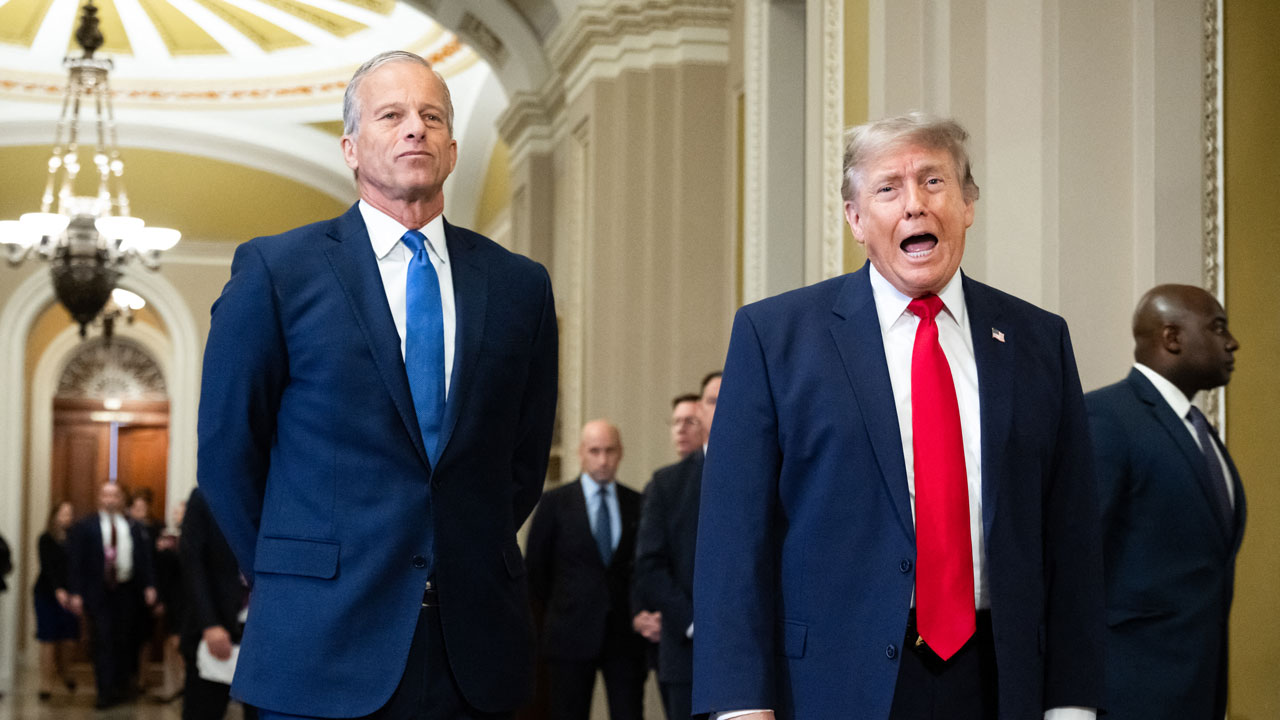
As the administration seeks a boost in defense funding, Republican leaders on Capitol Hill are trying to figure out how to overcome opposition from Democrats and cover the cost of the Iran war. The funding debate could be a prelude to a larger government shutdown battle ahead of the midterm elections.
On Wednesday, the White House’s Office of Management and Budget officially requested over $67 billion in Pentagon funding as part of a nearly $88 billion supplemental funding package.
OMB Director Russ Vought explained in a letter that the package is meant to address “operational costs” of the war, “including funding for military personnel and readiness expenses, operational costs to rebuild stocks expended by DOW, classified programs, and other key expenses.”
The White House is also seeking funding for national parks, Ebola prevention, and agricultural priorities.
Congress’ upcoming fight over supplemental funding is part of a larger debate over how Capitol Hill should interact with the Pentagon.
The supplemental is distinct from the 2027 National Defense Authorization Act, which is an annual defense policy bill, as well as from the annual defense funding bill.
TRENDING ARTICLES



Senate Majority Leader John Thune, R-S.D., told Punchbowl News on Thursday that Republicans in the Senate will try to find the bipartisan support necessary to fund the military, with a partisan bill as the backup measure.
“We need to let [the supplemental] play out and find out if there’s a path there,” Thune told the outlet. “And then if there isn’t, we’ll go to Plan B—which, like I said, I’m not ruling out. I think [Reconciliation] 3.0 is an option, but I think we have to exhaust all the other options first.”
Budget reconciliation is a type of bill that allows Congress to enact major budgetary changes without needing 60 votes in the Senate.
Congressional Republicans recently used the procedure to fund immigration enforcement agencies for the remainder of President Donald Trump’s term without any Democrat support.
Democrats have already indicated they aren’t eager to expand the Pentagon’s budget.
Senate Minority Leader Chuck Schumer, D-N.Y., wrote in a statement on X in response to the supplemental, “After dragging America into a reckless war, [Trump] now wants Congress to hand him tens of billions more to paper over the damage—while families are still paying higher prices.”
Schumer added that Democrats should not write “another blank check for Trump.”
Sen. Chris Coons of Delaware, the top Democrat on the Senate subcommittee that handles Pentagon funding, also expressed opposition on Wednesday.
“Our nation’s military has real needs, from filling munitions backlogs to protecting our troops and bases from modern drone warfare,” Coons wrote.
“But the administration’s supplemental accomplishes few of those goals,” he continued. “If brought to the floor, my Democratic colleagues and I would oppose it.”
This longstanding partisan rift on defense funding and other funding areas has resulted in prominent Republicans floating the idea of sidestepping the usual bipartisan process and pursuing reconciliation.
“Here’s the bottom line, and everybody knows this: If we want to get more money to defense—and I do—the only way we’re going to do it in the foreseeable future is through reconciliation,” Sen. John Kennedy, R-La., said Wednesday as he discussed the overall defense funding picture.
“Some don’t like doing it through reconciliation. They think resorting to reconciliation too often bastardizes the appropriations process,” he continued. “They’re right, but this whole political environment right now is bastardized.”
In the House, a group of Republicans is attempting to craft one last ambitious reconciliation bill before the midterms, although they have yet to release a plan for such legislation.
This effort, backed by the chamber’s Republican leadership, comes as The Heritage Foundation and the Republican Study Committee have urged the Republican Congress to harness the full force of its majorities ahead of the midterms.
There is some overlap between the House’s ambitious reconciliation goals and the more modest ideas being floated in the Senate.
The board of the House Freedom Caucus—a fiscally conservative faction in the chamber—recently released a proposal to use reconciliation to bypass the bipartisan appropriations process.
“Republicans should also use reconciliation to deny Democrats the ability to weaponize government shutdown threats for political leverage ahead of the midterm elections by providing responsible short-term funding for key government personnel and services,” reads the board’s proposal for Reconciliation 3.0.




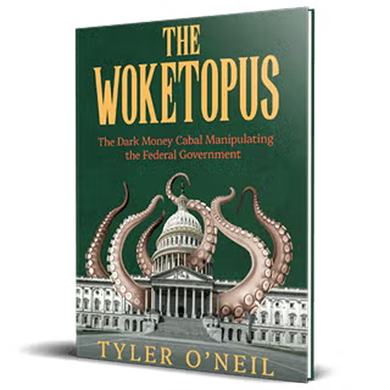
Read the first chapter of The Woketopus right now for FREE
Today, even with President Trump’s victory, leftist elites have their tentacles in every aspect of our government.
The Daily Signal’s own Tyler O’Neil exposes this leftist cabal in his new book, The Woketopus: The Dark Money Cabal Manipulating the Federal Government.
In this book, O’Neil reveals how the Left’s NGO apparatus pursues its woke agenda, maneuvering like an octopus by circumventing Congress and entrenching its interests in the federal government.
You can read the first chapter of this new book for FREE in this eBook, The Woketopus: Chapter One using the secure link below.

The Daily Signal depends on the support of readers like you.
RELATED ARTICLES





Don’t miss the

Don’t miss the signal