
The National Defense Authorization Act Gets Defense Spending on the Right Path
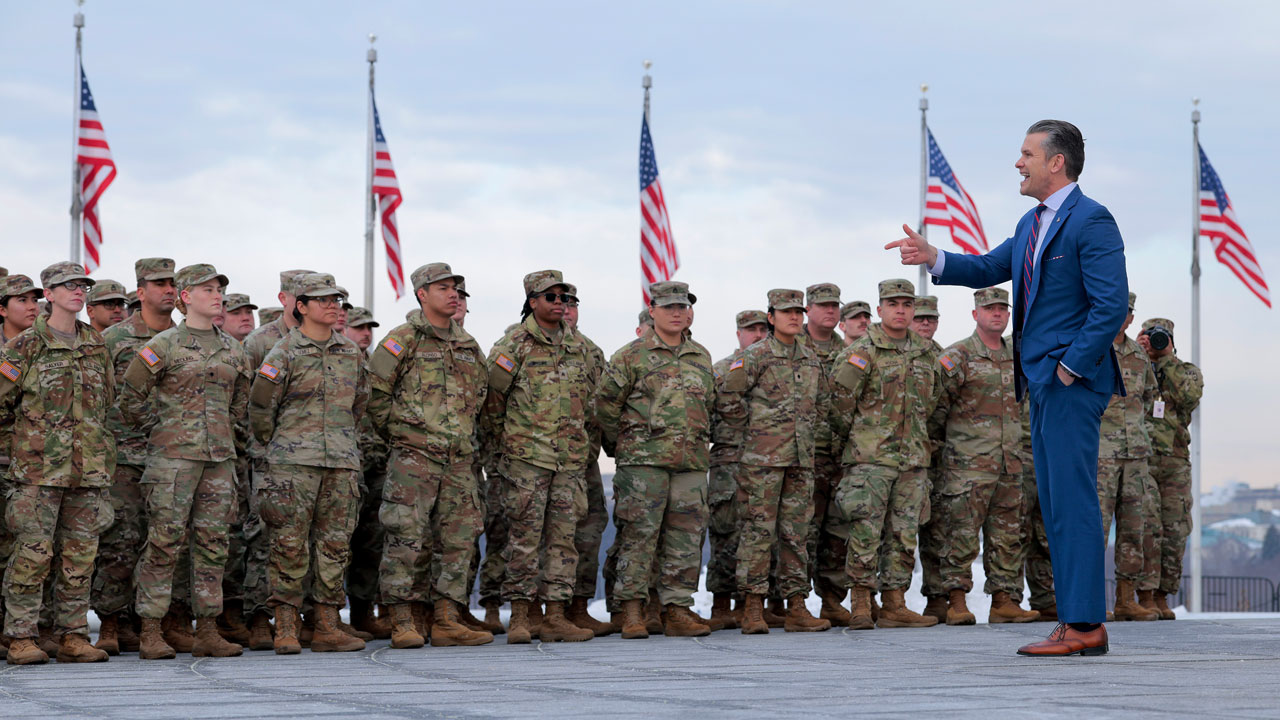
The fiscal year 2027 National Defense Authorization Act has cleared its first major hurdle in Congress.
The House Armed Services Committee approved its version of the legislation on June 4 in a 44-12 vote, while the Senate Armed Services Committee completed its markup and voted 18-9 on June 11 to advance its version of the fiscal year 2027 NDAA to the Senate floor.
Both bills now await consideration by their respective chambers before ultimately being reconciled in conference. As lawmakers begin debating the final shape of the legislation, the Senate proposal offers important insights into Congress’ current approach to rebuilding American military strength.
The bill begins with the foundation of military power: the men and women who serve. The fiscal year 2027 NDAA reinforces merit-based standards, prioritizes combat effectiveness, and expands recruiting and retention incentives to address persistent personnel shortfalls.
These reforms are intended to ensure that the military remains focused on readiness and warfighting.
The legislation also recognizes that military strength depends on more than the size of the force. A military can only be as strong as the industrial base that equips and sustains it. To address longstanding weaknesses in defense production, the bill invests in munitions manufacturing, shipbuilding capacity, and critical supply chains.
TRENDING ARTICLES


These efforts are intended to ensure the United States can produce the weapons, equipment, and materials necessary to sustain military operations during a prolonged conflict.
For the Navy, the legislation makes significant investments in both fleet capacity and deterrence. The bill authorizes $10.2 billion for the Columbia-class ballistic missile submarine, $8.4 billion for Virginia-class submarines, and an additional $4.1 billion in advance procurement funding.
It also provides $3.45 billion for DDG-51 destroyers, including funding for an additional destroyer above the president’s request, alongside $1.4 billion for the Constellation-class frigate program and $2.2 billion for amphibious ships.
These investments strengthen America’s sea advantage and help ensure the Navy can sustain operations in a contested maritime environment.
The Army portion of the bill focuses on ensuring the service can sustain operations in a prolonged conflict rather than simply fight the opening stages of a war. The legislation authorizes $2.03 billion in Army military construction funding while supporting modernization efforts through the Army Transformation Initiative, improvements to logistics networks, and investments in munitions production and prepositioned equipment.
These efforts recognize that future conflicts will require more than advanced weapons systems. The Army must be able to rapidly deploy forces, maintain supply lines, and sustain combat operations over long periods of time. The bill takes important steps to ensure the Army remains prepared for any future conflicts.
For the Air Force, the bill prioritizes long-range strikes and nuclear deterrence. The legislation continues support for the B-21 Raider bomber, maintains a force of at least 400 deployed intercontinental ballistic missiles, and invests in the infrastructure needed to support next-generation aircraft and new nuclear-armed air-launched weapons systems.
For the Marine Corps, the bill continues to support the service’s transition toward a lighter, more agile force capable of operating in contested environments. The legislation provides roughly $723 million for artillery and munitions programs. It also supports investments in unmanned systems, precision fires, and expeditionary capabilities that enhance the Corps’ ability to operate across the Indo-Pacific.
These efforts strengthen the Marine Corps’ ability to deploy rapidly and operate strategically in important regions.
The fiscal year 2027 National Defense Authorization Act reflects a growing recognition that military strength cannot be taken for granted. By investing in the personnel, infrastructure, industrial capacity, and modernization efforts that ground U.S. military power, the bill seeks to address the challenges facing today’s force while preparing for tomorrow’s threats.
Additional work remains, but this legislation represents a meaningful step toward rebuilding the foundations of American military strength and ensuring the U.S. remains prepared for the challenges ahead.


Read the first chapter of The Woketopus right now for FREE
Today, even with President Trump’s victory, leftist elites have their tentacles in every aspect of our government.
The Daily Signal’s own Tyler O’Neil exposes this leftist cabal in his new book, The Woketopus: The Dark Money Cabal Manipulating the Federal Government.
In this book, O’Neil reveals how the Left’s NGO apparatus pursues its woke agenda, maneuvering like an octopus by circumventing Congress and entrenching its interests in the federal government.
You can read the first chapter of this new book for FREE in this eBook, The Woketopus: Chapter One using the secure link below.



The Daily Signal depends on the support of readers like you.
RELATED ARTICLES





Don’t miss the

Don’t miss the signal