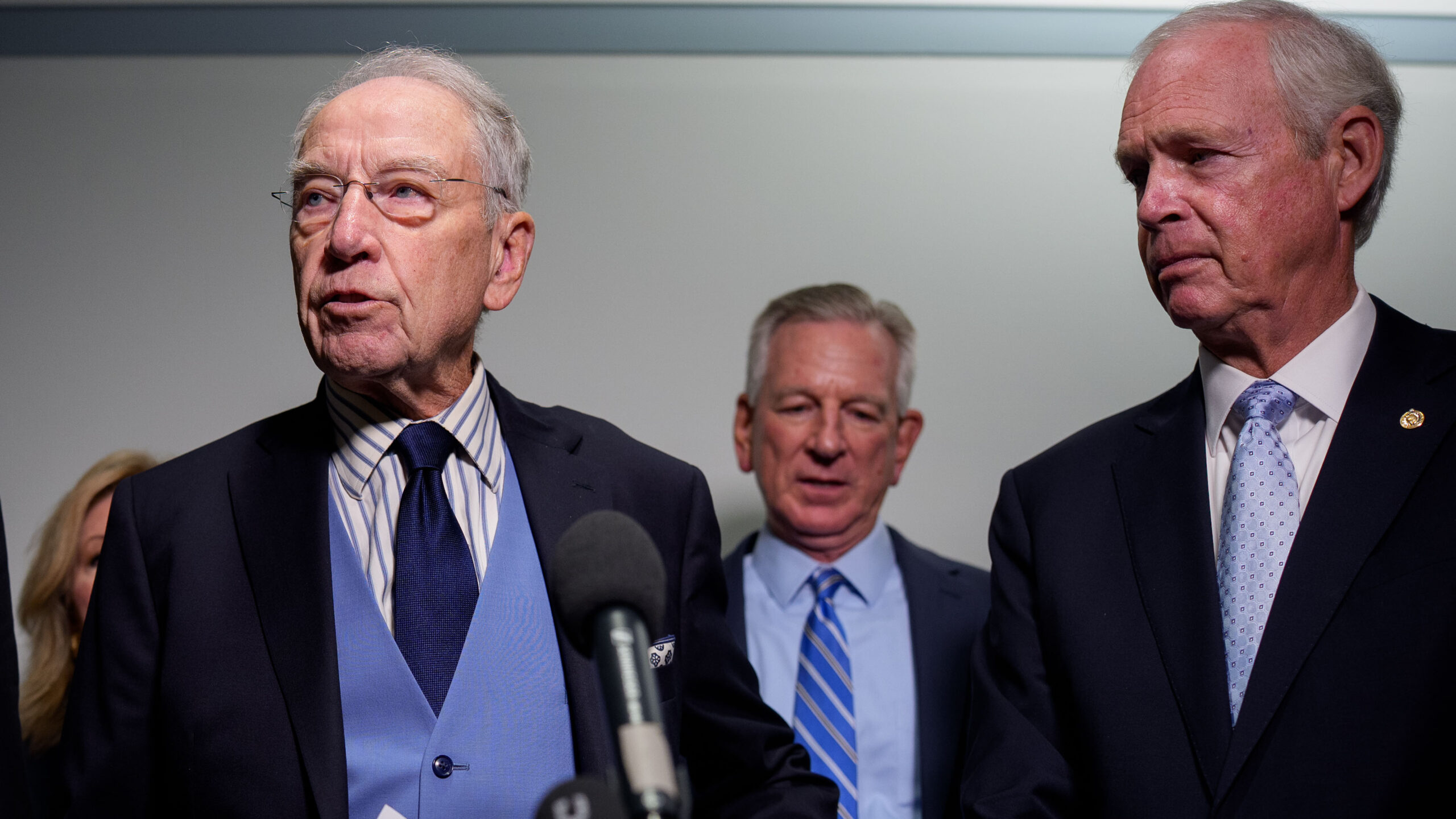
The senators who exposed the Biden administration’s snooping on Republicans and conservative groups have differing views on extending a surveillance provision for foreign intelligence gathering.
The two matters are distinct, to be sure, as the latter involves intelligence, while the former was primarily a criminal investigation targeting President Donald Trump, expanded to include supporters. Still, both involve surveillance, and critics of the foreign surveillance provision argue that it can allow for incidental collection of American citizens’ data.
Senate Judiciary Chairman Chuck Grassley, R-Iowa, championed extending the Foreign Intelligence Surveillance Act, which allows the U.S. to spy on foreigners abroad without a warrant. He has defended it as a vital national security tool.
Grassley, along with Sen. Ron Johnson, R-Wis., helped expose the Biden Justice Department’s “Arctic Frost” probe that involved issuing subpoenas to phone companies for data on eight Republican senators and a total of about 400 individuals involved in supporting President Donald Trump; the probe was later part of special counsel Jack Smith’s investigation.
“Section 702 [of the Foreign Intelligence Surveillance Act] is an essential national security tool. That law is responsible for over 60% of the intelligence in the president’s daily brief. Section 702 enables our intelligence and law enforcement communities to thwart attacks before they occur,” Grassley said in a Senate floor speech last week.
“It’s, as I see it, a preventative national defense and national security issue. Section 702 has saved countless lives in the United States and even abroad,” Grassley added. “It gives our military a strategic edge, allows us to hunt down foreign terrorists and rescue hostages, and helps us defend critical infrastructure from cyberattacks. More recently, Section 702 has enabled more than 90% of CIA-driven synthetic drug disruptions abroad and prevented a mass casualty terrorist attack at a Taylor Swift concert overseas.”
TRENDING ARTICLES
On Bloomberg News, Johnson said he wanted to renew it but desired reforms.
“I wish that those who wanted to renew it would want to protect civil liberties to a greater extent, but the bottom line, if you’ve got bad actors, no matter how many controls you put in place, they will probably violate them,” Johnson said. “I think we will probably reauthorize this. I will be generally supportive.”
Members of the House Freedom Caucus have insisted on a warrant for all spying.
In April, Rep. Andy Ogles, R-Tenn., posted on X: “The current FISA ‘reforms’ are being championed by the same people who did Arctic Frost. Not to mention Joe Biden signed those ‘reforms’ last year. I will not yield to big brother on this. GET A WARRANT.”
A leading Senate critic of the Foreign Intelligence Surveillance Act, Sen. Mike Lee, R-Utah, made the comparison during a Senate hearing investigating the Arctic Frost probe in February.
“As with what we’re covering here—these requests from telecommunications companies backed by a nondisclosure order—so too with FISA 702, somebody can, metaphorically speaking, be run over without ever knowing what happened,” Lee said during the hearing. “That’s why Congress has no business reauthorizing FISA 702 … without a warrant requirement … and political warfare, lawfare is bad, we shouldn’t weaponize these things.”
The nature of the Arctic Frost probe was to review Trump’s challenge of the 2020 election outcome. While a federal grand jury subpoenaed the phone data of members of Congress, none of the senators nor other targets were notified.
The nature of the FISA data gathering is about foreign intelligence collection authority, not a criminal investigation. Section 702 permits the government to compel electronic communication service providers to assist in the collection of intelligence on non-U.S. citizens located abroad, including phone records, emails, or texts.
That can conceivably include information to or from an American in the United States, or “incidental” collection of information on Americans.
In a statement of administration policy earlier this month, the Trump administration supported passage in the Senate before the lapse of the surveillance program.
“As detailed in the 2026 Annual Threat Assessment, our nation faces multiple immediate threats to the homeland and to our national interests. Given the threats posed by nonstate actors—including drug cartels, which poison Americans, and cyber actors who target our critical infrastructure—as well as state adversaries engaging in espionage and illicit proliferation of destructive weapons, we must remain vigilant to keep the American people safe. This cannot be accomplished without the reauthorization of Section 702,” the June 4 statement of administration policy says.

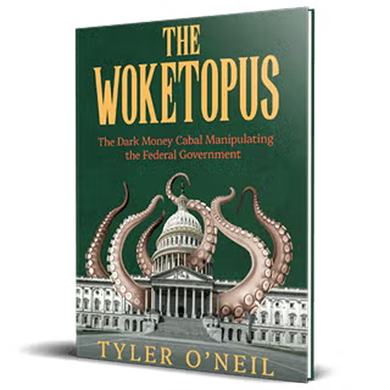
Read the first chapter of The Woketopus right now for FREE
Today, even with President Trump’s victory, leftist elites have their tentacles in every aspect of our government.
The Daily Signal’s own Tyler O’Neil exposes this leftist cabal in his new book, The Woketopus: The Dark Money Cabal Manipulating the Federal Government.
In this book, O’Neil reveals how the Left’s NGO apparatus pursues its woke agenda, maneuvering like an octopus by circumventing Congress and entrenching its interests in the federal government.
You can read the first chapter of this new book for FREE in this eBook, The Woketopus: Chapter One using the secure link below.




The Daily Signal depends on the support of readers like you.
RELATED ARTICLES




Don’t miss the

Don’t miss the signal