
A yearslong series of federal lawsuits against Walmart, CVS, and other pharmacies centers on opioids, insulin, prescription refills, federal reimbursements, and patient safety. With national companies involved and Department of Justice press releases proclaiming accountability for the opioid epidemic, they are the kinds of cases that naturally attract public attention.
There’s only one problem: Pharmacies are not where most of the underlying issues begin.
By the time a patient arrives at the pharmacy, their prescription has already been written, a drug has already moved through the distribution chain, reimbursement systems have already approved payment structures, and habits around medication use have often already been established.
Focusing heavily on pharmacies risks treating the final stage of the process as though it were the source of the broader problem itself. That is a serious problem.
The entire health care system should be scrutinized. But our regulation needs to be pragmatic. Enforcement needs to be appropriate. After all, the opioid crisis did not develop because retail pharmacists suddenly became the decision makers. In this case, many parts of the system encourage use without attempting to reduce overprescribing,
I saw this firsthand when operating a skilled nursing enterprise. My position was largely focused on the finance and accounting side, and pharmacy services were consistently one of our largest line items each month. We dealt with major pharmaceutical companies, along with a complicated system of rebates and refunds tied to prescription volume.
TRENDING ARTICLES



Once, I decided to dig deeper into the numbers and found that our average resident was taking roughly 12 medications a day. One physician would prescribe a medication, another specialist would adjust something else, and over time, the number of prescriptions continued to increase. Families often associated more medication with more comprehensive care, but in reality, facilities rarely had the time to fully reassess the entire medication stack.
The nurses knew that many residents were taking far more medication than they actually needed, but nothing ever changed. No medical professional stepped back to ask whether all of it still made sense together.
This pattern extends to all aspects of health care in America. It appears across elder care, chronic disease management, pain treatment, and other areas where long-term medication use has been normalized. Once patients enter systems built around layered prescribing, it becomes difficult for anyone involved to seriously reconsider whether all of the medications remain necessary, beneficial, or even compatible with one another.
If policymakers genuinely want to reduce abuse, waste, addiction, and unnecessary prescribing, they need to spend far more time examining the structure of the system before prescriptions ever reach the pharmacy.
Manufacturers and distributors can often identify unusual purchasing patterns long before serious public consequences emerge. Insurers and reimbursement systems shape prescribing behavior through payment structures and administrative incentives. Facilities and providers operate under legal, financial, and operational pressures that often favor adding treatment layers rather than removing them.
The broader problem is that responsibility is spread across too many different participants, and very few people are ever accountable for the cumulative outcome experienced by patients. As a result, the system often rewards complexity, defensive decision making, reimbursement volume, and institutional risk management rather than simplification or long-term stability.
Large settlements and enforcement actions may generate headlines and political momentum, but they are unlikely to substantially change prescribing culture or the incentive structures that shape medication use across the country.
If The DOJ wants real reform, it would be better off targeting the entire supply chain to confront issues that start hundreds or thousands of miles away from where customers pick up their medicine.
We publish a variety of perspectives. Nothing written here is to be construed as representing the views of The Daily Signal.
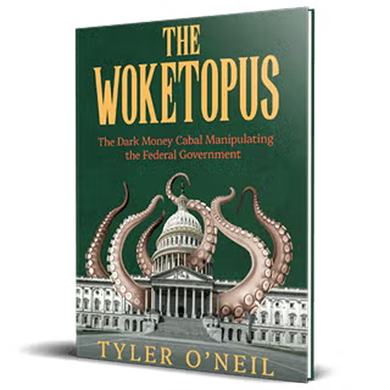
Read the first chapter of The Woketopus right now for FREE
Today, even with President Trump’s victory, leftist elites have their tentacles in every aspect of our government.
The Daily Signal’s own Tyler O’Neil exposes this leftist cabal in his new book, The Woketopus: The Dark Money Cabal Manipulating the Federal Government.
In this book, O’Neil reveals how the Left’s NGO apparatus pursues its woke agenda, maneuvering like an octopus by circumventing Congress and entrenching its interests in the federal government.
You can read the first chapter of this new book for FREE in this eBook, The Woketopus: Chapter One using the secure link below.
TRENDING ARTICLES


The Daily Signal depends on the support of readers like you.
RELATED ARTICLES





Don’t miss the
Don’t miss the signal