
The usual foreign policy experts are already misreading President Donald Trump’s decision to extend the Iran ceasefire as hesitation when it is actually a show of leverage.
Trump did not extend the ceasefire from a position of retreat. He did so citing Iran’s financial collapse and numerous ceasefire violations, all while maintaining the blockade and waiting for a coherent response to U.S. demands from a fractured regime that no longer looks formidable. The pressure test is working. Iran has lost its hold on the Strait of Hormuz, and the message is unmistakable: The only person Tehran is seriously responding to right now is Trump.
Trump has already proven he can pressure Iran. The more important question now is whether Tehran is able to negotiate on any serious terms. Trump extended the ceasefire because the United States is still waiting for a formal Iranian response from a divided regime that appears unable to produce a unified proposal. At the same time, Pakistan, not Europe, has become the unexpected hinge on whether diplomacy survives. Pakistani Prime Minister Shehbaz Sharif thanked Trump publicly for accepting Pakistan’s request to extend the ceasefire and expressed hope that a second round of talks in Islamabad would lead to a permanent end to the conflict.
Ceasefire extensions are only weak if the pressure to reach a deal subsides with them—it did not. Trump refused to remove the U.S. blockade of Iranian ports, while the military remains ready to strike. Trump is granting more time with intensified pressure and the realization that Iran is “starving for cash,” losing $500 million a day from trade disruptions. Trump’s position is the opposite of the Obama-era fantasy that talking itself constituted progress and leverage. This is diplomacy backed by force, not rhetoric masked as progress.
Within hours of the ceasefire extension, Iran’s response proved the point. It seized two ships and jeopardized the next round of negotiations. As Trump offered more time to respond, Tehran turned to more aggression in the world’s most important energy chokepoint. That is the behavior of a regime testing whether it can recover the leverage it is losing.
TRENDING ARTICLES

The anti-Trump crowd will ignore the historical lesson here because it negates everything they want the public to believe. In Bosnia, after the brutal ethnic war that followed the breakup of Yugoslavia, the ceasefire was the bridge, not the prize. Once pressure changed the balance on the ground, the U.S. brought the parties to Dayton, Ohio, and used that pause to lock in terms. The defining moment was who controlled the pause and what it used to compel. That is the framework for the negotiations with Iran. America does not need a ceasefire for strength. It needs a ceasefire that freezes Iran in a weakened position long enough to force compliance.
It is easy to miss the point when Trump Derangement Syndrome still shapes the analysis of some foreign policy experts. The measure of success in Iran is not the ceasefire itself, but whether Iran emerges weaker, with less room to maneuver and more pressure to comply. Right now, Tehran is divided, constrained by a blockade, dependent on Pakistan to act as an intermediary, and still unable to produce a coherent response to Trump’s demands. Further, Iran is cornered, knowing it cannot violate the ceasefire without proving Trump was right to keep the pressure on. That is not a diplomatic win for the U.S. and is the clearest signal Iran is weaker than it wants to admit.
Trump’s ceasefire extension exposed Iranian fragility. A regime once feared as one of the world’s most dangerous tyrannies is now violating ceasefire terms, relying on Pakistan to serve as an intermediary, and testing the edges because it no longer has the power to dictate the center. Trump’s blockade is still doing the strategic work, increasing pressure and forcing Iran toward compliance. Trump enters the next round of talks with leverage and strength, while Tehran is running out of money, running out of options, and running out of time. It is time to bet on America.

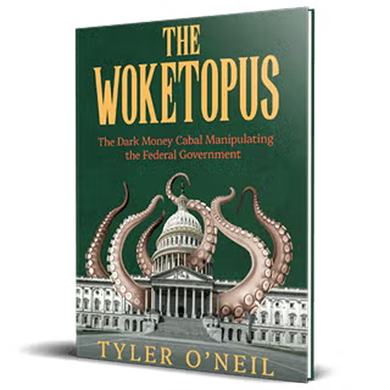
Read the first chapter of The Woketopus right now for FREE
Today, even with President Trump’s victory, leftist elites have their tentacles in every aspect of our government.
The Daily Signal’s own Tyler O’Neil exposes this leftist cabal in his new book, The Woketopus: The Dark Money Cabal Manipulating the Federal Government.
In this book, O’Neil reveals how the Left’s NGO apparatus pursues its woke agenda, maneuvering like an octopus by circumventing Congress and entrenching its interests in the federal government.
You can read the first chapter of this new book for FREE in this eBook, The Woketopus: Chapter One using the secure link below.

The Daily Signal depends on the support of readers like you.
RELATED ARTICLES



Don’t miss the
Don’t miss the signal