Democrats Want a Gas Price Panic Because They Cannot Beat Trump on Strength
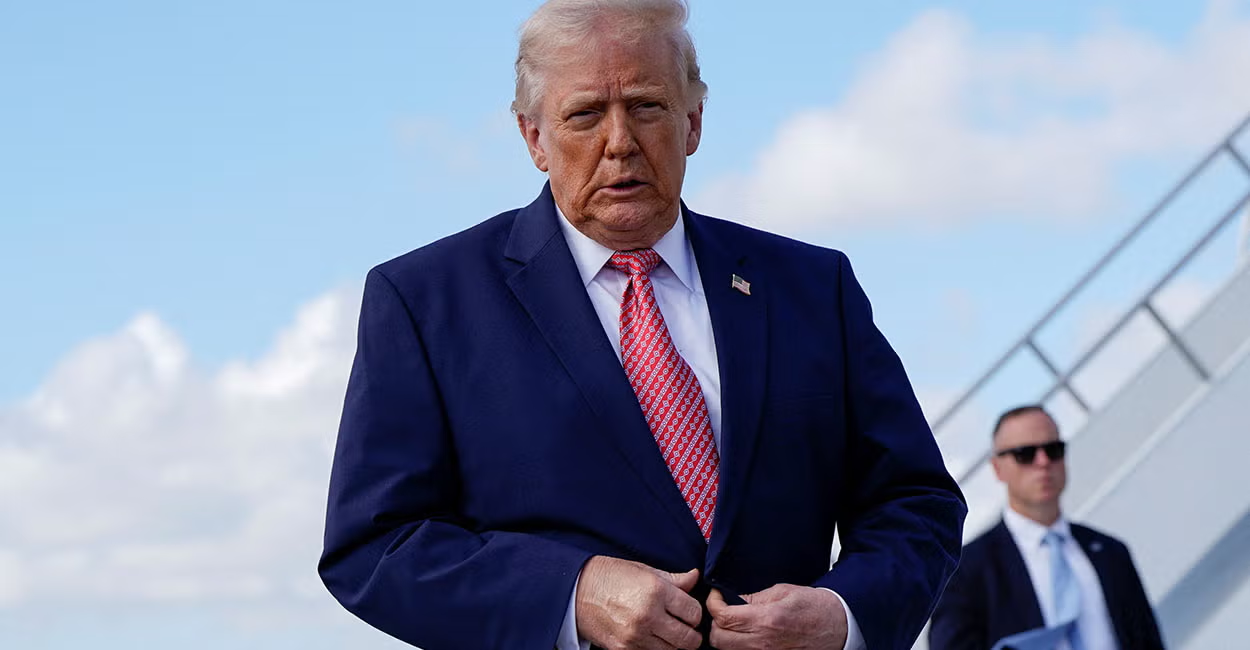
Democrats are betting higher gas prices will do what they cannot: weaken President Donald Trump’s advantage on strength. Their hope is that voters will fixate on the cost of a fill-up and forget why energy markets reacted in the first place. It is the same desperate Democratic strategy Americans have seen before. When they cannot win the bigger argument on national security, deterrence, and American strength, they retreat to the price tag and pray that short-term frustration will outweigh the far more serious stakes of American security and credibility.
The Democrat strategy is not subtle. Quinnipiac found that 65% of voters blame Trump at least somewhat for the recent rise in gas prices due to the Iran war, and Democrats think they have found their midterm jackpot issue. They hope if they can keep the conversation centered on pain at the pump, voters will forget their failures on the border, inflation, crime, and foreign policy.
Former Vice President Kamala Harris is already blaming Trump for pain at the pump, calling it the “direct result” of his Iran policy.
They are betting that temporary frustration will outweigh the larger truth Americans see: The world is dangerous, our enemies exploit weakness, and real leadership sometimes requires force even when markets react in the short term. Iran threatens global shipping lanes and destabilizes the world.
However, voters are not convinced that weakness is strength or that retreat is leadership.
We have seen this before. After Saddam Hussein invaded Kuwait, oil prices and gasoline costs rose as the Persian Gulf crisis shook global energy markets. Americans felt the pain, but history did not judge that moment by gas prices alone. It judged whether the United States had the strength to confront aggression at a critical moment. America led a coalition, drove Saddam out of Kuwait, and restored deterrence in the Gulf. President George H. W. Bush’s approval surged during and immediately after the Gulf War, rising from 64% before the war to 89% after victory.
TRENDING ARTICLES

That history matters now because it exposes the Democrats’ biggest strategic flaw: they confuse costs with failure. National security decisions can carry economic consequences, but the real question is whether those costs are helping restore deterrence, protect global order, and make hostile regimes think twice before testing American resolve. Democrats refuse this debate because exposes weakness, their playbook is to frame strength as escalation, deterrence as recklessness, and American power as a problem rather than solution.
Kamala Harris’ attack reveals how poorly the Democrats are misreading the electorate. They assume higher gas prices will immediately trigger voter backlash without asking what caused the increase, what alternatives exist, and what weakness costs the country. Gallup polled Americans in the war’s opening phase, from March 2-18, and found only 2% named gas prices as the nation’s top problem.
Recent Fox polling reveals that voter concern about gas prices is high, but concern about inflation is even higher.
Voters are not looking at the pump in isolation. They are looking at energy costs against the questions about affordability, deterrence, and American strength.
Voters cannot miss the hypocrisy. Democrats spent four years excusing historic inflation when it suited their politics. They backed policies that weakened confidence in American energy, from killing Keystone XL to pausing new federal oil and gas leases, ignored warnings about instability abroad, and dismissed deterrence as exaggerated concerns.
Now, as the Iran war has temporarily pushed up gas prices, they want to pose as defenders of working families. They offer no real alternatives; they only hope short-term pain will erase the memory of their own failures. Voters are smarter than that.
The truth is Democrats want a gas-price panic because they cannot beat Trump on security. While the real debate is about Iran, deterrence, and American resolve, they would rather turn it into a referendum on a gas receipt than on leadership. But Americans know temporary pain is not the same as strategic failure. A party that confuses the two proves only one thing: it never understood strength in the first place.

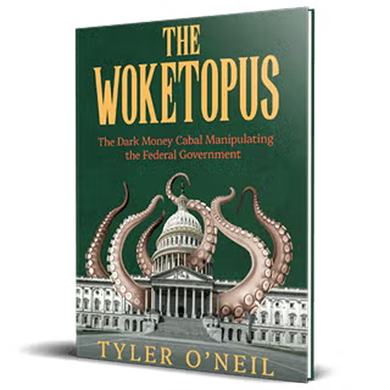
Read the first chapter of The Woketopus right now for FREE
Today, even with President Trump’s victory, leftist elites have their tentacles in every aspect of our government.
The Daily Signal’s own Tyler O’Neil exposes this leftist cabal in his new book, The Woketopus: The Dark Money Cabal Manipulating the Federal Government.
In this book, O’Neil reveals how the Left’s NGO apparatus pursues its woke agenda, maneuvering like an octopus by circumventing Congress and entrenching its interests in the federal government.
You can read the first chapter of this new book for FREE in this eBook, The Woketopus: Chapter One using the secure link below.



The Daily Signal depends on the support of readers like you.
RELATED ARTICLES




Don’t miss the

Don’t miss the signal