
When parents and prospective students choose colleges, they come across numerous statistics that can help guide their decision. The most popular is probably the acceptance rate, which reflects how exclusive a school is. Many assume that the lower the acceptance rate, the better the school.
Others may compare a school’s four-year graduation rate. Real data nerds might even go so far as to look at income after graduation.
While these statistics aren’t necessarily bad, they don’t answer the most important question when choosing the right school: Will this investment pay off in the long run?
At its core, college is an investment. The opportunity cost typically includes tuition, living expenses, and four whole years of one’s life.
These costs can be substantial. Tuition has increased by over 1,200% since 1980, with the average annual tuition now costing over $35,000 at private four-year institutions. The hope, of course, is that one will make this money back by landing a higher-paying job that wouldn’t have been possible without a college degree.
Whether that will actually happen is a question best answered by the underemployment rate for college graduates.
TRENDING ARTICLES



While the overall unemployment rate for college grads is quite low, that doesn’t tell the full story. A graduate who keeps working as a waiter after earning a degree isn’t unemployed, but, given the time and money spent earning that degree, one could argue they are underemployed.
The underemployment rate measures the share of college graduates working in jobs that do not require a traditional four-year degree. Importantly, these jobs aren’t necessarily unfulfilling or poorly compensated. Many commission-based sales roles, for example, can pay very well for talented salespeople. By definition, someone in that role is still underemployed because they could have taken that same job four years earlier without paying for college.
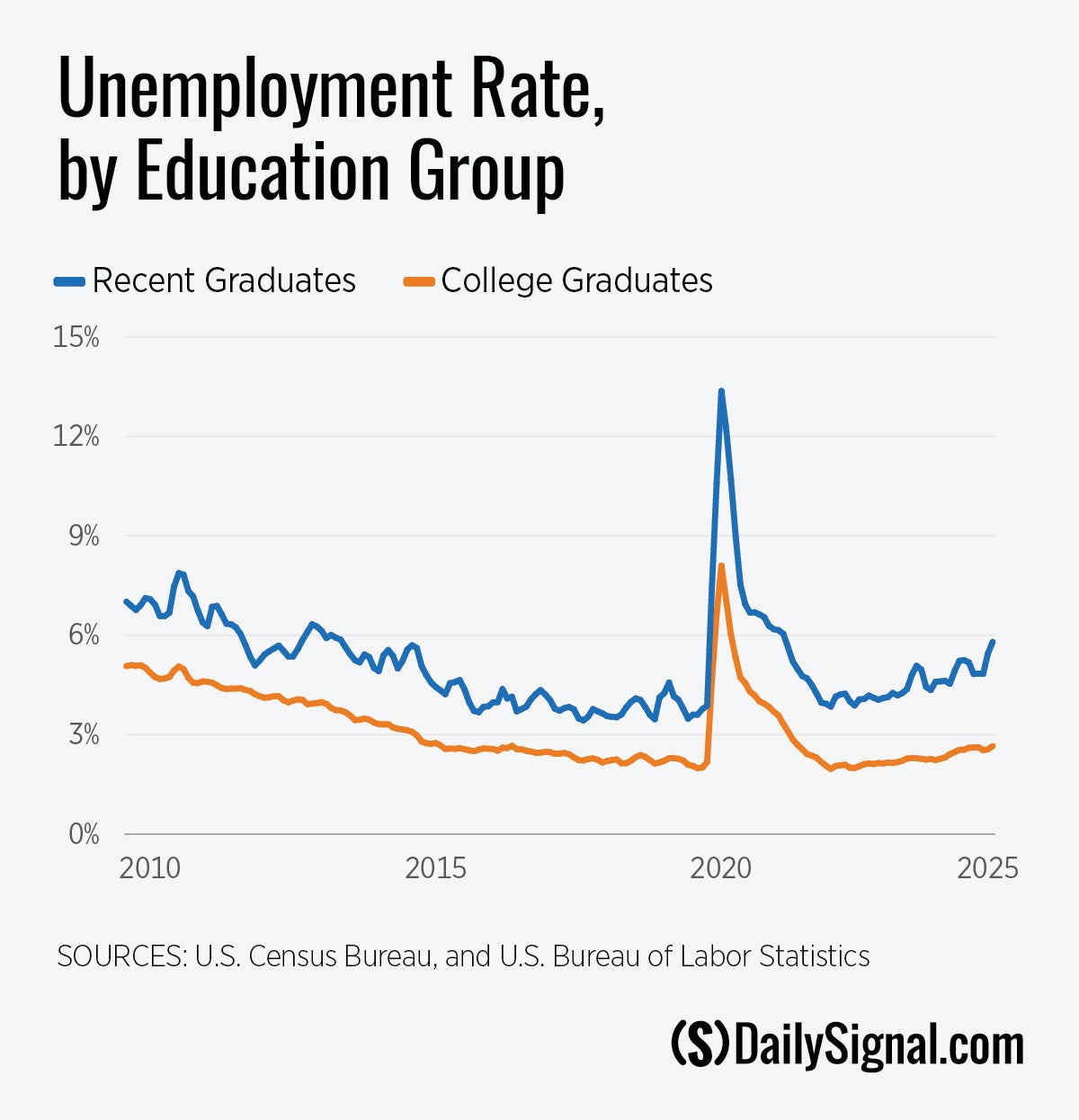
Figure 1 shows the unemployment rate by year for both recent and all college graduates. While there is a clear downward trend for both groups over the long term, the unemployment rate for recent graduates has risen by 2 percentage points in the most recent data, reaching 6%. This statistic is notably higher than the 3% unemployment rate for all college graduates, highlighting the greater job market vulnerability faced by new entrants to the labor force.
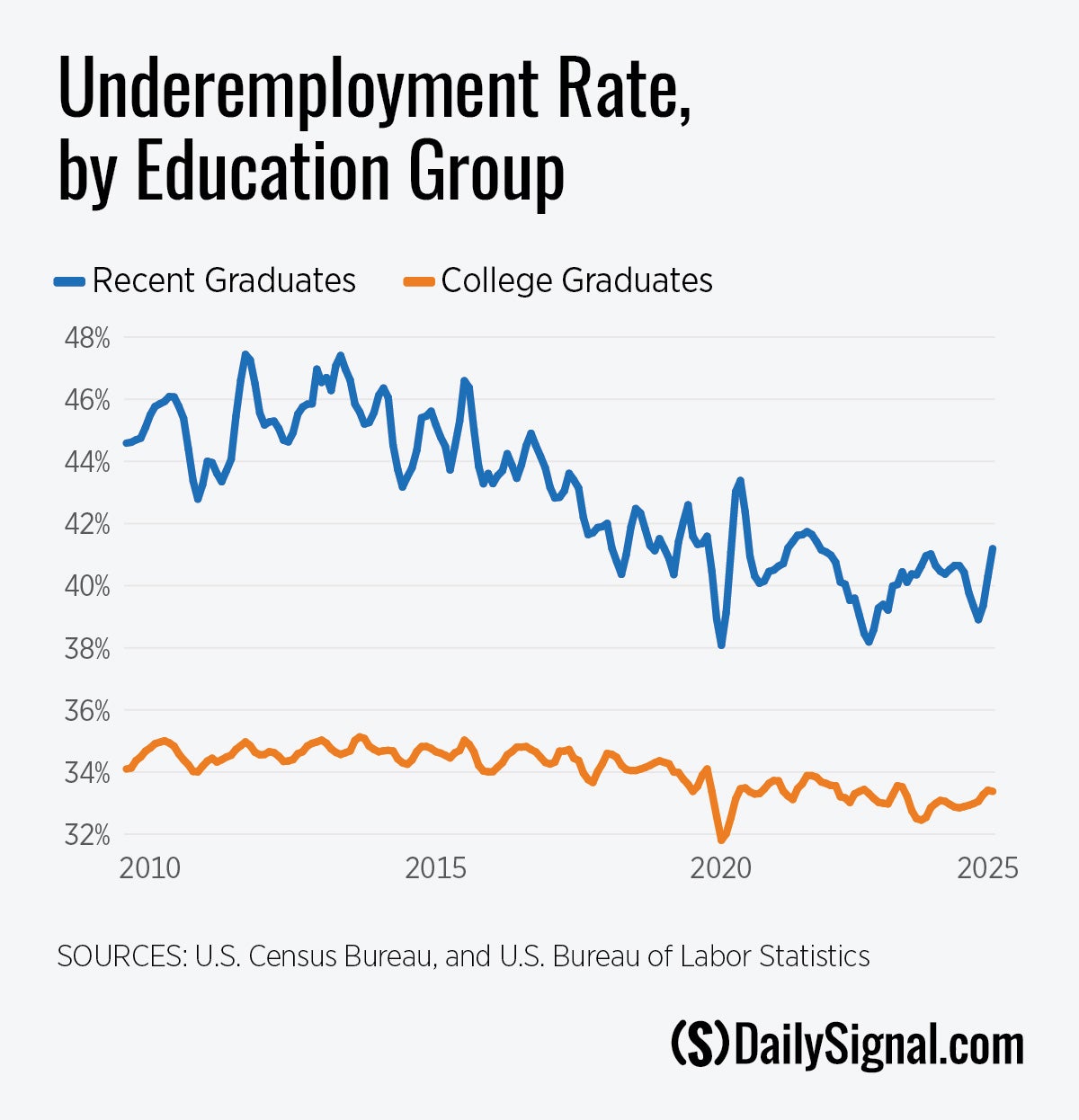
Figure 2, however, tells a different story. While the unemployment rate for college graduates is just 2.7%, the underemployment rate stands at approximately 33% for all college graduates.
That rate had been declining since 2010, but it experienced a sharp uptick this year—with data suggesting that around two in five recent college graduates remain underemployed.
That said, not all college degrees are created equal. A student’s major can significantly impact future career prospects.
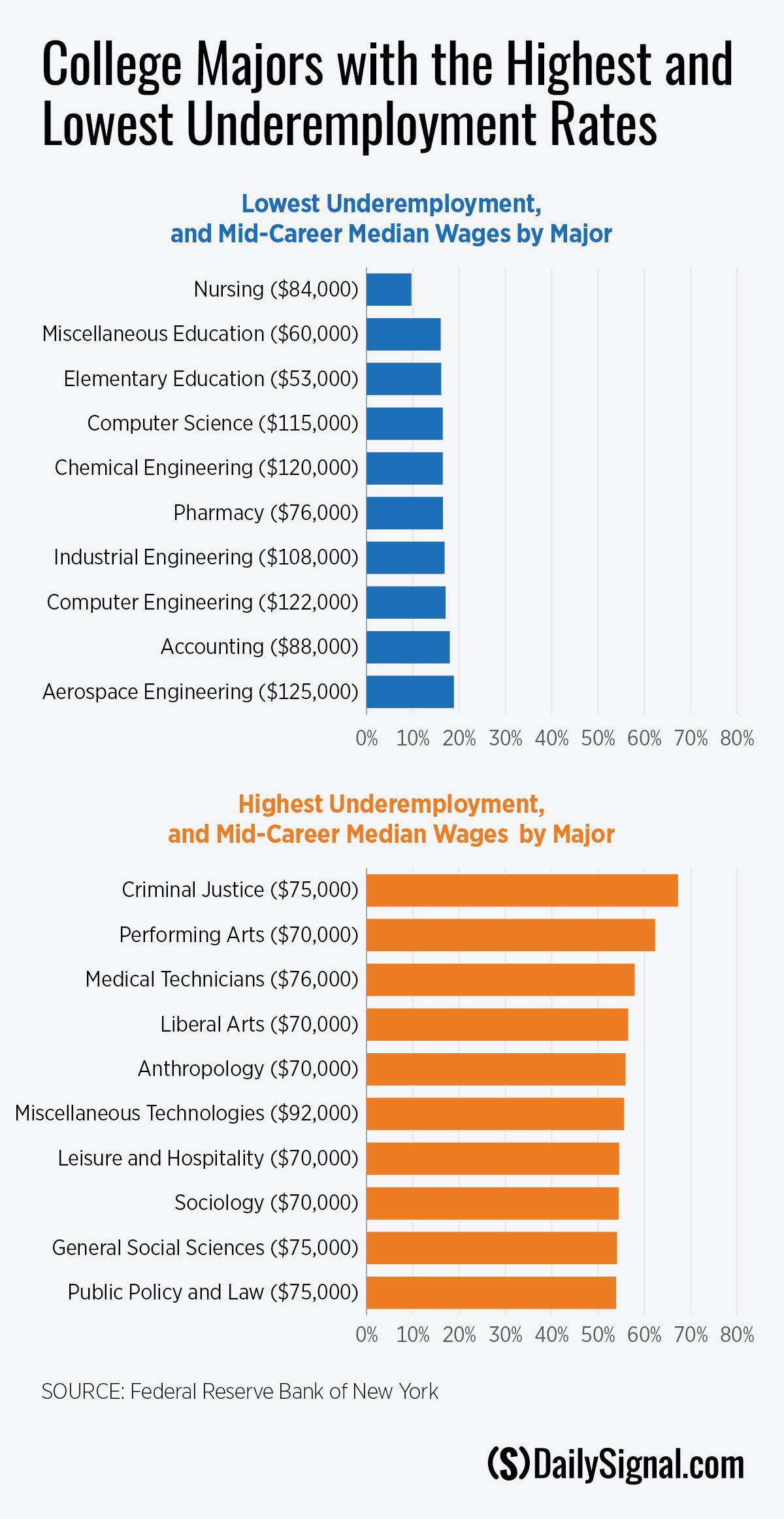
Figure 3 highlights the college majors with the highest and lowest underemployment rates, with mid-career median wages shown in parentheses.
Criminal justice has the highest underemployment rate, with nearly 70% of its graduates considered underemployed. In contrast, nursing has the lowest underemployment rate, followed by education and computer science.
Beyond employment outcomes, the choice of major and its connection to tangible skills useful in today’s economy are associated with differences in long-term earnings.
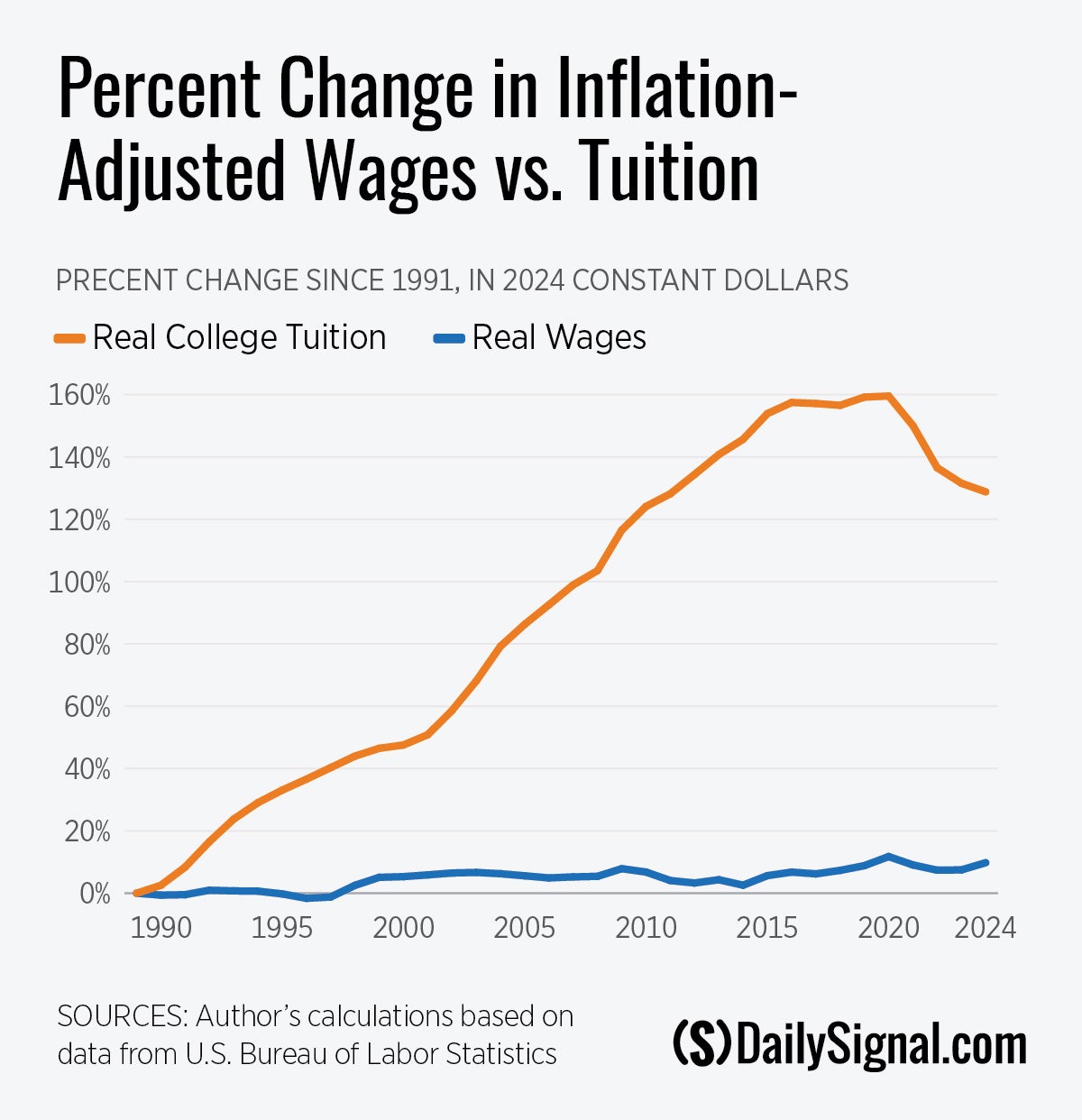
From an overall perspective, though, the cost of the college investment appears to be rising much faster than expected return. Figure 4 compares the inflation-adjusted (2024 dollars) increase in wages for college graduates with the average cost of college tuition.
On the bright side, real wages for college graduates have risen—up approximately 15% since 1991. But college tuition has soared by about 130%, even after adjusting for inflation.
This imbalance raises serious questions about the long-term value proposition of a college degree. As costs continue to outpace returns, students and families must weigh their choices more carefully than ever before.
In today’s economy, a college degree is no longer a guaranteed ticket to upward mobility, it’s a risk that demands careful evaluation. Alternative education pathways, such as apprenticeships, are increasingly desirable, and policymakers should remove barriers to apprenticeship growth.
For those who do pursue a college degree, choosing a major with strong labor market outcomes and low underemployment isn’t just smart economics; it’s essential for ensuring that the time, money, and effort invested in higher education truly pay off. As tuition costs climb and job markets evolve, students and parents alike should prioritize return on investment, not prestige, when planning for the future.
Read the first chapter of The Woketopus right now for FREE
Today, even with President Trump’s victory, leftist elites have their tentacles in every aspect of our government.
The Daily Signal’s own Tyler O’Neil exposes this leftist cabal in his new book, The Woketopus: The Dark Money Cabal Manipulating the Federal Government.
In this book, O’Neil reveals how the Left’s NGO apparatus pursues its woke agenda, maneuvering like an octopus by circumventing Congress and entrenching its interests in the federal government.
You can read the first chapter of this new book for FREE in this eBook, The Woketopus: Chapter One using the secure link below.


The Daily Signal depends on the support of readers like you.
RELATED ARTICLES




Don’t miss the

Don’t miss the signal