
How Policymakers Can Help Low-Income Americans Access Care During the Coronavirus Pandemic

As my fellow Heritage Foundation colleagues have laid out, any policy responses to the consequences of the coronavirus pandemic should be targeted, temporary, and directed at aiding public health efforts.
That includes both economic and social responses, such as those involving food security.
Congress should follow those principles as well with any policy response that leverages Medicaid to help low-income Americans to access health care.
- Targeted: Ideally, Congress should avoid a blanket nationwide approach, because no two states are alike.
Instead, policies and resources should be focused on those areas that are designated by the federal government as an epidemic area. That would ensure that services and resources are allocated most appropriately.
To assist states with its Medicaid costs, Congress could provide additional funding to help offset emergency-related costs through a modified and temporary change to the Federal Medical Assistance Percentage, the federal share of Medicaid costs, for services provided to Medicaid enrollees.
It could also provide separate sums for states to help low-income, uninsured Americans who don’t otherwise qualify for aid.
TRENDING ARTICLES


- Temporary: Here, too, Congress should link any policy or resources to the duration of the epidemic designation.
That would ensure that the policy and resource needs are evaluated and adapted on an ongoing basis as the designations are reviewed for renewal. It would also ensure there is a sunset, when policies return to normal, avoiding unknowingly setting new policy precedents in a crisis.
- Flexible: Ideally, Congress should avoid imposing new federal requirements on the states or the private sector. The states and the private sector are already responding to the emerging crisis. These types of voluntary and state-specific actions are critical to an effective response.
Instead, Congress should, if needed, expand the Department of Health and Human Services’ authorities to respond to individual state requests to waive program requirements to serve those in need.
States, for example, may want to utilize other avenues, beyond Medicaid, to help reach and serve the health care needs in their communities. For that reason, the federal response should provide policy and resource flexibility based on the needs of each state.
The changing dynamics in the spread of the virus underscore the need for states and local communities to continue to man the front lines. The federal government should do its best not to slow or burden those efforts, but rather, support and enhance them.

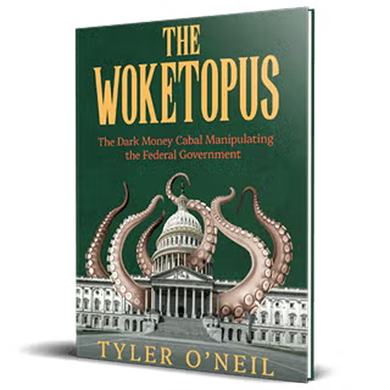
Read the first chapter of The Woketopus right now for FREE
Today, even with President Trump’s victory, leftist elites have their tentacles in every aspect of our government.
The Daily Signal’s own Tyler O’Neil exposes this leftist cabal in his new book, The Woketopus: The Dark Money Cabal Manipulating the Federal Government.
In this book, O’Neil reveals how the Left’s NGO apparatus pursues its woke agenda, maneuvering like an octopus by circumventing Congress and entrenching its interests in the federal government.
You can read the first chapter of this new book for FREE in this eBook, The Woketopus: Chapter One using the secure link below.
TRENDING ARTICLES


The Daily Signal depends on the support of readers like you.
RELATED ARTICLES



Don’t miss the

Don’t miss the signal