
Less than two-thirds of high schools across the country offer physics. Just half offer calculus, according to Michael Horn, an education innovation guru.
That only half of high schools offer calculus might come as a shock to a large portion of parents, who have worked to ensure their children have adequate educational opportunities. And it’s just one more reason why choice in education should be universal and not confined to choice among schools.
What exactly is course choice? Course choice enables students to craft an à la carte education uniquely tailored to their learning needs. Louisiana’s course choice program enables K-12 students to take courses from colleges, public high schools, virtual schools and private online providers. It enables students to access Advanced Placement and career and technical education courses, allowing them to earn high school and college credit, and industry-based certifications.
“They might, for instance, take algebra from a math tutoring firm, ACT prep from Princeton Review, pipefitting from a construction trade association, French from an online public school… or all of the above,” writes Politico’s Libby A. Nelson.
Horn writes in EducationNext that course choice “can allow schools to offer students an unparalleled course catalog that they couldn’t access within the four walls of any school anywhere.”
Louisiana’s course choice program uses state aid to cover the cost of courses for students attending a school rated “C” or lower on the state’s accountability system. Students enrolled in “A” or “B” schools are eligible to participate in the course choice program if their public school does not offer particular courses. Horn writes:
TRENDING ARTICLES



“…as online learning unbundles higher education, a need will emerge for entities to come along that help students make sense of and navigate this emerging, unbundled world and integrate the modular pieces together in ways that help them carve out a coherent and sensible life path. This is critical because it appears that in a personalized learning future, every single learner will have a custom fit educational pathway. The same could be true for high school students in K–12 schools, and district schools have a big opportunity to be the arbiter of coherence and the integrator of an array of pathways for learners.”
As school choice advances and takes on new and refined financing mechanisms such as education savings accounts (ESAs), course choice offers students the option to craft a learning plan that is tailored to their needs and future career goals.

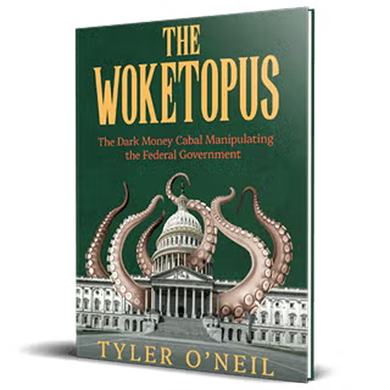
Read the first chapter of The Woketopus right now for FREE
Today, even with President Trump’s victory, leftist elites have their tentacles in every aspect of our government.
The Daily Signal’s own Tyler O’Neil exposes this leftist cabal in his new book, The Woketopus: The Dark Money Cabal Manipulating the Federal Government.
In this book, O’Neil reveals how the Left’s NGO apparatus pursues its woke agenda, maneuvering like an octopus by circumventing Congress and entrenching its interests in the federal government.
You can read the first chapter of this new book for FREE in this eBook, The Woketopus: Chapter One using the secure link below.


The Daily Signal depends on the support of readers like you.
RELATED ARTICLES



Don’t miss the
Don’t miss the signal