
On July 29, reformers challenging the abuses of civil forfeiture laws gathered at The Heritage Foundation to discuss the pitfalls of forfeiture and the possibilities for reform.
Keynoting the event was Representative Tim Walberg (R–MI), who introduced a civil forfeiture reform bill days before. Joining the congressman were acclaimed author and columnist Radley Balko and Scott Bullock, a senior attorney at the Institute for Justice.
“Executive branch officials, police departments, and prosecutors should not be self-financing their own activities,” said Bullock. Determining what resources those officers and agencies should have is the purview of legislators, he said, but civil forfeiture laws typically allow police departments to keep at least a portion (sometimes the entire sum) of what they seize as profits.
Allowing police to make a largely unregulated profit off their enforcement efforts naturally distorts their priorities. Balko pointed out the bizarre reality of cops deliberately waiting for drugs to be sold before executing raids. Why? “A stash house full of drugs is of no use to a police department. A stash house full of cash is of a lot of use to a police department.”
With forfeiture funds, departments have purchased everything from helicopters to expensive sports cars to tickets to conferences at island locales. “They may all be good ideas,” Walberg allowed, “but purchased at what expense? My concern is that they have been purchased at the expense of liberty.”
While some departments almost certainly use forfeiture to grow their budgets, others may see it as a necessary evil to fill budget holes left by their legislatures. It is incumbent upon responsible state and local governments to ensure their police forces are sufficiently funded by taxes to meet the law enforcement demands placed upon them.
TRENDING ARTICLES



Walberg has previously criticized civil forfeiture in a colloquy on the House floor. His recently introduced bill would implement a “clear and convincing evidence” standard to forfeit property and guarantee that property owners can assert an “innocent owner defense.” The government would then need to prove that the owner knew about the crime alleged to have been committed.
One of the most crucial reforms proposed in Walberg’s bill involves “equitable sharing,” whereby local or state law enforcement agencies can hand over their forfeiture cases to the federal government in return for up to 80 percent of the profits. Equitable sharing encourages police to circumvent their own (sometimes more stringent) state laws, short-circuiting the burgeoning reform efforts in the states. Walberg’s proposal would forbid the federal government from entering into any such agreement “for the purpose of circumventing any State law.”
For too long, the deck has been stacked in favor of the government. It is time to rebalance the judicial scales. Basic reforms that raise the burden of proof and shift that burden to the government are common-sensical, as is severing the link between law enforcement work and profit. After all, the justice system, like Caesar’s wife, must be above suspicion.
The full video of this public event is posted online at www.heritage.org/events/2014/07/civil-asset-forfeiture.

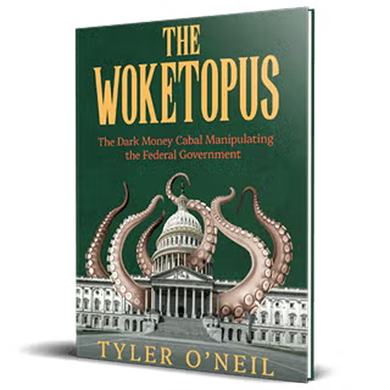
Read the first chapter of The Woketopus right now for FREE
Today, even with President Trump’s victory, leftist elites have their tentacles in every aspect of our government.
The Daily Signal’s own Tyler O’Neil exposes this leftist cabal in his new book, The Woketopus: The Dark Money Cabal Manipulating the Federal Government.
In this book, O’Neil reveals how the Left’s NGO apparatus pursues its woke agenda, maneuvering like an octopus by circumventing Congress and entrenching its interests in the federal government.
You can read the first chapter of this new book for FREE in this eBook, The Woketopus: Chapter One using the secure link below.
TRENDING ARTICLES


The Daily Signal depends on the support of readers like you.
RELATED ARTICLES




Don’t miss the

Don’t miss the signal