This week China announced its 2014 real economic growth rate. There are two salient takeaways from the report:
First, at least officially, the economy continues to slow modestly. Gross domestic product (GDP) grew at an annual rate of 7.3 percent in the fourth quarter of 2014 and 7.4 percent over the entire year. This is below the official target of 7.5 percent and marks the slowest rate since 1990, when international sanctions were imposed after Tiananmen Square. Property prices continued to fall, and companies and local governments are struggling under heavy debt burdens, keeping pressure on authorities to take aggressive steps to avoid a sharper downturn.
Second, there is a high probability that the growth figures were overstated. It is no secret that Beijing has “massaged” real GDP figures in the past to smooth reported growth, boosting them during downturns and sometimes moderating them during boom years.
Unreliable GDP Figures
When Chinese Premier Li Keqiang was General Secretary of Liaoning Province, he told then–U.S. Ambassador to China Clark Randt that Chinese GDP figures were “man-made” and consequently unreliable—“for reference only.” Li prefers three different metrics in quantifying GDP growth: loan growth, electricity consumption, and the volume of rail cargo. According to The Economist, these three figures reveal a far more volatile and slower growing Chinese economy than official GDP figures.
The accuracy of Chinese GDP figures has once again come under scrutiny after the 30 provinces and municipalities released their output figures. According to the Business Spectator, the total of the provincial and municipal figures for the first half of 2014 was 29.7 trillion yuan in goods and services. This figure is more than 10 percent larger than the national figure released by the National Bureau of Statistics. Given the incentives, local bosses have a strong incentive to significantly overstate output.
TRENDING ARTICLES



The timing adds to the suspicion. The 2014 GDP figure was slated for release on February 25, but was released less than three weeks after the end of the year. This is hardly enough time to collect output data from a nation of 1.37 billion people.
How Big Is China’s Economy?
This begs the question: Has the size of the Chinese economy been significantly exaggerated? Harry Wu, senior adviser to the Conference Board China Center for Economics and Business, estimates that China grew only 7.2 percent annually from 1978 to 2012. The official estimate clocks it at 9.8 percent. This difference, if accurate, compounded over three decades is enormous.

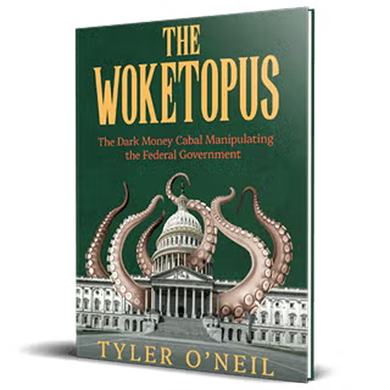
Read the first chapter of The Woketopus right now for FREE
Today, even with President Trump’s victory, leftist elites have their tentacles in every aspect of our government.
The Daily Signal’s own Tyler O’Neil exposes this leftist cabal in his new book, The Woketopus: The Dark Money Cabal Manipulating the Federal Government.
In this book, O’Neil reveals how the Left’s NGO apparatus pursues its woke agenda, maneuvering like an octopus by circumventing Congress and entrenching its interests in the federal government.
You can read the first chapter of this new book for FREE in this eBook, The Woketopus: Chapter One using the secure link below.
TRENDING ARTICLES


The Daily Signal depends on the support of readers like you.
RELATED ARTICLES



Don’t miss the

Don’t miss the signal