One argument keeps coming up in favor of reauthorizing the Export-Import Bank (Ex-Im) is that letting the bank expire would amount to unilateral disarmament. This argument doesn’t really mesh with reality.
Proponents of this line of thinking claim that the United States must subsidize exports to stay competitive since other industrialized countries do the same. Protectionists have been making similar claims for years against reducing tariffs, quotas, and subsidies in trade policy.
However, over the past three decades countries throughout the world have been steadily reducing tariffs unilaterally, and it has enhanced their relative competitiveness.
The most obvious examples are in South and East Asia, where countries have been unilaterally reducing trade restrictions for decades. In 1988, South and East Asian countries—including China—had average tariff rates of around 25 percent and 45 percent, respectively. In 2008, both of those rates were fell to about 10 percent. The effects certainly haven’t disadvantaged Asian companies: Since 1988, South and East Asia’s share of global gross domestic product (GDP) has risen from less than 20 percent to over 28 percent. Meanwhile, productivity has increased dramatically, as have standards of living for the world most populous region.
This phenomenon is reflected in measures of economic freedom as well. According to the Index of Economic Freedom, co-published by The Heritage Foundation and The Wall Street Journal,trade freedom in the Asia–Pacific Region has increased dramatically since economic freedom began to be measured in 1995. Since that year, trade freedom has increased by 42 percent despite an overall fall in regional economic freedom over the past two decades. This reflects a sustained commitment to “unilateral disarmament” that has reduced both tariff and non-tariff barriers and ushered in a period of rapid economic growth.
The success of unilateral action isn’t just reserved to the developing world, either, where much of the gains in Asia have been made. In the mid-1980s, New Zealand, a country at similar income levels to the U.S., underwent a round of extensive liberalization of trade rules and unilateral tariff reductions from an average of about 30 percent to 2.6 percent today. The rapid liberalization of the economy promoted strong economic performance, with GDP growth reaching as high as 6.2 percent in 1993.
TRENDING ARTICLES


The fear of unilateral disarmament is no excuse for keeping Ex-Im around. There are simply no examples of countries that unilaterally reduce tariff and non-tariff barriers (including subsidies) losing their competitive edge—and plenty of examples to the contrary. Supporters of the bank should cross this excuse off the list.
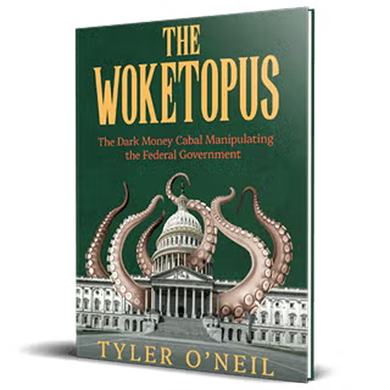
Read the first chapter of The Woketopus right now for FREE
Today, even with President Trump’s victory, leftist elites have their tentacles in every aspect of our government.
The Daily Signal’s own Tyler O’Neil exposes this leftist cabal in his new book, The Woketopus: The Dark Money Cabal Manipulating the Federal Government.
In this book, O’Neil reveals how the Left’s NGO apparatus pursues its woke agenda, maneuvering like an octopus by circumventing Congress and entrenching its interests in the federal government.
You can read the first chapter of this new book for FREE in this eBook, The Woketopus: Chapter One using the secure link below.


The Daily Signal depends on the support of readers like you.
RELATED ARTICLES




Don’t miss the

Don’t miss the signal