
Jilted Lovers and Unlimited Congressional Power: Another Day at the Supreme Court
The Supreme Court issued its decision in Bond v. United States, a much-awaited case that asked the question, as Justice Scalia cleverly put it in a different case: Can the Senate, the President, and, say, Zimbabwe conspire to pass laws that the Senate, the House, and the President cannot?
In other words, does the Article II Treaty Power allow the President and Congress to go beyond Congress’s enumerated powers and pass laws that they couldn’t otherwise pass?
In Bond, Carol Anne Bond, a Pennsylvania microbiologist, tried to injure her (former) best friend when she found out that the other woman had become pregnant by Bond’s husband. Bond combined a chemical she stole from her employer with another chemical that online through Amazon and smeared them on the woman’s mailbox. Sounds like a simple, state-law assault—what on earth do the feds have to do with this?
Simply put, the United States entered into a treaty, the Chemical Weapons Convention, and passed a law to implement that treaty, the Chemical Weapons Convention Implementation Act of 1998 (CWCIA). One section of this federal law prohibits the “use” of “chemical weapons.” Bond entered a “conditional guilty plea,” reserving the right to assert a constitutional challenge, and then moved to dismiss the charges against her on Tenth Amendment grounds, arguing that by passing the CWCIA, Congress exceeded its enumerated powers and intruded upon the traditional police power of the states—in this case, the authority of state governments to prosecute simple assault.
Yesterday, the Supreme Court issued its ruling, largely ducking the constitutional question and holding that the CWCIA simply doesn’t cover simple assaults like smearing chemicals on someone’s mailbox. Congress, the Court reasoned, couldn’t possibly have meant to authorize “such a stark intrusion into traditional state authority.”
The case is a win for Bond, but for those of us hoping for a strong ruling that would constrain the powers of Congress, the decision is somewhat anticlimactic. Can the Senate, the President, and Zimbabwe conspire to pass a treaty that would, for example, appear to enable Congress to pass federal family law? Family law is clearly traditionally a creature of state law, and yet the U.N. Convention on the Rights of the Child, which the U.S. has still not ratified, implicates family law. We still don’t know what would happen if such a treaty were passed—Supreme Court precedent in this area is still unclear.



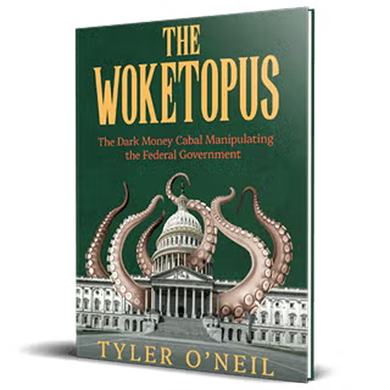
Read the first chapter of The Woketopus right now for FREE
Today, even with President Trump’s victory, leftist elites have their tentacles in every aspect of our government.
The Daily Signal’s own Tyler O’Neil exposes this leftist cabal in his new book, The Woketopus: The Dark Money Cabal Manipulating the Federal Government.
In this book, O’Neil reveals how the Left’s NGO apparatus pursues its woke agenda, maneuvering like an octopus by circumventing Congress and entrenching its interests in the federal government.
You can read the first chapter of this new book for FREE in this eBook, The Woketopus: Chapter One using the secure link below.



The Daily Signal depends on the support of readers like you.
RELATED ARTICLES




Don’t miss the

Don’t miss the signal