
Virginia’s Energy Future Needs the 3 Rs: Reality, Reliability, and Resilience
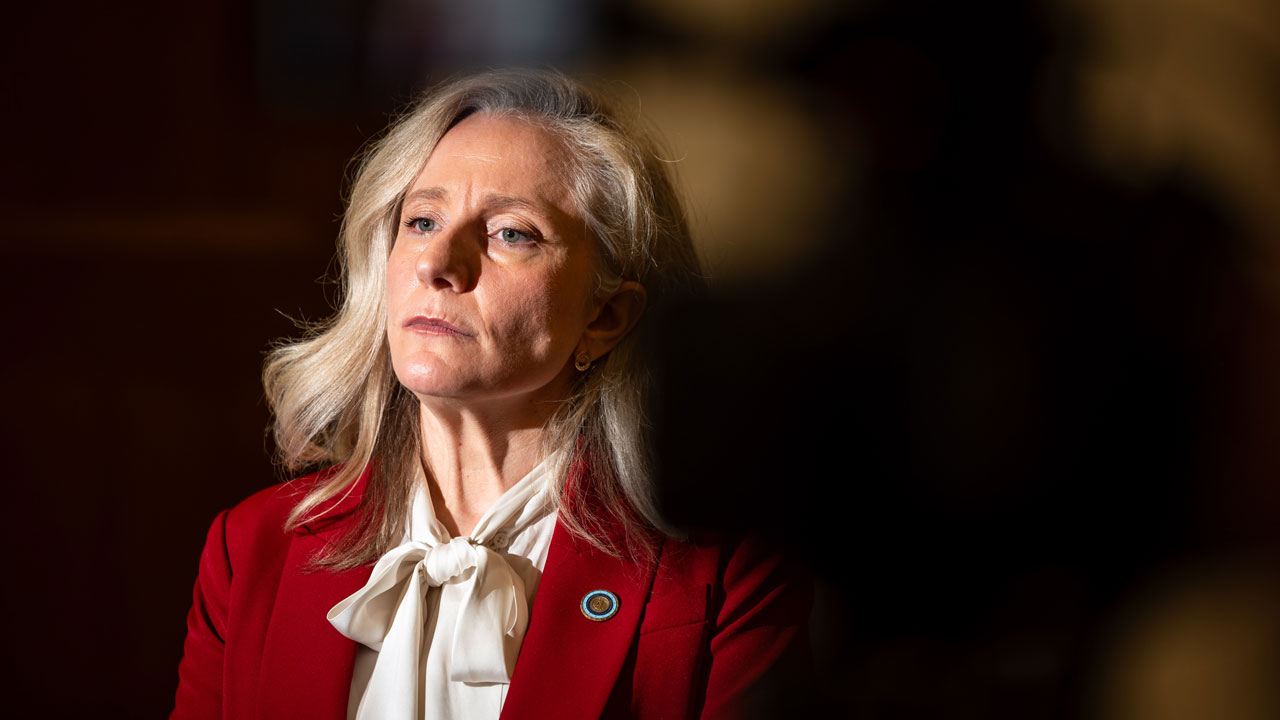
Virginia Gov. Abigail Spanberger’s new 2026 energy plan has arrived in familiar packaging, promising affordability, reliability, economic growth, cleaner power, and a path to a net-zero electric sector by 2050. Under this plan, we’re to believe Virginians can have their green-energy cake and eat it, too.
Unfortunately, they can’t.
No matter how good her intentions, the governor’s mandates can’t suspend the laws of physics or economics.
Elected officials can stress affordable and reliable power, or they can prioritize aggressive carbon targets. They can’t (honestly) commit to both, especially on the timetable the Virginia Clean Economy Act and the Regional Greenhouse Gas Initiative require.
Someone will pay the difference. That someone is you, the ratepayer.
The plan’s central flaw is not the desire for cleaner air or a stronger economy. Every serious policymaker wants those things. The flaw is assuming net-zero mandates are the electric system’s primary job, and that costs and reliability will follow. They will not.
TRENDING ARTICLES



The electric grid exists to provide electricity when and where it is needed. Keeping the lights on for families, hospitals, manufacturers, and the data centers Virginia has already built should be job No. 1. Environmental goals are certainly a consideration, but they cannot serve as the organizing principle.
The governor’s own modeling makes the tradeoff plain. Under a moderate demand forecast, the plan puts direct electricity system costs from 2026 through 2050 at about $422 billion if Virginia stays on its current path — the Virginia Clean Economy Act plus RGGI. Drop those requirements, and you get the ‘no-mandate’ version, which the same modeling predicts will cost about $295 billion.
That’s a difference of roughly $127 billion, which is what state Sen. Mark Obenshain correctly flagged as a serious problem for the plan. Building on that theme, House Minority Leader Terry Kilgore explained that the 2026 plan “is the strongest argument we’ve seen yet for repealing the Virginia Clean Economy Act and getting Virginia out of RGGI.”
But the governor’s plan creatively reverses the predicted costs by adding two figures that you’ll likely never see explicitly labeled on your utility bill: a $285 billion “social cost of carbon” and $145 billion in modeled health impacts. Stack those on the no-mandate case, and it magically becomes the “expensive” option, at $725 billion.
Obenshain correctly points out that the social cost add-ons rest on “wildly speculative assumptions.” That’s because Social Cost of Carbon (dioxide) estimates are easily manipulated to justify a modeler’s preferred energy policy, in this case, more expensive and unreliable “green” energy. Modeled health and social cost estimates are only as good as the assumptions behind them: remember that, in computer modeling, “garbage in” equals “garbage out.
Virginia will also face problems with the plan’s demand for land, as well as the expectation that other states will be ready and able to bail us out. The governor’s plan admits we will need to convert as much as 277,000 acres of farms and forests to utility-scale solar installations. The plan will also continue to require a heavy dependence on power imports from other states and the PJM grid—approximately 30% under the plan’s own framing. That expectation could prove problematic as grid operators and elected officials point to expected shortfalls in PJM planning forecasts.
Critics also point out that the plan expects the average residential bill to reach $274 a month by 2039, which appears to conflict with the governor’s “clean-first, least cost” promises. In reality, the plan is not an affordability agenda; it is a cost shift with a green climate ribbon wrapped around it, and the RGGI program already shows how the shift works in practice.
Supporters pretend that RGGI is a market-based climate program. But in Virginia, it functions as a tax on reliable electricity generation. Fossil plants must buy an allowance for every ton of carbon dioxide—not conventional pollutants, which are already heavily regulated—and state law lets the utility pass that cost on to its customers. Then, just like when you pay your taxes, the state takes in the auction revenue.
Virginians have seen this situation before. When the commonwealth was in RGGI from 2021 through 2023, the Dominion rider was about $4 to $4.40 a month for a typical household using 1,000 kilowatt-hours. After Gov. Glenn Youngkin withdrew the state, that charge was removed from the bill. Spanberger put Virginia back in on July 1, 2026. But allowance prices have more than doubled: the September auction cleared at $37.65 a ton, up from $14.88 at the last auction before the exit.
To recover the cost of the RGGI allowances, Dominion Energy has sought permission from the State Corporation Commission to bill customers for almost $1.18 billion. That translates to roughly a $13-per-month increase for the average Virginia household utility bill. While the State Corporation Commission has not yet approved Dominion’s request, the ruling isn’t really in doubt.
Defenders answer with “rebates” and point to Virginia’s budget, which now returns 45% of auction proceeds back to residential and small-business credits. But officials have described the credit as only a few dollars a month, which clearly will not erase the cost of the RGGI program. Government cannot rebate money it has not first collected. Collection, compliance, and administration will all take a cut.
Of course, RGGI isn’t a Virginia-only mistake. States that prioritize rushed net-zero timelines are seeing the same pattern: higher rates, growing grid instability, and growing demand for subsidies (read: tax increases) or rate increases to cover the cost of rebuilding the electric grid.
Virginia’s demand growth makes the priority order nonnegotiable. Manufacturing, data centers, and population growth all mean we need power that shows up when it is called, not when the weather cooperates. That means dispatchable generation—gas and nuclear—planned on engineering criteria, not on an arbitrary 24-year, net-zero-by-2050 deadline.
On the issues of costs and reliability, the governor’s energy plan effectively asks Virginians to “trust me, Bro.” We are to believe that staying in RGGI and on the Virginia Clean Economy Act will cut costs, improve reliability, and grow the economy at the same time. But examples from around the country, Dominion’s proposed bill for RGGI, and the administration’s own cost estimates clearly say otherwise.
We should judge energy policy by some basic principles, like: Can families afford to pay their bill? Can people and businesses trust the system to provide power when they need it? Does the system hold up under stress, and can utilities get it back up and running quickly when it fails?
Virginia’s elected officials and utilities both need to reorient their thinking toward providing affordable, reliable, resilient electricity first and remember that everything else is secondary.

Read the first chapter of The Woketopus right now for FREE
Today, even with President Trump’s victory, leftist elites have their tentacles in every aspect of our government.
The Daily Signal’s own Tyler O’Neil exposes this leftist cabal in his new book, The Woketopus: The Dark Money Cabal Manipulating the Federal Government.
In this book, O’Neil reveals how the Left’s NGO apparatus pursues its woke agenda, maneuvering like an octopus by circumventing Congress and entrenching its interests in the federal government.
You can read the first chapter of this new book for FREE in this eBook, The Woketopus: Chapter One using the secure link below.
TRENDING ARTICLES


The Daily Signal depends on the support of readers like you.
RELATED ARTICLES




Don’t miss the

Don’t miss the signal