

The Trump administration’s proposed changes to the 2030 U.S. census, to cease counting illegal immigrants, could boost congressional seats and electoral votes for battleground states such as Pennsylvania and Wisconsin at the expense of large states such as California and Texas, research suggests.
A 2024 study projected immigration trends under the Biden administration for the 2030 census, said Steven Camarota, director of research at the Center for Immigration Studies. Those projections would be altered by President Donald Trump’s existing crackdown on illegal immigration and could be reversed entirely under the census proposal.
“This census proposal could flip the dynamic,” Camarota told the Daily Signal. “Midwestern states would not lose as much, nor would Texas or California, which have large immigrant populations, both legal and illegal, gain as much.”
The current census model apportions congressional districts to states based on total population rather than total citizens. But the administration published a regulation in the Federal Register last month, now open for public comment, that would no longer count illegal aliens or legal residents with a status lower than a green card. The new rule would also eliminate questions on the form about race and sexual preference.
The study shows that under the existing model of counting illegal immigrants, the 2030 census would result in California, Texas, Massachusetts, New Jersey, and Florida gaining congressional seats and electoral votes. Meanwhile, Minnesota, Ohio, Pennsylvania, South Carolina, Virginia, Washington, and Wisconsin, with a lower illegal immigrant population, would lose a seat in Congress. That would be reversed under the Trump plan, Camarota said.
There are about 24 million noncitizens in the country, of whom 13 million are illegal aliens and 3.6 million are temporary workers or another legal status that falls short of being a legal permanent resident. So the new rule could mean counting about 16 million fewer people, Camarota said.
TRENDING ARTICLES



Only citizens can legally vote in any congressional district, which are divided based on total population. Camarota notes it’s easier to win a congressional seat with a smaller voting pool than in a district with a larger one.
“It seems on its face, this would undermine the intent of one-man, one-vote,” Camarota said.
The report points to the 33rd Congressional District of Texas that has one-third noncitizens and 262,000 fewer voting-age citizens than the 21st District, where 6% are not citizens. California’s 40th Congressional District is one-third noncitizen, or about 233,000 fewer voting-age citizens than the state’s 4th District, where just 4% are noncitizens. New York’s 14th District is almost one-third noncitizens, with 172,000 fewer voting-age citizens than the state’s 27th District, where 1% are noncitizens.
“Illegal immigrants should not be counted in the census at all. It’s about congressional apportionment, and Congress is here to serve the citizens,” Mike Gonzalez, a senior fellow for national security policy at The Heritage Foundation, told the Daily Signal.
Gonzalez contends that striking the racial and sexual preference boxes from the census could strike a potential “fatal blow” to the Left’s balkanization of the country.
“The census has been the Left’s building block for identity politics,” he said.
Notably, Gonzalez added, a future Democrat president possibly taking office in 2029 likely couldn’t reverse it in time for the 2030 census.
“There may not be enough time for a future administration to add this back. They would have 11 months. They might have to wait to 2040 to reverse this,” Gonzalez said.
Not all Democrats have been subtle about a potential advantage from counting illegal immigrants. At an October 2021 House Foreign Affairs Committee hearing, Rep. Yvette Clarke, D-N.Y., said, “I need more people in my district just for redistricting purposes, and those members could clearly fit here.”
The Center for Immigration Studies’ 2024 study extrapolated from 2020 census data and compared the immigrant count to what the count would have been without immigrants.
As a result of the immigrant population in the 2020 census, California and New York benefited the most, respectively, with eight and three extra House seats, according to the Center for Immigration Studies report. Florida has two additional seats, while Illinois, New Jersey, Rhode Island, and Texas have one additional seat because of immigrants.
Immigration caused other states to lose a House member, which included battleground states Arizona, Georgia, Michigan, North Carolina, and Pennsylvania. The rest were red states of Idaho, Indiana, Iowa, Kentucky, Louisiana, Missouri, Oklahoma, Tennessee, Utah, and West Virginia. Ohio had two fewer seats than it otherwise would have.
When looking only at the illegal immigrant count, it would distribute another seven seats in 2030. Without factoring in a proposed new census model or the Trump administration’s crackdown on illegal immigrants, the Center for Immigration Studies study shows that Texas and California would each have two additional seats in 2030 from illegal immigrants. Meanwhile, Massachusetts, New Jersey, and Florida would each have one additional seat.
The losers would be the states of Minnesota, Ohio, Pennsylvania, South Carolina, Virginia, Washington, and Wisconsin, which would have one fewer seat due to illegal immigrants being included in the 2030 census.
Counting legal and illegal immigrants, the numbers are even larger.
California would have nine more House seats in 2030 than it would have had without immigrants. Immigrants in 2030 would cause New Jersey and Florida to have three more seats under the previous trends. Massachusetts, New York, and Texas would get two more seats than they otherwise would have had without counting immigrants. Georgia would get one extra House seat.
Under the previous 2030 projection that did not factor in a new census proposal, a new census policy, or a crackdown on illegal immigration, Wisconsin and Ohio would have two fewer seats. States that would lose one seat are Colorado, Illinois, Minnesota, Oregon, Virginia, Washington, Michigan, Pennsylvania, Alabama, Arkansas, Iowa, Kentucky, Missouri, Oklahoma, South Carolina, South Dakota, Tennessee, and West Virginia.

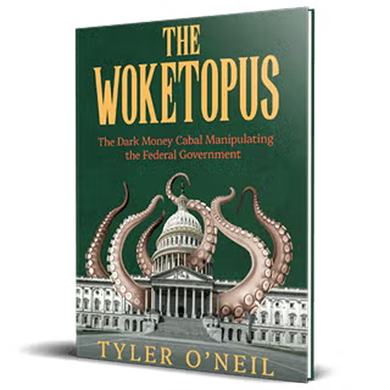
Read the first chapter of The Woketopus right now for FREE
Today, even with President Trump’s victory, leftist elites have their tentacles in every aspect of our government.
The Daily Signal’s own Tyler O’Neil exposes this leftist cabal in his new book, The Woketopus: The Dark Money Cabal Manipulating the Federal Government.
In this book, O’Neil reveals how the Left’s NGO apparatus pursues its woke agenda, maneuvering like an octopus by circumventing Congress and entrenching its interests in the federal government.
You can read the first chapter of this new book for FREE in this eBook, The Woketopus: Chapter One using the secure link below.
TRENDING ARTICLES


The Daily Signal depends on the support of readers like you.
RELATED ARTICLES





Don’t miss the

Don’t miss the signal