Presidential Ping-Pong: National Monuments Were Not Meant to Protect Millions of Acres
For decades, presidents have abused the Antiquities Act of 1906, stretching the law far beyond Congress’ clearly stated intent regarding monuments.
Congress passed the law to protect specific (pre)historic and scientific objects, including monuments. It was not meant as a blank check for future presidents to sidestep congressional oversight and lock up areas the size of small states with a stroke of a pen.
In a 2018 Washington Examiner article, I explained how the original law’s text placed a careful and deliberate limit on presidential power regarding monuments.
“In all cases,” Congress wrote, the area set aside “shall be confined to the smallest area compatible with the proper care and management of the objects to be protected.”
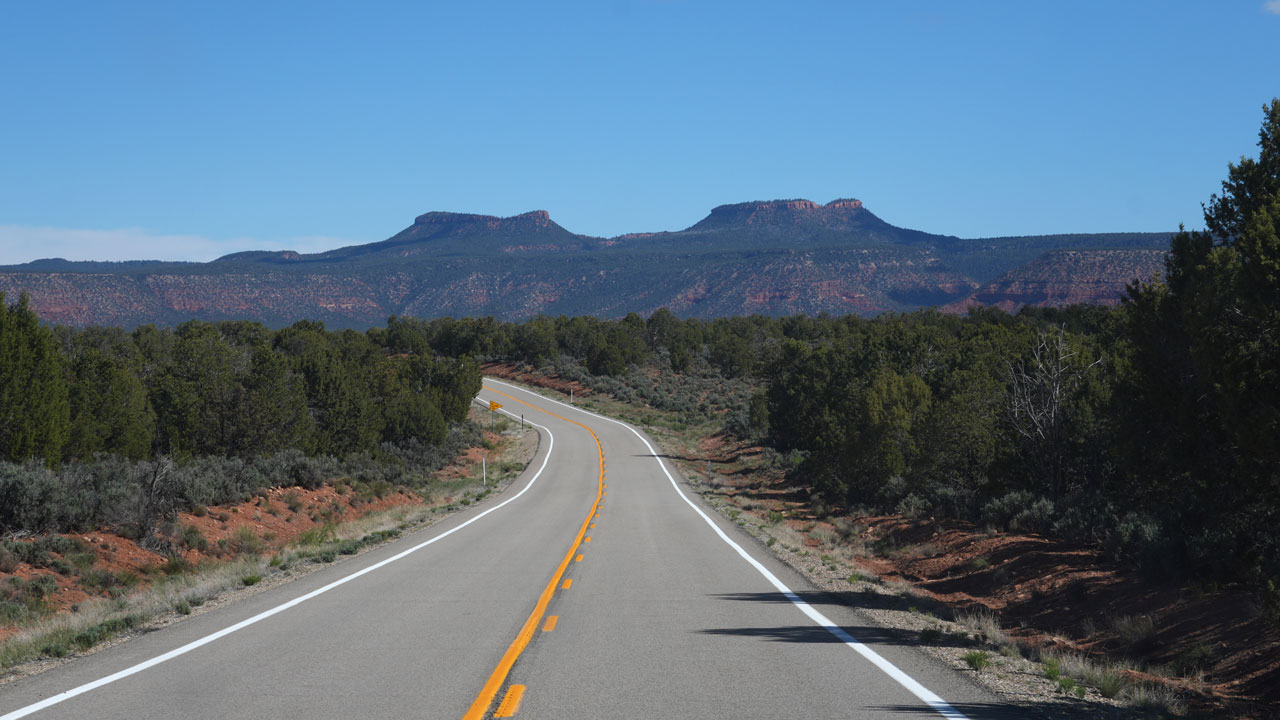
Eight years later, the two monuments I discussed in that article–Bears Ears and Grand Staircase-Escalante National Monuments in Utah—are back in court.
On July 13, President Donald Trump issued proclamations reducing the Bears Ears National Monument from about 1.36 million acres to about 121,000 acres, and Grand Staircase-Escalante from about 1.87 million acres to about 181,500 acres.
TRENDING ARTICLES


Combined, the proclamations remove nearly 3 million acres from monument status and confine the remaining units to identified objects and the land needed to manage them, exactly as the text of the 1906 law required.
The president’s proclamations correctly refocus on the wording of the Act, recognizing that the “area reserved for the monument” should “be the smallest area compatible with … proper care and management.”
The proclamations also correctly point to the value in restoring public access to the areas and reestablishing historical multiple-use activities, like “grazing, timber harvest, fishing, hunting, resource development, infrastructure upgrades, and motorized recreation.”
Conservation groups, outdoor retailers, and some tribal governments have reopened a 2017 case and filed a familiar set of new challenges.
Amusingly, the litigants overlook the presidential abuse of the act in establishing the monuments to attack the reduction of the monuments as “executive fiat.” But their arguments are a motte-and-bailey fallacy.
The motte: a true and well-supported claim that archaeological sites, cultural heritage artifacts, and fossils deserve protection. The bailey: their specious legal claim that the 1906 law authorizes a president to unilaterally and indefinitely impose strict prohibitions on the use of public lands that subsequent presidents can do nothing to alter this ever-tightening regulatory ratchet, and that any attempts to do so undermine all conservation efforts
Despite overwrought headlines claiming “places that took millions of years to form” will be “destroy[ed] with the stroke of a pen,” the land will not disappear if the monument’s boundary is redrawn. The areas will remain federally managed public land and subject to a host of strict federal laws and regulations. What will change is whether one person can unilaterally impose monument restrictions on entire regions that Congress never voted to lock up at that scale.
Most will not read the act to confirm that Congress authorized presidents to protect “historic landmarks, historic and prehistoric structures, and other objects of historic or scientific interest” on land owned or controlled by the United States.
Beyond that, the above-noted “smallest area” limitation was explicit. A scientific or historic object is not an entire landscape. A cliff dwelling, fossil bed, or ruin does not require a multimillion-acre envelope wrapped around it to be protected.
If a president must confine a monument to the smallest compatible area, then a subsequent president who finds a predecessor reserved far more than needed is not attacking conservation but applying the very limit that Congress intended. Instead, presidents have expanded their authority, redefining “objects of scientific interest” to mean entire ecosystems, viewsheds, recreation economies, and climate narratives.
President Barack Obama took the abuse of this law to new lengths (more than doubling President George W. Bush’s actions), setting aside more than 553 million acres in 29 separate designations.
Bears Ears was initially set aside in the final days of the Obama administration. After taking office, Trump reduced the monument, then President Joe Biden restored it. The result has been a game of political ping-pong that I described in 2018, where “seesawing designations and confusion over the exact areas being set aside puts management of these monuments into a state of political limbo.”
The Supreme Court has so far avoided deciding how far a president can stretch the Act.
However, in 2021, after declining to hear a challenge to a vast Atlantic marine monument, Chief Justice John Roberts warned the “smallest area compatible” restriction “has ceased to pose any meaningful restraint.” He pointed out that “A statute permitting the President in his sole discretion to designate as monuments ‘land-marks,’ ‘structures,’ AND ‘objects’ — along with the smallest area of land compatible with their management—has been transformed into a power without any discernible limit to set aside vast and amorphous expanses of terrain above and below the sea.”
Federal and state legislators have the authority to create parks, wilderness preserves, or recreation areas. So, if landscape-scale conservation is the popular and appropriate goal, why is a unilateral presidential proclamation preferred over an act of Congress? Why is there little to no opportunity for input from local communities and state legislators?
Monument advocates should leave behind their emotional outbursts for more reasoned legal arguments as they answer the question: Why does the “smallest area compatible” offer no meaningful restriction on presidential power?
Specific historical and scientifically valuable objects can and should be protected, promptly, when they are at risk. But permanent decisions about millions of acres of the public domain belong to the people’s representatives, not to a signature ceremony in the last weeks of an outgoing president.
Restoring the Antiquities Act to its original purpose will not end conservation. It would end the pretense that conservation requires unbridled executive power. Durable land-use decisions should be made through the democratic process, not by presidential decree.
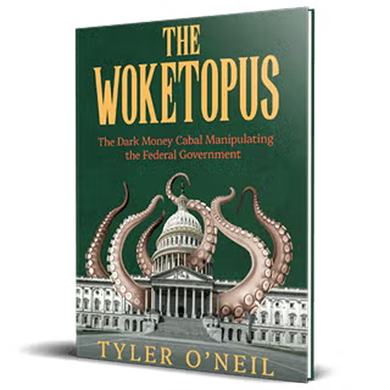
Read the first chapter of The Woketopus right now for FREE
Today, even with President Trump’s victory, leftist elites have their tentacles in every aspect of our government.
The Daily Signal’s own Tyler O’Neil exposes this leftist cabal in his new book, The Woketopus: The Dark Money Cabal Manipulating the Federal Government.
In this book, O’Neil reveals how the Left’s NGO apparatus pursues its woke agenda, maneuvering like an octopus by circumventing Congress and entrenching its interests in the federal government.
You can read the first chapter of this new book for FREE in this eBook, The Woketopus: Chapter One using the secure link below.


The Daily Signal depends on the support of readers like you.
RELATED ARTICLES





Don’t miss the

Don’t miss the signal