‘Gaslighting,’ ‘Toxic,’ ‘Trauma’: How Therapy-Speak Is Changing Family Life
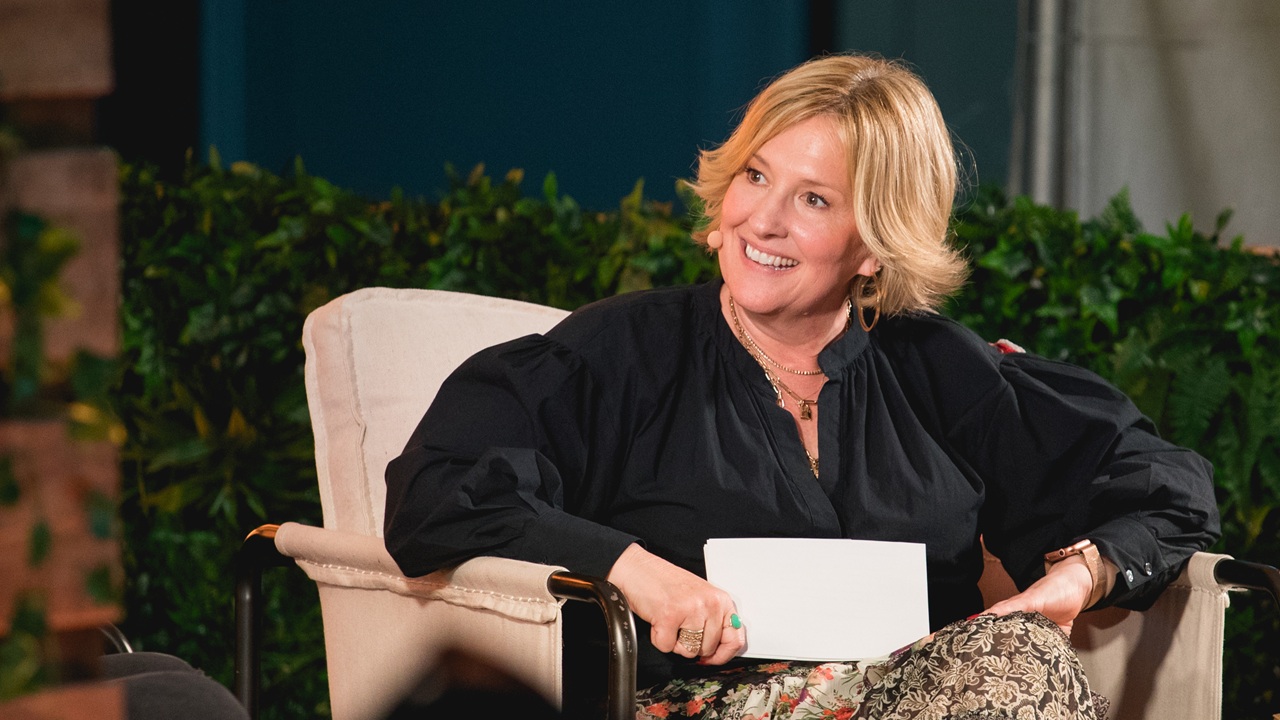
This is an adapted excerpt from Noelle Mering’s new book “No Contact: How a Seductive Ideology Broke Families and Friendships and How We Can Repair Them,” released Sept. 8 from Forum Books.
In 2022, Merriam-Webster declared gaslighting its word of the year after searches for the term increased by more than 1,700%. “It’s a word that has risen so quickly in the English language, and especially in the last four years, that it actually came as a surprise to me and to many of us,” said Peter Sokolowski, Merriam-Webster’s editor at large. “It was a word looked up frequently every single day of the year.”
There is a rapid rise in Americans framing ordinary life through the lens of therapeutic language. And as the categories of the therapeutic expand, ordinary life increasingly appears pathological. We now speak casually of toxic people, trauma, narcissists, emotional safety, triggers, boundaries, and gaslighting. Some of this cultural shift can work toward the good. Mental illness has become less stigmatized, and people who once might have suffered silently feel freer to seek help.
Yet every cultural correction invites overcorrection. While it’s a good thing that those who need therapy seek it, the unchecked spread of therapy-speak and the ease of self-diagnosis carry serious cultural and relational costs. A challenging friend or relative can be dismissed as toxic. If someone pushes back on my perspective, I can either engage in self-reflection or accuse that person of gaslighting me. Therapy-speak makes it difficult to distinguish between genuine psychological manipulation and ordinary human conflict. The ordinary frictions of life turn into catastrophes.
As I sat in a café working on this piece, a teenager next to me discussed her newly released SAT scores with her friend. She had taken and then retaken the test, expecting a higher score—but her score didn’t improve. “This is literal trauma,” she lamented. Her friend nodded knowingly and agreed the process was deeply traumatic. College entrance exams can be stressful, especially for an 18-year-old carrying high expectations and perhaps without a context for actual trauma.
That teens use dramatic language is nothing new. I remember complaining with elongated vowels, “Mom, I am dyyying,” to convey fatigue after a long ballet class or an arduous exam when I was a teen. But I knew I wasn’t dying.
TRENDING ARTICLES



Therapeutic language, however, is just plausible enough to begin to invade our inner world and reframe our outer one. It can shape, reinforce, and freeze emotional states rather than help us work through them. Yesterday’s teenage hyperbole conveyed a fleeting feeling. Today’s therapy speak calcifies a fleeting feeling into a diagnosis.
Social media accelerated this transformation. A passing curiosity about anxiety, childhood wounds, or difficult family relationships can quickly become an immersive algorithmic world of therapist influencers, self-diagnoses, and quizzes about “toxic families” that invite users to reinterpret ordinary family conflict through the language of trauma. Over time, these online ecosystems trained a generation to see themselves and their relationships through the lens of identity and injury, to conflate emotion with truth, and to regard disagreement as harm. Young adults became fluent in therapeutic language but often impoverished in the habits that make real relationships sustainable.
Part of what makes these messages so compelling is what psychologists call the Barnum Effect—our tendency to recognize ourselves in descriptions so broad they could apply to almost anyone. In 1948, psychologist Bertram Forer gave his students what they believed were individualized personality assessments. Students rated them as remarkably accurate. Only afterward did they discover that every student had received the exact same personality profile.
Many therapist influencers employ a similar dynamic. “If your parents dismissed your feelings … ” “If you felt you had to earn love … ” “If you were always the responsible child … ” Such statements resonate because, to one degree or another, nearly everyone has experienced them. They’ve just enough truth to feel revelatory.
The subtle sleight of hand is that what is nearly universal comes to appear clinically significant, encouraging viewers to reinterpret the normal wounds and frustrations of family life as evidence of psychological pathologies. This reinterpretation becomes even more persuasive in a culture that rewards grievance by conferring moral authority on the victimized.
Perhaps nowhere are the consequences more visible than in the rise of the no-contact phenomenon. A practice once reserved for escaping genuinely abusive or dangerous relationships is often now presented as the appropriate response to a much broader range of ordinary family wounds. As the therapeutic categories expand, so too do the moral justifications for severing ties.
The family is a formation in forgiveness and maturation because it’s the first place we intimately experience imperfect people as well as face the humbling reality of our own limitations. These are healthy and hard experiences. When therapeutic categories are indiscriminately applied to ordinary family life, they can function like an autoimmune disorder, attacking the very system they need to be truly healthy.
No single idea comprehensively explains the rise of the no-contact phenomenon. It emerged from the convergence of several cultural currents that have reshaped how we understand the self, family, obligation, and freedom. The rapid rise of therapy-speak is one of those currents, but it is a particularly influential one because it changes how think about relationships as well as how we experience them.
When language loses its precision, moral judgment loses its proportion, flattening distinctions upon which every relationship, every family, and ultimately every society, depends. A culture that can’t distinguish between ordinary suffering and genuine catastrophe will eventually fail to respond rightly to either. Recovering those distinctions might be one of the most important acts of true compassion we can undertake.
We publish a variety of perspectives. Nothing written here is to be construed as representing the views of the Daily Signal.
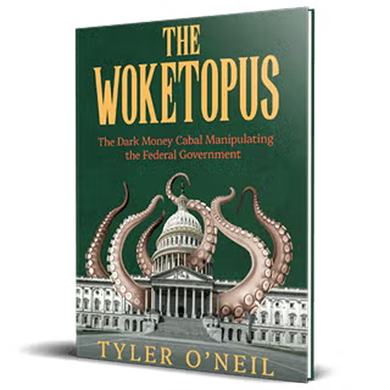
Read the first chapter of The Woketopus right now for FREE
Today, even with President Trump’s victory, leftist elites have their tentacles in every aspect of our government.
The Daily Signal’s own Tyler O’Neil exposes this leftist cabal in his new book, The Woketopus: The Dark Money Cabal Manipulating the Federal Government.
In this book, O’Neil reveals how the Left’s NGO apparatus pursues its woke agenda, maneuvering like an octopus by circumventing Congress and entrenching its interests in the federal government.
You can read the first chapter of this new book for FREE in this eBook, The Woketopus: Chapter One using the secure link below.
TRENDING ARTICLES


The Daily Signal depends on the support of readers like you.
RELATED ARTICLES





Don’t miss the
Don’t miss the signal