
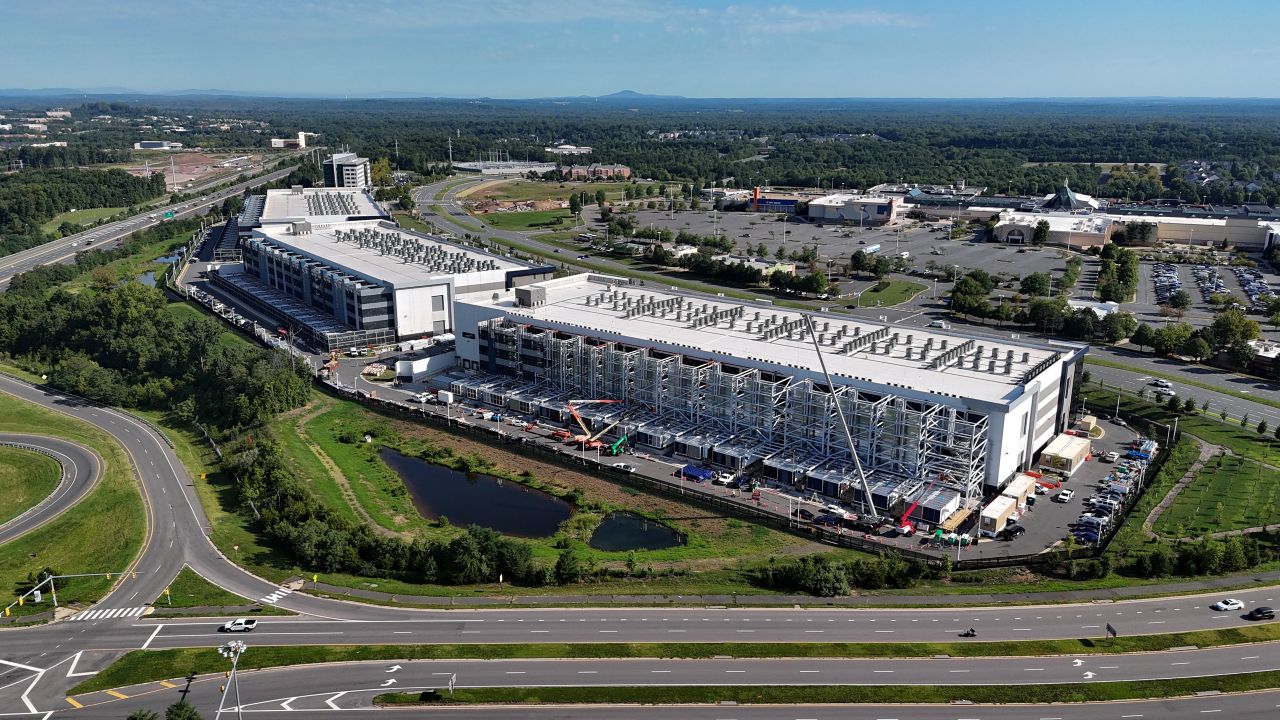
Data centers are shaping politics and elections across the country, but that is especially true in Georgia, which has a critical gubernatorial election and a Senate race that could determine the balance of power in Washington.
Democrats and Republicans are scrambling to solidify their policies toward data centers in the Peach State. Their approaches and the policy implications that follow could prove critical come Election Day.
Recently, Sen. Raphael Warnock, D-Ga., announced his support for a statewide data center moratorium. Warnock came out in support of the moratorium after visiting the location that OpenAI is preparing for a large-scale data center in Effingham County, Georgia.
While Warnock said he would allow certain exceptions to this moratorium, the office of Gov. Brian Kemp and others believe different policy approaches could be better suited to serve Georgia communities and the Georgia economy.
Warnock and Kemp will not be on the ballot this November, but both men are critical players shaping how their parties respond to data centers.
Kemp’s Data Center Strategy
Annalise Morning, the deputy press secretary and digital media manager for Kemp, discussed the governor’s position on a moratorium in an email to the Daily Signal.
TRENDING ARTICLES



“The Governor does not support a blanket, statewide moratorium on data centers but instead supports empowering local communities to choose whether data centers or any other kind of development is right for them or not,” Morning wrote.
In Effingham County, after citizens asked for more information for the community regarding the project, OpenAI pledged to invest $80 million in a community fund. By doing so, the company stated its hope to take citizens’ concerns into account by committing to various measures.
Utility prices are a big concern. An agreement for Georgia Power to power the OpenAI data center was recently accepted by state regulators. The contract requires 3,200 megawatts of power. The utility also stated its intent to commit to further steps that would prevent Georgians and small businesses from shouldering these additional data centers’ power costs.
Writing for the Atlanta Journal-Constitution, Republican gubernatorial candidate Rick Jackson, the man looking to succeed Kemp as governor, acknowledged the economic benefits of data centers but believes local communities should be involved.
“Data centers must have local support, provide a clear local benefit, pay their own way and meet strong environmental standards,” Jackson wrote.
At a Chamber of Commerce Congressional Luncheon earlier last month, Rep. Mike Collins, R-Ga., told reporters that data centers “are local issues, and they [data centers] need to be decided from a local perspective.”
Collins, who is looking to unseat Sen. Jon Ossoff in November’s election, also highlighted the national security implications of data centers. “We are in a AI race with China,” Collins said.
J. Thomas Perdue, policy analyst at the Georgia Public Policy Foundation, told the Daily Signal that data centers are necessary, but data centers also need to be transparent about the impacts they will have on the community.
“It’s important that stakeholders have a clear understanding of the facts, understand the services that data centers actually provide, and do not fall for common misconceptions,” Perdue said.
Republican strategist Katie Frost believes data center moratoriums are misguided. “A moratorium is an easy way to just get out in front of it now, but it doesn’t actually address the problem if we don’t have an answer and a new policy in place once that one-year moratorium runs out,” Frost told the Daily Signal. “It doesn’t actually provide a solution.”
Data Centers Impact Down-Ballot Races
Races down ballot will also be affected by data center policy.
Josh Tolbert, a Public Service Commission candidate, believes the PSC can serve a vital role in data center development and is campaigning on his plan. “You’ve probably heard a lot about Senate bills and ratepayer protection pledges, those don’t comprehensively solve the problem,” Tolbert said. “It’s the PSC that must make sure that some of these indirect costs … are not being passed on to the ratepayer.”
While data centers might not be on every voters’ radar, the second order effects of data center development certainly will, according to general consultant Stewart Bragg.
Bragg told the Daily Signal that while data centers might not sway voters one way or another this fall, “the issues surrounding them absolutely could. Voters care about their power bills, water use, infrastructure, and quality of life.”
Issues such as “affordability and accountability” when it comes to data centers will shape “the stronger argument”, Bragg said.


Read the first chapter of The Woketopus right now for FREE
Today, even with President Trump’s victory, leftist elites have their tentacles in every aspect of our government.
The Daily Signal’s own Tyler O’Neil exposes this leftist cabal in his new book, The Woketopus: The Dark Money Cabal Manipulating the Federal Government.
In this book, O’Neil reveals how the Left’s NGO apparatus pursues its woke agenda, maneuvering like an octopus by circumventing Congress and entrenching its interests in the federal government.
You can read the first chapter of this new book for FREE in this eBook, The Woketopus: Chapter One using the secure link below.
TRENDING ARTICLES


The Daily Signal depends on the support of readers like you.
RELATED ARTICLES





Don’t miss the

Don’t miss the signal
