
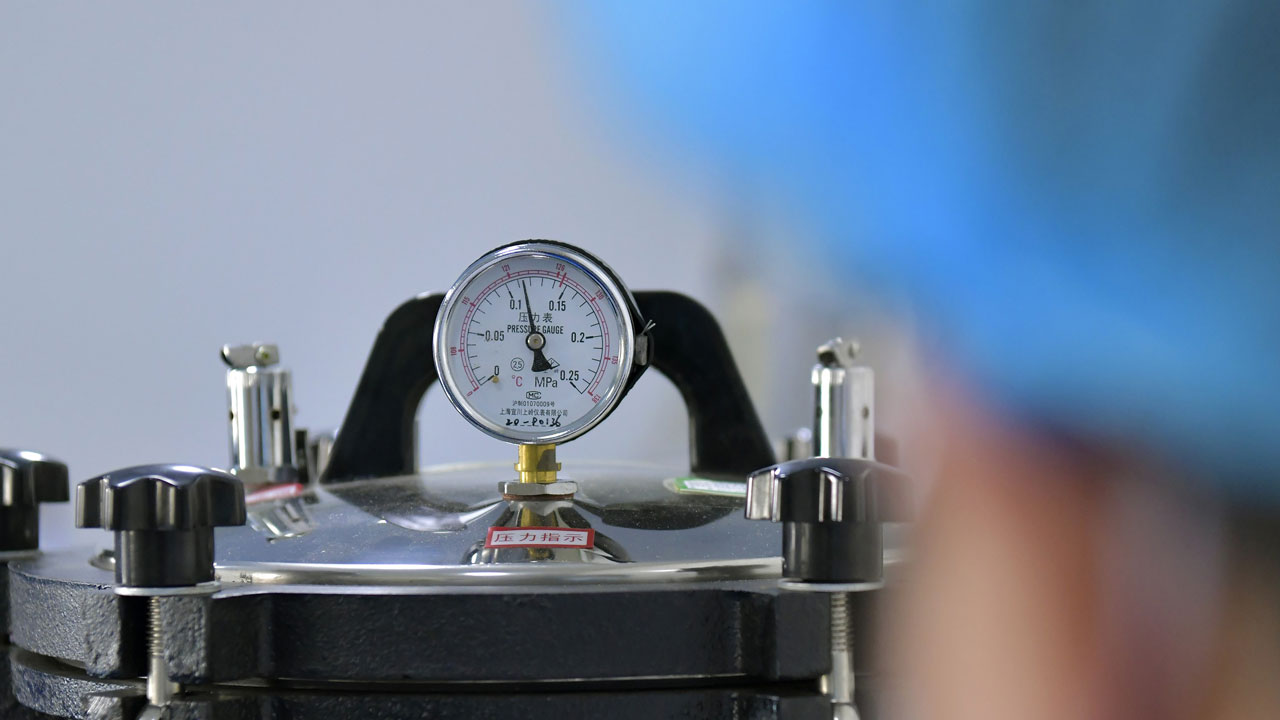
It is extraordinary to contemplate how, six short years ago, during the COVID-19 pandemic, the entire world faced challenging shortages of medical supplies and equipment.
Even the United States was not immune.
The president invoked the Defense Production Act to safeguard American medical supply chains while governments everywhere scrambled to secure the supplies and equipment needed to treat their populations in the face of a novel illness.
It is an unfortunate fact that even in developed countries, medical product shortages were already common before the pandemic, and shortages in U.S. hospitals for many medical supplies persist today, albeit not at the emergency levels that led to extreme policy measures during the pandemic.
Yet, if anything salutary could come from the pandemic, one would hope that the examples of U.S. car companies being made to repurpose their factories to build ventilators, and alcohol companies redirecting their efforts from producing booze to sanitizers, would ground American policymakers with the firm determination to foster medical supply chains sufficiently robust to ensure that American medical providers can rely on the supplies they need to treat American patients. That should be especially so when demand becomes stressed.
Balancing the need to foster agile, domestic medical supplies against the complex, global nature of these supply chains is not an easy task, but at minimum, we should expect our leaders to take care that they are not suppressing the U.S. medical device industry.
TRENDING ARTICLES



So, it was alarming in April 2023, barely two years after the COVID-19 vaccine became available and just as life was returning to normal, when the U.S. Environmental Protection Agency proposed to enact stringent regulations to limit ethylene oxide emissions by medical sterilization facilities.
The EPA then finalized that regulation in 2024.
Ethylene oxide is a gas that is naturally ubiquitous in the air around us, and which occurs naturally in our bodies. Nonetheless, when inhaled at elevated levels, ethylene oxide is a known carcinogen.
However, when it’s not inhaled, ethylene oxide is critically important as a disinfectant used to sterilize more than 20 billion medical devices each year, which are too sensitive to be sterilized with heat or steam. In fact, the U.S. Food and Drug Administration estimates that ethylene oxide is used to sterilize approximately 50 percent of all sterilized medical supplies, and EPA acknowledges that ethylene oxide is used to sterilize 95 percent of all surgical kits used in the U.S.
The FDA therefore raised major concerns over the effect that the EPA’s proposal would have on the U.S. medical supply chain, which the environmental agency essentially ignored when adopting the 2024 regulation.
Ethylene oxide has been used in a variety of contexts since its fumigation properties were first discovered in 1928, and medical sterilizers in fact account for less than 3 percent of all ethylene oxide emissions in the U.S.
Recognizing both the critical importance of the medical sterilization industry, and the industry’s negligible share of ethylene oxide emissions nationally, the EPA determined decades ago that the medical sterilization industry was not a significant source of ethylene oxide emissions.
Nevertheless, given that ethylene oxide has been used industrially and regulated for decades, there are long-established, well-known methods to limit ethylene oxide emissions, which include using thick walls and doors, automated systems to limit human exposure, aeration, and environmental monitoring.
Yet, rather than rely on established methods to reduce ethylene oxide emissions from the sterilizers, the EPA sought to enforce untested Permanent Total Enclosure requirements to prevent virtually any ethylene oxide from escaping the facility.
Although these have been used in the context of smaller food packaging warehouses, such systems would be prohibitively expensive in the context of medical sterilization facilities that are 25-50 times larger and have never been shown to work on such a scale.
At a minimum, facilities would have to close for months to construct the newly required PTEs—EPA admits that it was unable even to estimate how long such closures would last, and given the cost, some might never reopen.
There were concerns that medical sterilizers would need to raise prices to cover the higher costs, or that medical equipment would now need to be imported to fill the gaps, thereby undermining U.S. medical supply chains.
Legislators and the FDA even expressed concerns that resulting shortages in sanitized medical equipment could lead to higher hospital infection rates.
Given the tremendous costs, the critical importance of the industry, and the minimal reduction in ethylene oxide emissions that would result, it seems clear that the EPA violated its statutory duty to take costs into account in administering its regulations.
Fortunately, these damaging regulations never went into effect.
Citing the national security implications of undermining the U.S. medical equipment supply chain, a presidential proclamation last year delayed the scheduled onset of the 2024 regulations by two years.
Better yet, the EPA has proposed to rescind the 2024 rule that threatened to impose these prohibitive requirements on the U.S. medical sterilization industry in the first place.
For the sake of the U.S. medical supply chain and American patients, we can only hope that the EPA follows through with its proposed rescission.

Read the first chapter of The Woketopus right now for FREE
Today, even with President Trump’s victory, leftist elites have their tentacles in every aspect of our government.
The Daily Signal’s own Tyler O’Neil exposes this leftist cabal in his new book, The Woketopus: The Dark Money Cabal Manipulating the Federal Government.
In this book, O’Neil reveals how the Left’s NGO apparatus pursues its woke agenda, maneuvering like an octopus by circumventing Congress and entrenching its interests in the federal government.
You can read the first chapter of this new book for FREE in this eBook, The Woketopus: Chapter One using the secure link below.
TRENDING ARTICLES


The Daily Signal depends on the support of readers like you.
RELATED ARTICLES




Don’t miss the

Don’t miss the signal
