
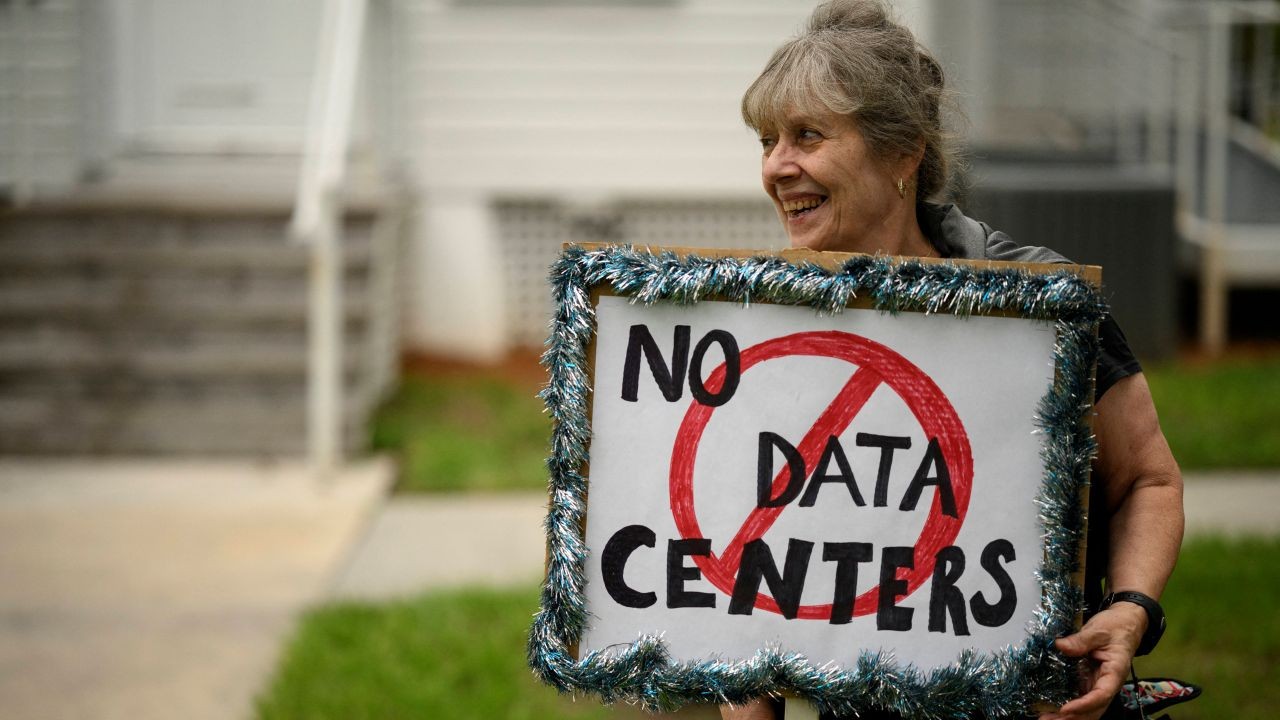
Recently, Georgians across the state have expressed concerns over the potential for new data centers to be built in their communities.
Examples include a $20 billion project being discussed in Effingham County. Massive development projects raise many bipartisan issues, including the possibility of tax hikes and higher water and electricity costs.
“It’s easy to say you’re not going to put it on the consumers, but there’s a lot of hidden costs that get put on them,” Georgia state Sen. Chuck Hufstetler, a Rome Republican, told the Daily Signal.
“Georgia Power is incentivized to build big, expensive things because they make more profit, but then that makes the rates go up much faster than in places that don’t have that incentive built in,” he added.
Earlier this year, Hufstetler reintroduced Senate Bill 34, legislation aimed at ensuring tech companies pay for the energy infrastructure costs required to power them.
Another contentious issue, he said, is the sales tax exemption many states offer to incentivize data center development.
TRENDING ARTICLES



“Those exemptions add up, just on the state, to a billion and a half dollars, which is more than a month’s total income tax revenue we bring in in Georgia,” Hufstetler said.
As many residents across the country and in Georgia express their concerns at community meetings, the data center industry has launched an effort to assuage concerns and inform the public about the benefits of new development. Last month, Connected Georgia unveiled a website and YouTube channel aimed at getting out the pro-data center message.
Last week, many local residents challenged OpenAI, the organization known for ChatGPT, after it announced plans to construct a $20 billion data center in Effingham County.
In an email to the Daily Signal, Effingham County Board of Commissioners Chairman Damon Rahn said the board takes those concerns seriously.
“The county also recognizes that a project of this size raises important questions regarding water, power, traffic, noise, and environmental impacts. Those questions have been a central focus of our review,” he said.
When asked how the county plans to protect taxpayers, Rahn replied, “Project Camellia will receive electric service from Georgia Power under tariffs and service agreements approved by the Georgia Public Service Commission.
“Those PSC-approved requirements are designed to ensure that large-load customers, such as data centers, are responsible for the costs associated with the electric infrastructure needed to serve their operations, rather than shifting those costs to existing residential and small business customers.”
Mark Woodall, a lobbyist who works for the Sierra Club of Georgia, says the rapid growth of the data center industry is uniting Americans in opposition. “There’s one thing that independents, Democrats, and Republicans agree on: they all hate data centers,” he told the Georgia Recorder.
Brionté McCorkle, executive director of Georgia Conservation Voters, told the Daily Signal in an interview that some “concerns that we see communities speaking up about is the impact to water infrastructure in their communities.”
McCorkle noted that the organization’s position is not “anti-data center” or “anti-AI.” But when it comes to costs associated with these centers, they “should be borne by the large users themselves,” especially as the companies are “big tech companies with lots of money.”
She added, “They can certainly afford to pay more to reduce the burden on everyday Georgians.”
According to Hufstetler, Georgians may have different representation on the state’s Public Service Commission starting in January. The five-member commission has two of five seats up for election this November.
“There very well might be, come January, three of the five public service commissioners … will be more supportive of the residential customers and small businesses,” he said.


Read the first chapter of The Woketopus right now for FREE
Today, even with President Trump’s victory, leftist elites have their tentacles in every aspect of our government.
The Daily Signal’s own Tyler O’Neil exposes this leftist cabal in his new book, The Woketopus: The Dark Money Cabal Manipulating the Federal Government.
In this book, O’Neil reveals how the Left’s NGO apparatus pursues its woke agenda, maneuvering like an octopus by circumventing Congress and entrenching its interests in the federal government.
You can read the first chapter of this new book for FREE in this eBook, The Woketopus: Chapter One using the secure link below.
TRENDING ARTICLES


The Daily Signal depends on the support of readers like you.
RELATED ARTICLES





Don’t miss the

Don’t miss the signal