
Virginia’s need for plentiful, reliable energy is increasing every year. Former Virginia Gov. Glenn Youngkin developed an “all of the above” program during his administration to tap into any available source of power. That included promoting technologies such as a fusion plant in Chesterfield. While the technology hasn’t been proven commercially yet, it shows potential to be the power source of the future.
In October, Democrat Gov. Abigail Spanberger plans to unveil the 2026 Virginia Energy Plan to describe energy trends, identify challenges and opportunities across the energy system, and identify strategies that span 10 years and fit “the 2045 net-zero carbon energy economy for all sectors.”
This week, Spanberger rolled out one piece of her plan, a statewide “Switch Together” program, which will promote the use of solar panels on residential homes. “By using the power of the free market, leveraging the Commonwealth’s buying power, and cutting out middlemen, we are creating significant discounts for families and businesses,” the governor said in a news release. She said the program could save a family more than $6,000 on the installation of solar panels.
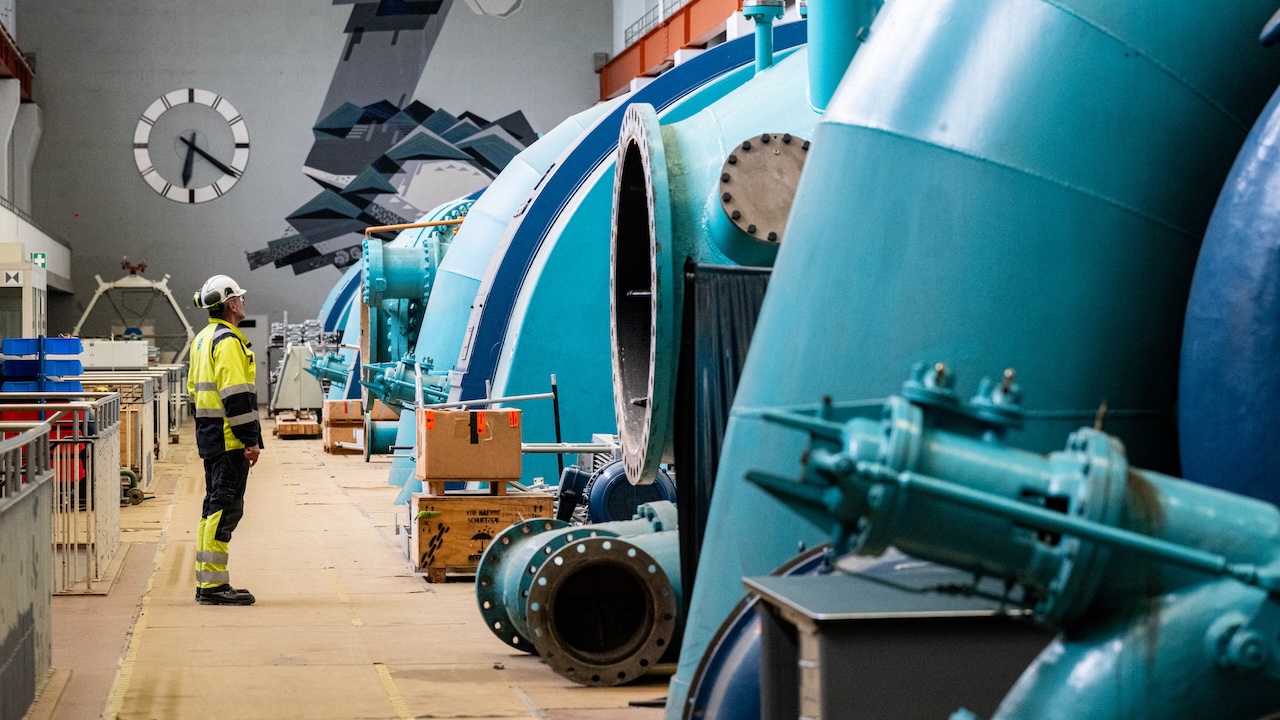
Another potential project is a pumped storage hydroelectric plant under development in Wise County. Pumped storage uses gravity to generate electricity by moving water from one reservoir to another.
Sandy Slayton is vice president of environmental for Rye Development, the company that is planning the facility. She told the Daily Signal how the project would work.
“We have an upper reservoir and a lower reservoir, and when we need additional energy on the grid, we can release water from the upper reservoir,” she said. “It goes down through the penstock, and it spins the turbine like a regular old hydropower project and generates energy. When we want to store energy, we pump it up to the upper reservoir.”
TRENDING ARTICLES



The actual amount of water in the two reservoirs remains the same, in the same way that the amount of sand in an hourglass remains the same even as it moves between bulbs. The water is simply moving from one reservoir to the other throughout the day, generating power at peak times by moving downhill, and using power at off-peak times to be moved back uphill.
“Pumped storage is the world’s largest, most proven energy storage technology,” Slayton told the Daily Signal. “It’s been around for a really long time. It accounts for about 90% of stored energy on the grid globally.”
The very first pump storage project opened in 1929. It’s still in service.
When it’s operational, the project would be able to generate 250 megawatts of electricity for 10 hours, or the water could be moved more quickly to generate 300 megawatts for eight hours. That’s enough to power tens of thousands of households simultaneously and would help balance out the grid even as the expected need for electricity in Virginia is increasing.
That flexibility is crucial. “Storage is needed for load growth, aging fossil fuel plants, transmission constraints, and extreme weather, and it helps ensure that we have electricity available when people need it—and not just when it’s generated, which helps to balance the grid,” Slayton said. The project would also create at least 1,000 jobs over a five-year construction cycle, along with 20 operational jobs for the life of the project.”
The property Rye is looking at once generated a different source of power: it’s a former coal mine. The company has experience working under these circumstances.
“It’s modeled on our project in Bell County, Kentucky, which is also on a former coal mine site,” Slayton said of the proposed Lewis Ridge Pumped Storage Project. “That site in Kentucky has five coal seams running under the upper reservoir at different elevations, so we have gotten a lot of experience understanding what questions we need to ask to be able to develop on that type of geology.”
When the Wise County project is ready to generate electricity, it is designed to be able to hook up to the grid relatively easily, which is one reason Rye was interested in working on a project in Virginia.
The proposal is still on the drawing board. Pumped storage hydropower is regulated by the Federal Energy Regulatory Commission (FERC). The approval process typically takes several years.
“It’s a long process,” Slayton said. “One of the things that’s good about it is this long process really makes sure that everybody comes to the table, and we get everything hammered out. We do want to be sure that we’ve thought through everything before we go into construction.”


Read the first chapter of The Woketopus right now for FREE
Today, even with President Trump’s victory, leftist elites have their tentacles in every aspect of our government.
The Daily Signal’s own Tyler O’Neil exposes this leftist cabal in his new book, The Woketopus: The Dark Money Cabal Manipulating the Federal Government.
In this book, O’Neil reveals how the Left’s NGO apparatus pursues its woke agenda, maneuvering like an octopus by circumventing Congress and entrenching its interests in the federal government.
You can read the first chapter of this new book for FREE in this eBook, The Woketopus: Chapter One using the secure link below.
TRENDING ARTICLES


The Daily Signal depends on the support of readers like you.
RELATED ARTICLES





Don’t miss the

Don’t miss the signal