Should Taxpayers Be on the Hook for Bailing out Large Corporations? New Legislation Suggests Yes

Taxpayers shouldn’t be subsidizing banks and large corporations. Nor should government be making bank failures more likely. But Congress just introduced bipartisan legislation that would do precisely that.
Sen. Bill Hagerty, R-Tenn., and Sen. Angela Alsobrooks, D-Md., both members of the Senate Banking Committee, have introduced the Main Street Depositor Protection Act, legislation that would require federal deposit insurance of up to $10 million per account for noninterest-bearing transaction accounts.
Meanwhile, Rep. Maxine Waters, D-Calif., the ranking member of the House Financial Services Committee, has introduced the Employee Paycheck and Small Business Protection Act, legislation that would allow the Federal Deposit Insurance Corp. to cover business deposits of up to $100 million. There have already been attempts to sneak this misguided policy into so-called must-pass legislation via an amendment to the fiscal year 2026 National Defense Authorization Act.
Currently, the standard deposit insurance amount is $250,000 per depositor per FDIC-insured bank. This means that joint accounts are effectively covered up to $500,000. It also means that 99% of all deposit accounts are fully insured—meaning ordinary Americans and small businesses are protected.
But the proposed legislation would extend federal deposit insurance to very large accounts held by very large businesses.
Because of the high dollar amount of the would-be newly insured deposits, this legislation would make it much more likely that the deposit insurance fund will be exhausted—forcing taxpayers to make up the difference. In the next financial crisis, taxpayer exposure would easily be in the tens of billions of dollars—and could well exceed $100 billion.
TRENDING ARTICLES


On top of that, the legislation makes bank failures more likely due to what economists call “moral hazard,” or the incentive to take on greater risk as a result of being protected from the consequences of risk-taking. Banks will have a tendency to make riskier, higher-yield loans to be able to attract depositors. Meanwhile, depositors will have no incentive to monitor the credit worthiness of the banks where they deposit money because the FDIC and taxpayers will pick up the tab if things go wrong.
Effectively, losses from risky bank management or decisions by large corporate depositors would be socialized, but profits would remain private. It creates a “heads I win, tails taxpayers lose” regulatory framework, putting the FDIC and taxpayers on the hook for the risky behavior of banks and their large depositors.
Lobbyists are hard at work to make this happen. Congress should not oblige them.

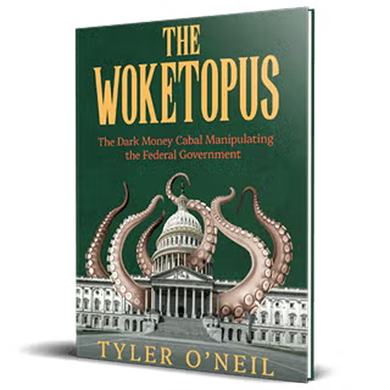
Read the first chapter of The Woketopus right now for FREE
Today, even with President Trump’s victory, leftist elites have their tentacles in every aspect of our government.
The Daily Signal’s own Tyler O’Neil exposes this leftist cabal in his new book, The Woketopus: The Dark Money Cabal Manipulating the Federal Government.
In this book, O’Neil reveals how the Left’s NGO apparatus pursues its woke agenda, maneuvering like an octopus by circumventing Congress and entrenching its interests in the federal government.
You can read the first chapter of this new book for FREE in this eBook, The Woketopus: Chapter One using the secure link below.
TRENDING ARTICLES


The Daily Signal depends on the support of readers like you.
RELATED ARTICLES





Don’t miss the

Don’t miss the signal