In case you haven’t heard, Anthropic co-founder Dario Amodei has published a new essay about the need to “pace” the class of products his own firm is pioneering. Amodei’s essay, plus a highly-orchestrated whistleblower campaign about the supposedly existential AI threat has elevated the debate about regulating frontier AI models. A consensus seems to be forming that the best option is a neutral, “third party” watchdog.
At first blush, this sounds promising. In practice, however, neutrality is as rare as a hundred karat diamond and as elusive as a snow leopard. I also have deep concerns about the “effective altruism” program that pervades the space. It’s hard to trust a watchdog made up of utilitarian atheists who think they’re building actual intelligent beings, and who, as Christopher Rufo put it, “have abysmal instincts on so many big-ticket issues—sexuality, addiction, climate, shrimp, human nature.”
Still, I assume that Amodei and others like him are sincere. But motives don’t much matter. If the structure is wrong, a watchdog will concentrate power rather than protect the public and enhance domestic innovation. That is, it will serve the firms it oversees and the political class that wants to choreograph the economy. Rather than sharpening the natural discipline imposed by market competition and civil liability, it will dull it.
Even if we set aside the visions of a murderous Super AI, reasonable people still worry about frontier risks. They would like some assurance before a system scales up and is released into the wild.
But first, let’s understand where we are. We don’t live in a lawless jungle. We already have powerful forces in place, including market competition and liability laws. If a company ships a harmful model, it will get sued. If the mistake is bad enough, it will die and its competitors will live on.
That is why companies have general counsels, insurers, and risk teams. Tort law is still sorting the details for large language models and agentic systems. (I myself am a party to the $1.5 billion class action settlement involving copyright violations by Anthropic.) Still, the basic incentive is strong: If you bear the risk, you invest in testing, red-teaming, guardrails, and governance. You do this before release, not after someone is harmed.
TRENDING ARTICLES



Any third-party evaluator of advanced AI models must reinforce this existing discipline. It must not become a shield that blunts responsibility or a cartel that fixes the pace of innovation and locks out upstart competitors.
Here’s my working list of what the members of a neutral watchdog would need to have:
- Financial independence. No “issuer-pays” model that lets a lab pick and fund its own referee. Use a neutral clearinghouse that assigns evaluators and pays them from pooled assessments or risk-based premiums. Tie fees to rigor, not to pleasing the client.
- Ideological independence. It shouldn’t launder a political agenda through “safety.” Require viewpoint diversity on core questions—national security, speech, bioethics—and publish board members’ affiliations, funding, and prior advocacy.
- Reputational independence. If an organization markets, lobbies, consults, or receives grants from the firms it audits, it’s an agent, not an umpire. Bar evaluators from groups that work for the same clients. Cool-off periods before and after engagements should be standard.
- Philosophical clarity. Members should understand the differences between organisms and machines, and between humans and machines. They should grasp the strong critiques of “strong” AI, such as John Searle’s famous Chinese Room thought experiment. They should know the difference between real mental states, and machine outputs designed to mimic the actions of real people.
- Moral seriousness. Evaluators should affirm inalienable moral truths—see the Declaration of Independence for examples—that aren’t hostage to a utilitarian calculus. They should defend moral bright lines, not greatest-good-for-the-greatest number altruism. Most safety failures are not trolley problems with no easy answer. They’re foreseeable temptations to cut corners.
- Political independence. There should be no “approved list” of pet evaluators who serve as quasi-state gatekeepers. Accreditation should be open, rule-bound, and competitive. Rotating assignments prevent cozy repeats.
- Economic literacy. Members need a working knowledge of price signals, tradeoffs, and public-choice dynamics that distort incentives. Capture occurs when a small group can externalize costs and internalize benefits while invoking the common good.
- Proven courage and discernment. Favor people who have resisted false intellectual orthodoxies when it mattered. The various COVID-era whoppers can serve as one such filter. If someone spoke out against lockdowns and phony statistics in the spring of 2020, that reveals moral courage and above-average skill at evaluating evidence in a context of uncertainty and social contagion. If someone showed no immunity to the social contagion, that’s a liability. Bonus points for anyone who also opposed “gender affirming care” when it was the hot new social justice cause.
- Technical grasp. A general understanding of the technologies involved: training regimes, evaluation methods, alignment strategies, and the dynamics of post-deployment drift. You don’t need to write the model code, but you should know where bodies can be buried.
The requirements above are about character and composition. They must be matched with operating rules that align incentives:
- Voluntary. To avoid making compliance costs prohibitive for small firms, certification from the watchdog should be voluntary.
- Open methods; readable reports. Badges without details are theater. Publish test plans, adversarial methods, and high-level results in plain English, with technical appendices for specialists. Where full disclosure would create new risks, use “publish or explain” summaries with verifiable artifacts under controlled access.
- Adversarial testing by default. Don’t just check if a lab met its own checklist. Try to break things—prompt-bypass attacks, spec-gaming, chained-agent exploits, and live-tool failures. Evaluate the training pipeline, deployment guardrails, and incident response, not just a pre-release demo.
- Rotation and plurality. Authorize multiple accredited evaluators. Assign them by lottery or rotation and require a second opinion on consequential releases. Competition disciplines the discipliners.
- Re-verification. Because models evolve, certifications should expire quickly, with surveillance audits and event-triggered reviews after major updates or incidents.
- Aligning liability. An evaluator’s verdict should not immunize the developer. It should inform courts, customers, and insurers. Where an evaluator’s negligence contributes to demonstrable harm—say, by skipping a required adversarial test—contract and insurance mechanisms should allow cost recovery. Everyone keeps skin in the game.
If we get these basics right, we won’t need a public/private/nonprofit cartel to “pace the frontier.” It will pace itself. The firms that ship frontier systems will bear the risk and, under credible evaluation, will show their work.
Until we have a live proposal that fits the criteria above, policymakers should resist the panic. Panic feeds the temptation to act first and ask questions later. That’s a good way to lock in yesterday’s mistakes, not to protect the public.

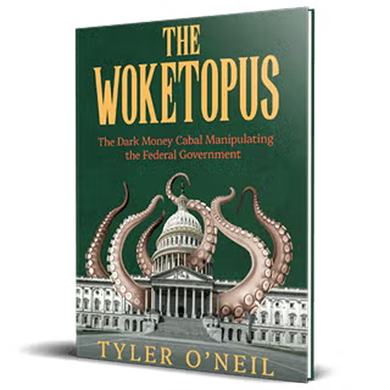
Read the first chapter of The Woketopus right now for FREE
Today, even with President Trump’s victory, leftist elites have their tentacles in every aspect of our government.
The Daily Signal’s own Tyler O’Neil exposes this leftist cabal in his new book, The Woketopus: The Dark Money Cabal Manipulating the Federal Government.
In this book, O’Neil reveals how the Left’s NGO apparatus pursues its woke agenda, maneuvering like an octopus by circumventing Congress and entrenching its interests in the federal government.
You can read the first chapter of this new book for FREE in this eBook, The Woketopus: Chapter One using the secure link below.
TRENDING ARTICLES


The Daily Signal depends on the support of readers like you.
RELATED ARTICLES





Don’t miss the

Don’t miss the signal