A Maryland school district can order a substitute teacher to use a student’s chosen pronouns and, according to the same policy, forbid her from telling that student’s parents. Kimberly Polk sued Montgomery County Public Schools over that combination, and in January the 4th U.S. Circuit Court of Appeals ruled against her, 2-1.
The panel’s reasoning traces back to Garcetti v. Ceballos, the 2006 case holding that when a public employee speaks pursuant to official duties, the government owns that speech, not the employee. Classroom instruction counts as official duty. So, the majority held Polk’s speech wasn’t hers to withhold and treated the district’s gender-identity guidelines as neutral and generally applicable for purposes of her free-exercise claim.
Judge J. Harvie Wilkinson III dissented, and dissented hard. His argument, stripped of the legal language: a policy that requires teachers to affirm one contested view of gender while leaving no room for any other isn’t neutral regulation of a public employee’s duties. It’s compelled belief with a paycheck attached.
To give the district its due, It’s true that school boards employ teachers to speak on their behalf in the classroom, and Garcetti gives them real latitude to control that speech. If Montgomery County’s guidelines were a curriculum requirement, this would not be a close case. Teachers don’t get to freelance the English syllabus because they don’t like Shakespeare. Courts have upheld a school board’s right to set what gets taught, and Polk’s own filings never argued otherwise.
But that’s not what happened here. The policy did two things at once: It compelled Polk to affirm a name and pronoun she believed to be factually and theologically false, and it barred her from telling a child’s own parents about a change in how that child identifies at school. Those aren’t the same act, and the Fourth Circuit treated them as though they were.
A curriculum tells a teacher what to teach. This policy told a teacher what to believe, and then it told her to keep a secret from the one adult with the clearest legal and moral claim to know it.
TRENDING ARTICLES

Set the ruling next to Mahmoud v. Taylor, decided by the Supreme Court in 2025. The case concerned the same district. In that case, the justices held that Montgomery County’s refusal to notify parents or let them opt their children out of gender-identity instruction burdened the parents’ free exercise of religion.
The Supreme Court has told this district once already that keeping parents in the dark on this subject crosses a constitutional line. Now the 4th Circuit has told a teacher that raising the same objection, on her own religious grounds, doesn’t even get her past the threshold question of whether her speech was hers to begin with. Put plainly, the parents in Mahmoud and the teacher in Polk are objecting to the same policy from opposite sides of the classroom, and the courts have so far treated their claims as though they belong to entirely different bodies of law.
Polk filed her cert petition this summer after the court granted her two extensions, represented by the Becket Fund for Religious Liberty and the National Legal Foundation. The Manhattan Institute has since filed an amicus brief urging the justices to grant review, arguing the panel’s decision conflicts with the Supreme Court’s recent line of cases on compelled speech and religious liberty, from 303 Creative to Kennedy v. Bremerton to Mahmoud itself. That’s a strong bench of precedent pointing the same direction, and it’s worth asking why the Fourth Circuit didn’t feel the pull of it.
The real threat to the First Amendment today isn’t a statute banning speech outright—Brandenburg v. Ohio made outright prohibition nearly impossible decades ago. The threat is procedural: a compliance training module, an affirmation form, a policy document that never once uses the word “compel” and doesn’t have to.
Polk didn’t lose her job because of a Maryland law explicitly silencing her. She lost it because she wouldn’t sign a form. That’s the pattern playing out well beyond Maryland classrooms—in human resources departments and licensing boards and university faculty meetings—and it’s precisely the kind of pressure the founding generation didn’t build the First Amendment to catch. They were worried about Congress, not compliance training.
That distinction is exactly why the Supreme Court should take this case. Garcetti was written for a prosecutor’s memo, not a teacher’s conscience, and lower courts have split for years on how far it reaches into public education.
If a school district can compel affirmation of contested belief and call it an official duty, the exception has swallowed the rule, and every public employee with a sincerely held religious conviction works at the pleasure of whichever policy document their employer drafts next.
The court settled the parents’ half of this question in Mahmoud. It owes teachers the other half, and it owes the rest of the country a clear answer on how far “official duty” can stretch before it becomes something closer to a loyalty oath.
We publish a variety of perspectives. Nothing written here is to be construed as representing the views of the Daily Signal.
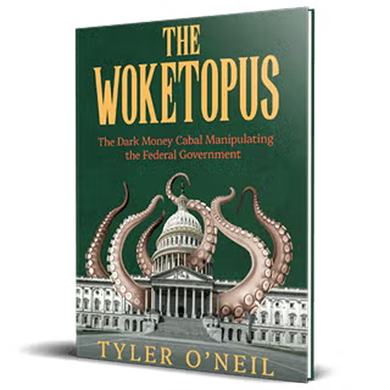
Read the first chapter of The Woketopus right now for FREE
Today, even with President Trump’s victory, leftist elites have their tentacles in every aspect of our government.
The Daily Signal’s own Tyler O’Neil exposes this leftist cabal in his new book, The Woketopus: The Dark Money Cabal Manipulating the Federal Government.
In this book, O’Neil reveals how the Left’s NGO apparatus pursues its woke agenda, maneuvering like an octopus by circumventing Congress and entrenching its interests in the federal government.
You can read the first chapter of this new book for FREE in this eBook, The Woketopus: Chapter One using the secure link below.
TRENDING ARTICLES


The Daily Signal depends on the support of readers like you.
RELATED ARTICLES





Don’t miss the

Don’t miss the signal