
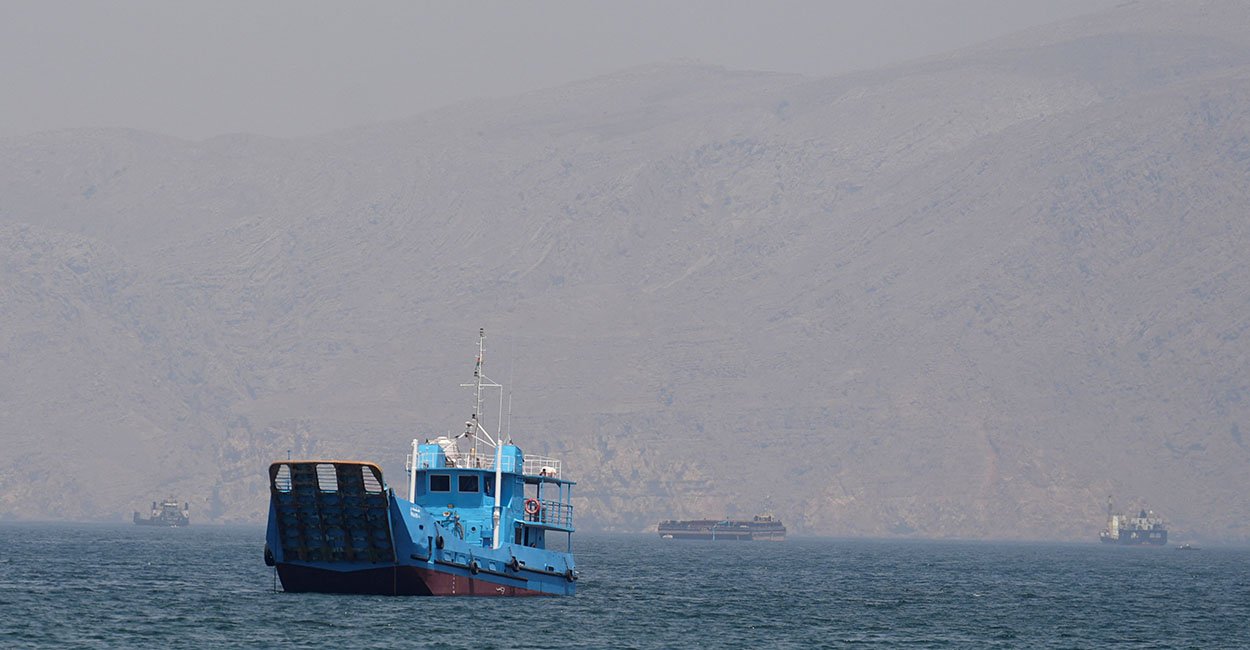
REUTERS—The U.S. military said on Tuesday it had seized a tanker linked to Iran in international waters, its latest apparent action to enforce a blockade, with time running out on a ceasefire and the prospect of last-ditch further peace talks still up in the air.
Washington has expressed confidence that talks with Iran will go ahead in Pakistan, and a senior Iranian official said Tehran was considering joining. But with the final hours of a two-week truce ticking by, there was little time left for the talks.
The U.S. military said it had boarded the tanker Tifani “without incident.” The ship, capable of carrying 2 million barrels of crude, last reported its position on Tuesday morning as near Sri Lanka in the Indian Ocean, according to MarineTraffic tracking data. It was close to fully loaded and had signaled Singapore as its destination.
“As we have made clear, we will pursue global maritime enforcement efforts to disrupt illicit networks and interdict sanctioned vessels providing material support to Iran—anywhere they operate,” U.S. Central Command said.
In a short statement on social media, President Donald Trump said Iran had carried out numerous violations of the ceasefire, without giving further details.
There was no immediate comment from Iran on the boarding, but the move could complicate efforts to arrange peace talks: Iran has said the blockade of its ports amounts to a U.S. violation of the truce, and that it will not negotiate while the blockade is being enforced.
TRENDING ARTICLES



Iran-US Talks Up in the Air
Iranian sources told Reuters Tehran still had not made a firm decision on whether to attend another round of peace talks in Islamabad, aimed at ending the war that the U.S. and Israel unleashed on Iran on Feb. 28.
Pakistani officials said that if the delegations do attend, they will not arrive until Wednesday, leaving just hours to reach a deal before the two-week truce expires.
Trump has threatened to restart the war and attack Iran’s civilian infrastructure unless it accepts his terms. A first session of talks 10 days ago produced no agreement, and Tehran had been ruling out a second round this week after the U.S. refused to end its blockade and seized an Iranian cargo ship.
Still, a Pakistani source involved in the discussions told Reuters there was momentum for talks to resume on Wednesday and U.S. Vice President JD Vance was expected in Islamabad.
An Iranian official told Reuters on Monday that Tehran was “positively reviewing” its participation but stressed that it was waiting to see if its conditions would be met, including recognition of its right to enrich uranium.
Oil prices eased around $0.20 and stocks bounced back in Asia on expectations that peace talks will resume this week, although European stocks were flat. Oil had jumped around 6% on Monday on doubts about the talks.
A senior Iranian military commander said Iran was ready to deliver an “immediate and decisive response” to any renewed hostility, the semi-official Tasnim news agency said.
Top negotiator Mohammad Baqer Qalibaf late on Monday accused Trump of increasing pressure through the blockade, saying Trump was deluded in seeking to “turn the negotiating table into a table of submission” or justify renewed warmongering.
Iran’s army said an Iranian tanker had entered its territorial waters from the Arabian Sea on Monday with help from the Iranian Navy, despite what it described as repeated warnings and threats from the U.S. naval task force.
Iran has largely blocked off the Strait of Hormuz, which controls access to the Gulf, to all ships but its own. It had announced last week that it would reopen the strait, but reversed that decision on Saturday after Trump refused to lift his blockade of Iranian ports.
That has left the strait closed and the world deprived of the 20 million barrels of oil that typically crossed it each day.
Iran Nuclear Program a Crucial Issue
Trump wants an agreement that would prevent further oil price rises and stock market shocks, but has insisted Iran cannot have the means to develop a nuclear weapon. He wants Iran to give up its stockpile of highly enriched uranium, which can, if further enriched, be used for a nuclear warhead.
Tehran hopes to exploit its control of the strait to strike a deal that averts a restart of the war and lifts sanctions, while retaining more of its nuclear program, which it says is for peaceful purposes.
Trump initially announced the ceasefire would last two weeks from the evening of April 7 in Washington, though he has lately suggested it runs until the evening of Wednesday, April 22, effectively an extra 24 hours. A Pakistani source involved in the talks also said it would expire at 8 p.m. Eastern Time on Wednesday, which is 3:30 a.m. Thursday in Iran.
Thousands of people have been killed by U.S.-Israeli strikes on Iran and a parallel Israeli bombing campaign and invasion of Lebanon. The war has caused a historic shock to global energy supplies, and fears that the global economy could be pushed to the brink of recession.
Trump said on Monday that Iran was “going to negotiate, and hopefully they’ll make a fair deal.”
Pakistan has been preparing to host the talks despite the uncertainty. Nearly 20,000 security personnel have been deployed across Islamabad, officials said.
Read the first chapter of The Woketopus right now for FREE
Today, even with President Trump’s victory, leftist elites have their tentacles in every aspect of our government.
The Daily Signal’s own Tyler O’Neil exposes this leftist cabal in his new book, The Woketopus: The Dark Money Cabal Manipulating the Federal Government.
In this book, O’Neil reveals how the Left’s NGO apparatus pursues its woke agenda, maneuvering like an octopus by circumventing Congress and entrenching its interests in the federal government.
You can read the first chapter of this new book for FREE in this eBook, The Woketopus: Chapter One using the secure link below.
TRENDING ARTICLES


The Daily Signal depends on the support of readers like you.
RELATED ARTICLES




Don’t miss the

Don’t miss the signal