Georgia Official Charged With COVID-19 Fraud Runs for State Senate, While 2 Others Plead Guilty
A suspended member of the Georgia House of Representatives announced she will run for the state Senate despite being charged by the U.S. Department of Justice with COVID-19 unemployment fraud, while two of her former colleagues have already pleaded guilty to similar offenses.
Former state Reps. Dexter L. Sharper and Karen L. Bennett, along with state Rep. Sharon Henderson, D-Covington, were accused in recent months of lying on unemployment applications to collect tens of thousands of dollars in federally funded pandemic benefits.
“These charges point to some disgraceful conduct at the highest level, which should shock and repulse every citizen,” Georgia State Inspector General Nigel Lange said in a Jan. 30 statement. “The alleged activities describe a disgusting abuse by an elected official who appeared to trade integrity for money destined for those in need. Shameful.”
According to federal prosecutors, Sharper, who represented Georgia’s 177th House District from 2013 until his resignation this year, fraudulently applied for unemployment assistance from April 2020 through May 2021.
Sharper was arraigned in January before U.S. Magistrate Judge Russell G. Vineyard on charges of making false statements to obtain funds administered by the U.S. Department of Labor. He pleaded guilty in March and resigned from office the following day.
Less than three weeks after charges were filed against Sharper, Bennett, who represented Georgia’s 94th House District, pleaded guilty on Jan. 21 to federal charges of making false statements connected to $13,940 in pandemic unemployment benefits. She resigned before entering her plea.
TRENDING ARTICLES


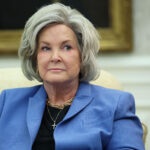
Henderson, who has represented Georgia’s 113th House District since 2021, was indicted Dec. 2, 2025, on charges of theft of government funds and making false statements in connection with receiving $17,811 in pandemic unemployment benefits.
Unlike her colleagues, Henderson did not resign. Gov. Brian Kemp suspended her from office pending resolution of the case. Her suspension will remain in effect until either her term ends or the charges are resolved.
Henderson’s attorney, Gerald Griggs, said the representative intends to contest the charges.
“We look forward to litigating this matter in court,” Griggs wrote in a Jan. 8 text message to The Associated Press. “In America, every individual is presumed innocent unless and until proven guilty beyond a reasonable doubt.”
Prosecutors allege Henderson falsely claimed she was a laid-off substitute teacher in 2019, even though she had not held that position since 2018. Court records further state that substitute teachers were explicitly ineligible for unemployment benefits under their contracts.
Despite the pending charges, Henderson announced in early March that she is running for state Senate.
The cases echo other high-profile prosecutions involving fraud tied to pandemic-era relief programs, including that of U.S. Rep. Sheila Cherfilus-McCormick, who was charged by the Justice Department with allegedly stealing more than $5 million in COVID-19 disaster-relief funds and making illegal campaign contributions. If convicted, she could face up to 53 years in prison.
In March, the U.S. House Ethics Committee found Cherfilus-McCormick guilty of violating 27 House ethics rules.
She could be replaced by former Broward County Mayor Dale Holness, who recently announced his third run for Congress following the charges.
Both of Holness’ daughters have been convicted in separate COVID-19 fraud cases.
In 2024, Richelle Holness pleaded guilty to defrauding Florida’s unemployment system of $30,000. Under the plea agreement, she avoided prosecution for allegedly diverting funds from her father’s 2020 County Commission campaign, where she served as treasurer.
Two years earlier, her sister, Damara Holness, was sentenced to 20 months in federal prison after fraudulently receiving $300,000 through a Paycheck Protection Program loan. Prosecutors said she falsely claimed to operate a consulting business with 18 employees, though investigators found the business had no employees.
In addition to the prison sentence, Damara Holness was ordered to repay the $300,000, serve five years of supervised release, and pay a $100 special assessment.

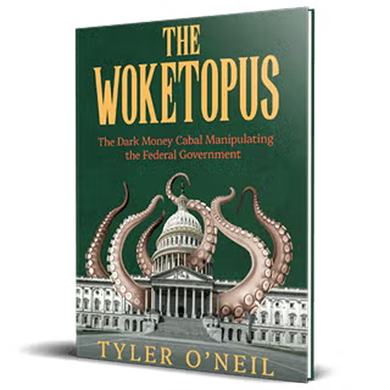
Read the first chapter of The Woketopus right now for FREE
Today, even with President Trump’s victory, leftist elites have their tentacles in every aspect of our government.
The Daily Signal’s own Tyler O’Neil exposes this leftist cabal in his new book, The Woketopus: The Dark Money Cabal Manipulating the Federal Government.
In this book, O’Neil reveals how the Left’s NGO apparatus pursues its woke agenda, maneuvering like an octopus by circumventing Congress and entrenching its interests in the federal government.
You can read the first chapter of this new book for FREE in this eBook, The Woketopus: Chapter One using the secure link below.
TRENDING ARTICLES


The Daily Signal depends on the support of readers like you.
RELATED ARTICLES



Don’t miss the

Don’t miss the signal