
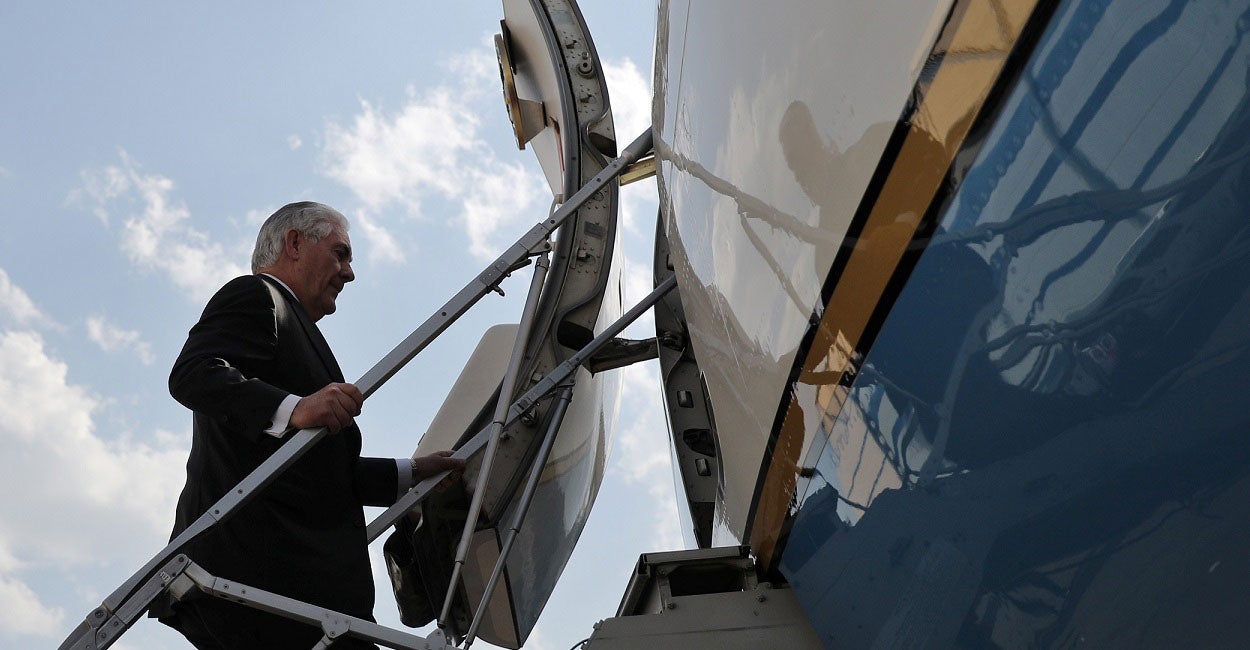
As Secretary of State Rex Tillerson sets out on his first official visit to Asia, expectations are high.
As he visits key U.S. allies Japan and South Korea, he will be expected to reassure them of America’s steadfast commitment to their security. And in visiting the People’s Republic of China, Tillerson will have to send a message that the United States is prepared to work with the Chinese leadership, even as he must also signal that its efforts to establish a new order—whether at sea, in cyberspace, or in the global financial system—will not be left unchallenged.
In pursuing this set of diverse, and at times contradictory goals, it might help if Tillerson keeps several things in mind.
1. Rivalries and distrust are continuing features of Asia’s geopolitics.
The Cold War was merely one source of antagonism in Asia, and its end in the rest of the world did nothing to end the other underlying sources of discord. For example, territorial disputes that predated the rise of the Cold War continue to pose a long-term challenge to regional stability.
While most of the world’s attention has been focused on China’s artificial islands in the South China Sea, other outstanding territorial disputes include those between Japan and South Korea (Takeshima/Dok-do) and between Russia and Japan.
TRENDING ARTICLES



The recent announcement that Russia would be deploying a division to the disputed Northern Territories, occupied by the Russians since the last days of World War II, highlights the increasingly militarized nature of these disputes.
2. Asia remains an engine for global economic growth, despite ongoing tensions caused by historical grievances and territorial disputes.
Asia currently accounts for 40 percent of global gross domestic product. Consequently, Asia remains the central geo-economic focal point for all the major international players, including not only the U.S. and China, but also Europe.
It is therefore imperative that the United States signal to the region that it remains engaged, not only militarily, but also economically. Having formally ended the Trans-Pacific Partnership process in favor of bilateral trade arrangements, it is now urgent for the Trump administration to develop targets for such agreements.
While prospects for a bilateral free trade agreement with Japan are currently subsumed by the new economic dialogue between Vice President Mike Pence and Prime Minister Taro Asa, Japan remains the most logical target for a bilateral agreement.
Tillerson should signal enthusiastic American support for the dialogue and keep his ears open for Japanese appetite for a bilateral agreement—perhaps one with an accession process for bringing in new partners.
Other targets for bilateral agreements would be Vietnam, which by many estimates is the biggest loser in the demise of the Trans-Pacific Partnership, and Taiwan, which despite its prominence as a U.S. trading partner remains without a U.S. free trade agreement.
3. Russia and China are at best allies of convenience.
In some areas, such as the Central Asian republics, the two nations are actively competing with each other. Russia has only reluctantly sold China some of its most advanced weapons, as it is concerned that Beijing will reverse-engineer them. China, meanwhile, continues to outpace Russia economically, viewing its neighbor primarily as a source of raw materials.
These historical divides not only affect U.S. allies in the region, but also U.S. rivals. In particular, while Sino-Russian relations are good at the moment, there are limits to the two nations’ potential cooperation.
While the two states are willing to cooperate, especially in containing the United States and limiting its influence, China and Russia otherwise share few mutual sympathies. The degree of strategic alignment should therefore be realistically assessed, and not mistaken for a return to the heyday of the Sino-Soviet alliance.
4. Taiwan remains of critical interest to the U.S.
Tillerson should also avoid at all costs the prospect of negotiating a fourth communiqué around President Xi Jinping’s pending visit to Washington.
A visit to Beijing is not the place to entertain changes. Instead, Tillerson should emphasize that U.S. policy is not just about the Three Communiqués with Beijing, which form the basis of America’s "One China" policy, but is also based on the Taiwan Relations Act (1979) and the Six Assurances (1982), which govern U.S. “unofficial” relations with Taiwan.
The Chinese government often tries to exploit newly incoming U.S. administrations to alter America’s commitment to Taiwan. Tillerson should scrupulously adhere to the long-standing “One China” policy on cross-straits relations.
5. The U.S. faces a perfect storm on the Korean Peninsula.
Pyongyang is already an existential threat to South Korea and Japan, and it is only a matter of time before the regime achieves its decadeslong quest of being able to threaten the United States with nuclear weapons.
The new administration is formulating its North Korea policy at an inauspicious time of accelerating threats and deteriorating relations in the region. North Korea's recent missile launches are but an extension of its robust nuclear and missile testing regimen in 2016, which produced breakthroughs in several missile systems.
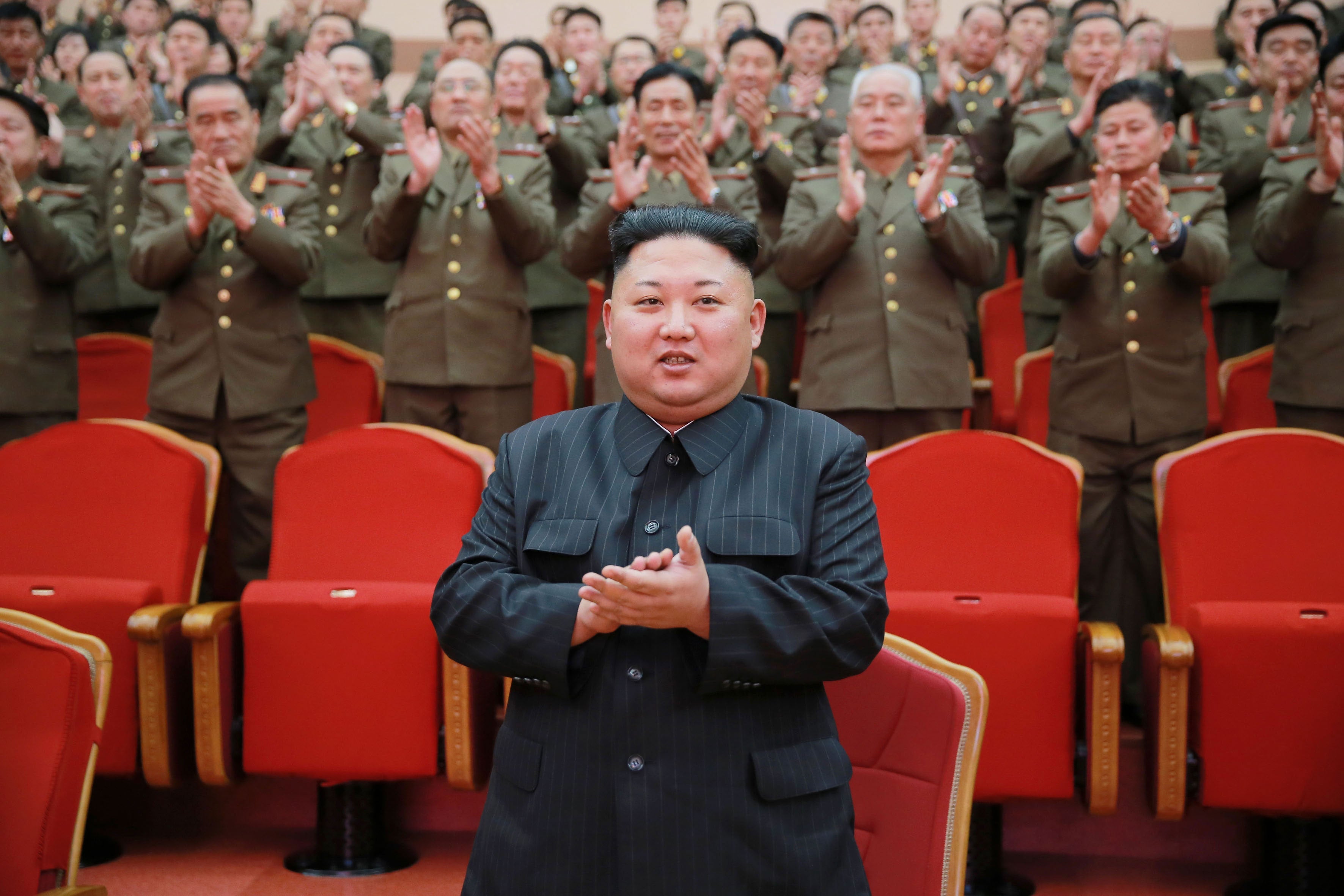
China responded to the allied decision to deploy the Terminal High Altitude Area Defense (THAAD) missile defense system by threatening South Korea with economic, diplomatic, and military repercussions. South Korean public opinion of China has plummeted, but growing economic fallout from Beijing's arm-twisting could lead to greater willingness to accommodate Chinese and North Korean security concerns under a successor liberal South Korean government.
6. Allies need constant reassurance.
Secretary of Defense James Mattis’ trip to Seoul and Tokyo in February, backed by statements by Tillerson and President Donald Trump, assuaged many of the allied concerns—though as one senior South Korean official commented, “The concerns are gone, but anxiety remains.”
The increasing North Korean threat has aggravated long-standing allied concerns of U.S. abandonment exacerbated by perceptions of diminished U.S. military capabilities and resolve.
In recent months, there have been growing South Korean fears of a decoupled alliance in which the U.S. “wouldn’t trade Los Angeles for Seoul” once North Korea demonstrates an unambiguous capability to threaten the continental U.S. with nuclear intercontinental ballistic missiles. This had led to greater South Korean advocacy for a range of military options, including a greater reliance on preemption strategies.
The Trump administration's efforts at building on positive momentum generated from its recent affirmation of its “ironclad commitment” to defend South Korea and Japan will be completed by the forthcoming change in government in South Korea. After the May election, the new (likely liberal) South Korean administration will be more inclined to engage both North Korea and China, even at the expense of its relations with the U.S. and Japan.


Read the first chapter of The Woketopus right now for FREE
Today, even with President Trump’s victory, leftist elites have their tentacles in every aspect of our government.
The Daily Signal’s own Tyler O’Neil exposes this leftist cabal in his new book, The Woketopus: The Dark Money Cabal Manipulating the Federal Government.
In this book, O’Neil reveals how the Left’s NGO apparatus pursues its woke agenda, maneuvering like an octopus by circumventing Congress and entrenching its interests in the federal government.
You can read the first chapter of this new book for FREE in this eBook, The Woketopus: Chapter One using the secure link below.
TRENDING ARTICLES


The Daily Signal depends on the support of readers like you.
RELATED ARTICLES

Don’t miss the

Don’t miss the signal