
Supreme Court Decision Will Lead to Gay Marriage in Five States. Why That’s Wrong.

Today the U.S. Supreme Court declined to review appeals from Utah, Oklahoma, Virginia, Indiana and Wisconsin on the definition of marriage. This means that lower court rulings that struck down state marriage laws now will go into effect, forcing the redefinition of marriage in these states and potentially in other states in the 4th, 7th, and 10th circuits.
This is an unfortunate setback for sound constitutional self-government and a setback for a healthy marriage culture.
The truth of the matter is that the marriage laws in these five states—as in many states across our nation—are good laws that reflect the truth about marriage. Frequently they were passed with overwhelming democratic support. The Supreme Court should have reviewed these cases and should have upheld the authority of citizens and their elected representatives to make good marriage policy. Instead, the Supreme Court left standing bad rulings from lower federal courts that usurped authority from the people by striking down good laws.
The cases at issue involve lower court rulings that struck down state marriage laws, claiming that they violated the U.S. Constitution. But the courts never provided compelling arguments that laws that reflect the truth about marriage are unconstitutional. Indeed, as former Attorney General Ed Meese and I argued last week in The Washington Post, the Supreme Court should have reviewed these cases and declared the laws constitutional.
In a system of limited constitutional self-government, the people and their elected representatives should be making decisions about marriage policy. And there are reasonable arguments on both sides of this debate. Judges should not insert their own policy preferences about marriage and declare them to be required by the Constitution.
Some people argue that marriage is simply a committed relationship of two people. My co-authors and I have argued that marriage is a comprehensive union of sexually complementary spouses—and that the state cares about marriage because it can unite a man and a woman as husband and wife to be mother and father to any children their union may produce.
TRENDING ARTICLES



A comprehensive union capable of uniting children with their mom and dad is something only a man and a woman can form. So enacting same-sex marriage would not expand the institution of marriage but redefine it. Finishing what policies such as no-fault divorce began, it would finally replace the conjugal view with a revisionist view of marriage as fundamentally an emotional union. This would multiply the marriage revolution’s harms, making them harder than ever to reverse.
Citizens are, of course, free to redefine marriage to include same-sex relationships, but so too should citizens be free to retain the historic definition of marriage as the union of a man and a woman—as citizens in a majority of states have done. Nothing less than the future of our society and the course of constitutional government in the United States are at stake.
No one can say for certain why the Supreme Court declined to review these cases. Perhaps it is because it is waiting for the 6th Circuit Court to rule on Ohio and Michigan’s marriage laws (a ruling that even many who favor redefining marriage think will uphold those state laws) or perhaps because it is waiting on the 5th Circuit Court to rule on Texas’ and Louisiana’s laws (a federal judge recently upheld Louisiana’s law). Who knows?
Declining to review these cases does not speak one way or the other to the merits of the cases. But it does leave in place bad rulings from lower courts—and it will make it harder for courts to do the right thing in the future.
Nevertheless, as citizens, we must rally in support of our constitutional authority to pass laws making marriage policy. We must insist that law and culture promote the truth about marriage.

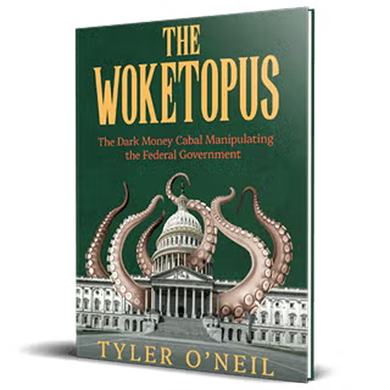
Read the first chapter of The Woketopus right now for FREE
Today, even with President Trump’s victory, leftist elites have their tentacles in every aspect of our government.
The Daily Signal’s own Tyler O’Neil exposes this leftist cabal in his new book, The Woketopus: The Dark Money Cabal Manipulating the Federal Government.
In this book, O’Neil reveals how the Left’s NGO apparatus pursues its woke agenda, maneuvering like an octopus by circumventing Congress and entrenching its interests in the federal government.
You can read the first chapter of this new book for FREE in this eBook, The Woketopus: Chapter One using the secure link below.



The Daily Signal depends on the support of readers like you.
RELATED ARTICLES





Don’t miss the

Don’t miss the signal