






















CHARLOTTESVILLE, Virginia—The Camp Ten Four restaurant, on the ninth and top floor of the Graduate Charlottesville hotel, offers a good view of much of this city associated with Thomas Jefferson.
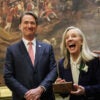
Sitting at a table in the rustic venue, Charlottesville resident Pat Napoleon expresses concern about what she sees as city leaders’ dishonoring the founder of Monticello and the University of Virginia—both staples of this area’s identity.
“We are all just horrified by how this town is attacking Thomas Jefferson,” she tells The Daily Signal, suggesting that her view is widely shared by those who put the third president’s ownership of hundreds of slaves in historical context.
Charlottesville, a town of 48,000, was once best known for being the home of Jefferson’s beloved Monticello estate and the University of Virginia, which Jefferson founded in 1819 after serving two terms as president.
Located along the foothills of the Blue Ridge Mountains, Charlottesville features wineries and distilleries, historic churches, and the Historic Downtown Mall, including a pavilion for outdoor concerts. Trump Winery, owned by one of President Donald Trump’s businesses, is on Blenheim Road.
But in 2017, the town—about a hundred miles from Washington, D.C.— made national headlines amid a riot that stemmed in part from proposals to take down two Confederate war memorials.
During the uproar, white nationalists fought masked “anti-fascists” known as Antifa in the city streets. Before it was over, one woman was dead and two police officers perished in a helicopter crash en route to provide security amid the chaos.
Now Charlottesville, long known for its association with one of America’s Founding Fathers, is grappling with its history—as are so many other cities and institutions across the nation.
Across the South, more than 100 Confederate monuments have been removed since 2015, according to Smithsonian magazine. The San Francisco Board of Education recently voted to cover a mural of George Washington, who also owned slaves when he became the nation’s first president.
Local and state chapters of the Democratic Party, including Virginia’s, have done away with traditional Jefferson-Jackson dinners honoring the dual founders of the party, Jefferson and Andrew Jackson, the seventh president, because both owned slaves.
College campuses, too, have entered such debates. In 2017, students at the University of Wisconsin-Madison demanded removal of a statue of Abraham Lincoln, claiming the 16th president was complicit in the deaths of Native Americans. Some students at Princeton University called for removing the name of President Woodrow Wilson—also a former president of Princeton—from campus buildings. As the 28th president, Wilson resegregated the federal workforce.
This summer, lawmakers in both Charlottesville and Albemarle County voted to stop observing Jefferson’s April 13 birthday as an official holiday. The city replaced it with “Liberation and Freedom Day” on March 3, the date Union Gen. Philip Sheridan led troops in to free slaves in Charlottesville and Albemarle County.
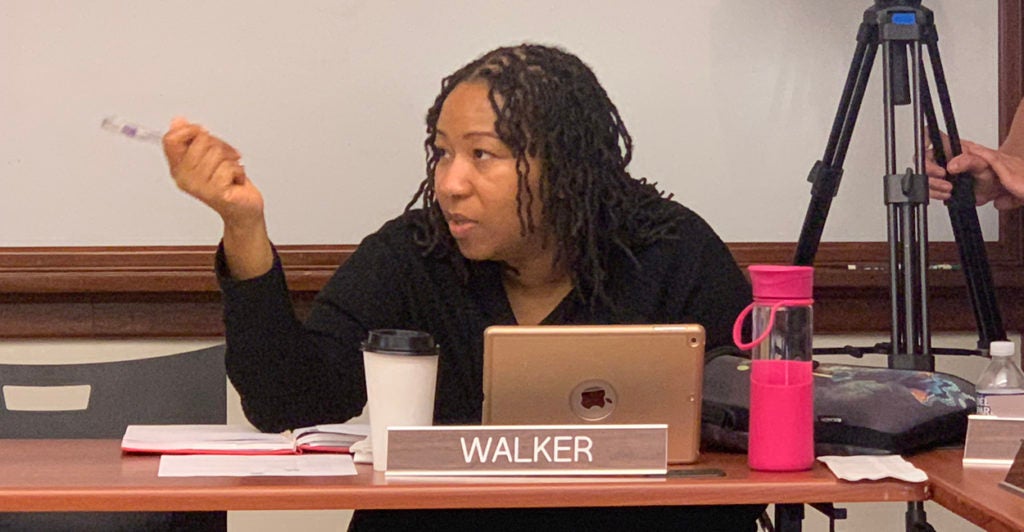
Charlottesville Mayor Nikuyah Walker, who first proposed eliminating Jefferson’s birthday as a city holiday, said the idea wasn’t about “sanitizing history.”
“Removing Jefferson’s Birthday is not sanitizing history,” the mayor wrote in a July 9 Facebook post. “I’m sure that he’s still able to celebrate his birthday in hell.”
“Sanitizing history is whitewashing history for 400 years and having the audacity to feel scorned because a ‘holiday’ was removed that was [first] added in 1945,” Walker said.
Rob Schilling, a former City Council member, said the change is a larger deal than a paid day off for public employees, and is “conceptually diminishing of the Founding Fathers.”
“We shouldn’t be erasing history,” Schilling, now a local conservative talk radio host, told The Daily Signal.
For Jefferson specifically, Schilling said, it is “sending a message that he’s not worthy of honor.”
Landmarks and Legacies
Jefferson, born in 1743, also was the primary author of the Declaration of Independence, the nation’s first secretary of state, and its second vice president.
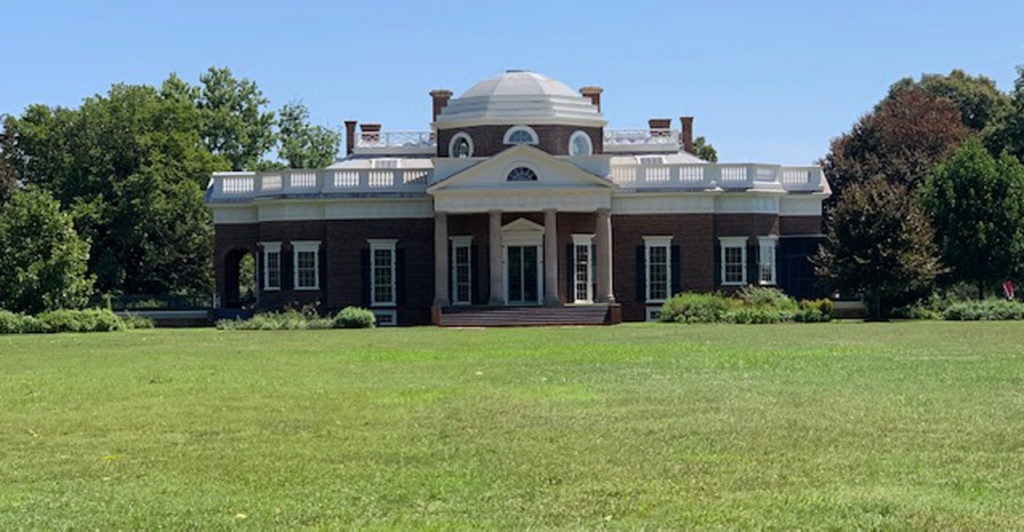
At age 26, Jefferson inherited the Monticello plantation in Albemarle County, outside the Charlottesville city limits. He designed a home that was built mostly with slave labor and completed in 1772, four years before he wrote the Declaration of Independence.
In response to a remark that the home was unfinished, Jefferson was quoted as saying: “I hope it will remain so during my life, as architecture is my delight, and putting up, and pulling down, one of my favourite amusements.”
The mansion features Jefferson’s library as well as his research in science and architecture, an ornate dining area, dumbwaiters, skylights, and some of his inventions.
Today, the 5,000-acre plantation mostly grows tobacco and wheat. It is both a National Historic Landmark and a World Heritage Site, as designated by the United Nations Educational, Scientific and Cultural Organization, or UNESCO.
Monticello reports that the estate attracts about 500,000 visitors a year, including families, group tours, and school field trips.
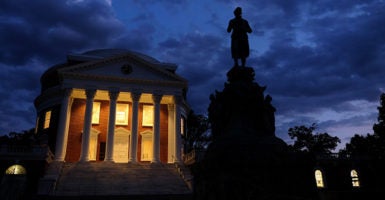
In 1800, Jefferson, who had designed a building for the then-private College of William & Mary, in Williamsburg, Virginia, wrote a letter about his desire to see a public university in Virginia. He won the presidential election that same year. Nearly two decades later, he founded the University of Virginia.
The cornerstone for the university’s first building was laid at a ceremony in October 1817 attended by President James Monroe as well as two former presidents—Jefferson and James Madison.
Jefferson called the university “the hobby of my old age.” In overseeing design of the campus, he explained that he didn’t want the school to resemble a house, but rather “the whole arranged around an open square of grass & trees would make it, what it should be in fact, an academical village.”
As with Monticello, UNESCO recognized the university as a World Heritage Site.
Dropping the Holiday
Pat Napoleon, who is active in local politics, occasionally speaks at Charlottesville City Council meetings that frequently live up to their reputation of being raucous events. And she has seen plenty of chaos.
At one council meeting, a resident denounced Jefferson during the public comment period as “a racist” and “a rapist.”
At another meeting, Councilor Wes Bellamy, who previously led the effort to remove Confederate statues in the city, declared that Jefferson “raped” Sally Hemings, a slave with whom historians believe Jefferson had an affair, fathering children.
Both Walker and Bellamy declined interviews with The Daily Signal.
Three days before the Fourth of July, the City Council voted 4-1 to drop the holiday honoring Jefferson. Councilor Kathy Galvin was the lone no vote. The four council members are all Democrats, while Walker is an Independent.
The council’s action followed a June vote by the Board of Supervisors for Albemarle County, which encompasses Charlottesville, to strike Jefferson’s birthday as an April 13 holiday for county government employees.
Walker and the council discussed the change in June, with Galvin supporting adoption of Liberation and Freedom Day but also citing Jefferson’s contributions to the nation’s founding. She proposed deleting his birthday as a paid holiday but marking the day with a discussion of his contributions and misdeeds.
“I find it somewhat ironic that the very Founding Father who gave us the very ability to question our holiday schedule is now not going to be able to be acknowledged for that,” Galvin said at the June meeting.
An angry crowd erupted at this juncture, The Daily Progress newspaper reported, and the mayor became irate.
“I can’t even understand how we’re having a conversation at this point about what the perception of what he did well is,” Walker is quoted as saying. “It is insane that in this time … that we will have a conversation about, ‘Let’s just look at what he did well.’”
Jefferson’s birthday had been a paid holiday for both city and county employees since 1945.
Under the new county and municipal calendars, county employees get a paid floating holiday in place of Jefferson’s birthday, while Charlottesville employees get Liberation and Freedom Day as a holiday.
The city has not held official celebrations regarding Jefferson’s birthday, in part because city staff is off that day. However, Monticello, the University of Virginia, and some private groups have sponsored ceremonies on the day in past years.
The council has not asked staff to plan a celebration for Liberation and Freedom Day in 2020, according to the city. Before making it an official holiday, the city participated in commemorating the day at an event last year with the university and the Jefferson School African American Heritage Center.
Contradictions on Slavery
Although Jefferson penned the famous words “all men are created equal” in the declaration, he owned more than 600 slaves during his life and bought and sold them for his plantation at Monticello. Despite being critical of the institution of slavery, Jefferson didn’t move to end it.
Although he referred to slavery as an “abominable crime,” he also was quoted as saying: “We have the wolf by the ears and feel the danger of either holding or letting him loose.”
The nation’s third president feared the South’s economy had become too dependent on the institution of slavery, and was reluctant to divide a young and fragile republic over the issue.
Jefferson freed only five slaves in his lifetime and another six in his will, all relatives of Hemings. Monticello historians accept the story of the affair and children as true, based on DNA tests.
An understandable divide exists regarding Jefferson, said Janette Martin, president of the Albemarle-Charlottesville NAACP.
A retired school teacher, Martin said she believes that putting history in context is important.
Martin didn’t express a strong position on the holiday. She said she understands the motivation to drop the holiday, but also sees the need to recognize Jefferson’s legacy.
“I can understand given the history of Mr. Jefferson, but, here again, what do you do?” Martin told The Daily Signal. “With Mr. Jefferson, you have Monticello and a wonderful document he wrote.”
“But I do appreciate Liberation and Freedom Day,” she said.
‘A Dated Thing’
The city of Charlottesville isn’t going to forget Jefferson because of a personnel decision, Councilor Heather Hill argues.
“Moving forward, there are certain dates in our community’s calendar [on which] we wanted to make sure we are coming together as a community,” Hill, who voted to scrap Jefferson’s birthday as a holiday, told The Daily Signal.
“I thought it was kind of a dated thing,” she said of the holiday. “I’m not opposed to it being on a calendar. On the other hand, you can’t look anywhere here and not see that Thomas Jefferson has left his mark.”
Still, Hill noted that hundreds of emails from residents arrived in opposition to the action after the council’s vote.
Two decades ago, she said, Monticello didn’t tell the full story of Jefferson. Hill said she believed the council’s debate over his birthday was a missed opportunity to do the same at the city level.
“During our Jefferson discussion, we used that to talk about could we tell a more robust picture of Jefferson on his birthday as an opportunity,” Hill said. “There was some resistance to that, for a number of reasons.”
Across the nation, local Democratic parties are doing away with events honoring not only Jefferson but also Jackson, Councilor Michael Signer, the city’s last mayor, said.
“I looked into the specific history, saw it was created in 1945, and saw [Jefferson] was the only person other than Martin Luther King [Jr.] the city recognizes that way,” Signer told The Daily Signal.
“I heard what my colleagues were saying and listened to the community,” he said. “I looked at what Democratic committees around the country are doing, changing Jefferson-Jackson Day dinners, and I thought that it was a worthwhile corrective that could be appropriately struck.”
Confronting Slavery
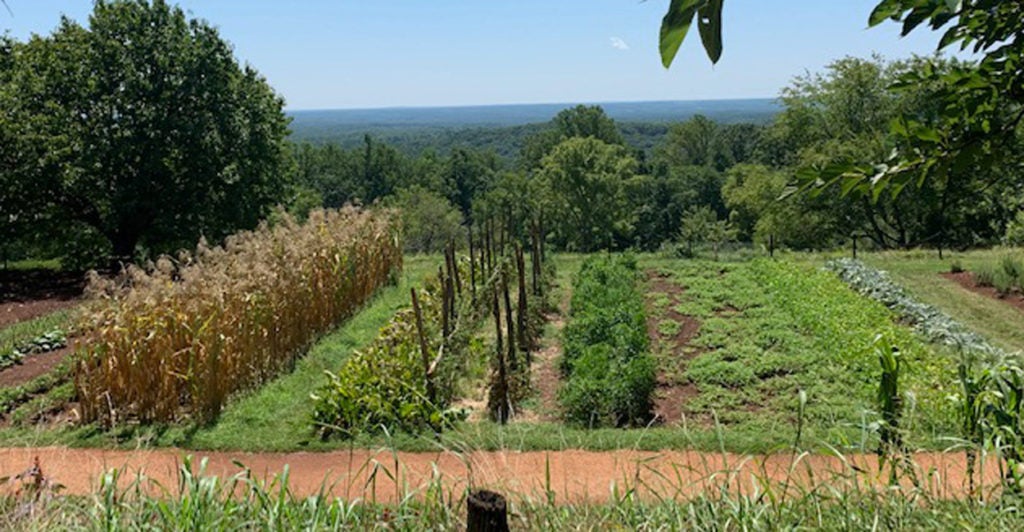
A crowd of about 80 gathered one August day at noon for a “Slavery at Monticello” tour in which a guide spoke about Jefferson’s words “created equal” in the Declaration of Independence and how they conflicted with the reality of slavery.
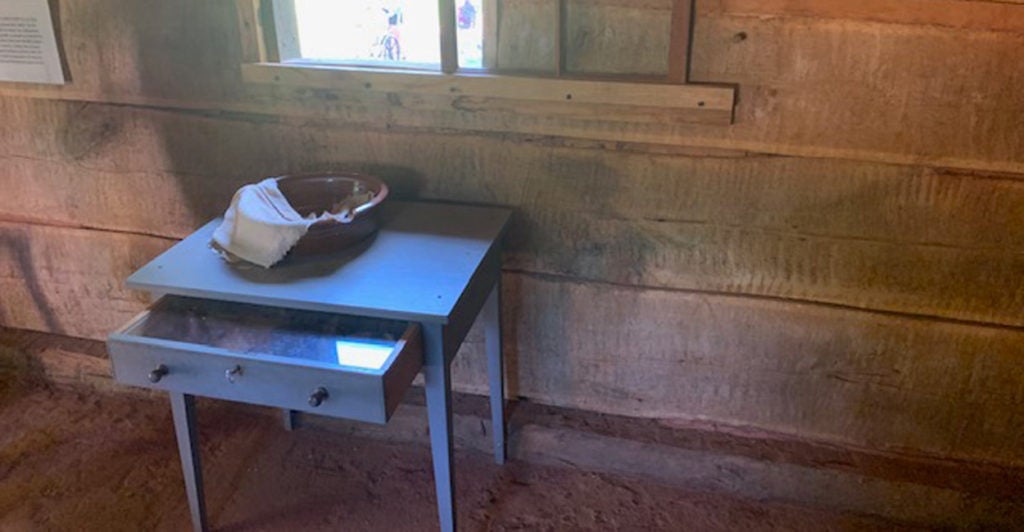
The 5,000-acre plantation originally had 25 small slave dwellings that would have housed a dozen or more people each, along with workshops and sheds. The remains of four original structures along Mulberry Row were rebuilt.
In addition to being farm workers, slaves were nail-makers, spinners, weavers, blacksmiths, carpenters, joiners, and domestic servants.
The tour guide answered questions about how engaged Jefferson was in the slaves’ treatment. Generally, he said, Jefferson allowed supervisors at Monticello to handle things, in a kind of out-of-sight, out-of-mind approach. Among the punishments for slaves: separating families through auctions.
The guide noted that Jefferson was pressured to show leadership in ending slavery as president from 1801 to 1809, but became exasperated on the matter.
Also at Monticello is a Sally Hemings exhibit, which includes a short film. But during the tour, the guide posed the unanswerable question raised by historians: Had Hemings navigated her way through the slave system in a bargain that secured freedom for several of her family members, even though the Jefferson family continued to own Hemings until her death?
In addition to the Hemings family, the complex offers information about two other slave families, the Fossetts and the Grangers.
Monticello points out that in 1778, Jefferson introduced legislation to prohibit importation of enslaved Africans into Virginia. And in 1784, he proposed a ban on slavery in the Northwest territory, new lands ceded by the British the year before.
In “Notes on the State of Virginia,” a book published in 1785, Jefferson proposed a gradual emancipation of slaves. However, he was publicly silent on the matter after that, Monticello acknowledges.
Without Jefferson
Schilling, the talk radio host, considers a thought excercise for critics of Jefferson.
“For all of the people enjoying the privileges of Thomas Jefferson and the Founding Fathers, I have called for a remake of the movie ‘It’s a Wonderful Life,’” Schilling, the former city council member-turned-talk show host, said, adding:
Let’s get rid of Thomas Jefferson and see where you’d be right now. I think if you look at it like that, and figure out how history would have been different had it not been for Thomas Jefferson and some of the other people, no one could make a good argument that that would have been a good way to go in history.
Back at Camp Ten Four restaurant, Richard Lloyd, a former Republican candidate for the Albemarle County Board of Supervisors, stressed that everyone should condemn slavery as a blight on America’s past.
At the same time, Lloyd said, folks should recognize Jefferson’s role in promoting freedom in the Declaration of Independence, a template for ending slavery that was quoted by Lincoln in the Gettysburg Address.
“Before that, we were all subjects of the king [of England],” Lloyd said. “The king had put troops in the houses of the people. We were essentially slaves to the king. He could take your money. He could take your cattle. He could take your possessions. Anything.”
“Without Jefferson and the Founding Fathers,” he added, “we would have all have been slaves.”

