























EDINBURG, Texas—The story that thrust a Rio Grande Valley city into the national spotlight is hardly a new anomaly, say residents such as Richard Monte.
“Down here, voter fraud is not all that unusual,” says Monte, a city planning consultant in a brown suit jacket, sitting with other activists at a table in Coffee Zone on McColl Road. “It’s unusual when they get prosecuted.”
Now, for this south Texas town, that unusual moment has arrived. A November 2017 mayoral election has been under scrutiny from local and state officials, and 19 arrests have been made over alleged voter fraud. The mayor—and winner of the 2017 election—was indicted earlier this month, along with his wife.
Only 8,400 votes were cast in the mayoral election, and Mayor Richard Molina’s final vote count was more than 1,200 votes ahead of the No. 2 candidate, 14-year incumbent Richard Garcia. From what’s known now, the election result couldn’t have been changed by the number of suspicious votes identified.
But Molina reportedly is the first elected official in Texas to face a felony charge under a 2017 statute against vote harvesting, casting the midsize city into the national debate over election integrity. The mayor denies the charges.
“Some people are unfortunate in that they are caught,” Monte tells The Daily Signal.
Fraud and Small Towns
Across the nation, officials made more than 60 formal findings of voter fraud in 2017 alone, according to The Heritage Foundation’s voter fraud database, and six of those cases were out of Texas. And 2018 saw more than 50 official findings of voter fraud.
“Many of the cases in our database are in small towns,” said Hans von Spakovsky, a senior legal fellow in the Meese Center for Legal and Judicial Studies at The Heritage Foundation. “That’s because, one, those kind of races are often decided by a very small number of votes. So it’s easier to commit fraud when you don’t have to fake as many votes.”
“Second, it’s in small towns, particularly rural areas, where, particularly in areas that are economically not as well off as other parts of the country, [that] county and city government are the sources of jobs and contracts,” added von Spakovsky.
“So there is a big incentive in those smaller towns and smaller county governments for people to cheat in order to be in a position of power where they can distribute jobs.”
A federal judge overturned a mayor’s race in Florida’s Miami-Dade County in 1997 because of massive voter fraud that included phony registrations, noted von Spakovsky, who also served on the Presidential Advisory Commission on Election Integrity.
“You find cases where it’s just an isolated voter taking advantage of the system,” von Spakovsky told The Daily Signal, “but there’s plenty of cases in our database where it is an organized conspiracy oftentimes involving an elected official who wants to ensure he is reelected.”
‘Shady Past’
Edinburg, filled with palm trees, Tex-Mex restaurants, and friendly people, is the Hidalgo County seat. Home to the University of Texas Rio Grande Valley and the Museum of South Texas History, it has a population of 77,000 as of the 2010 census.
Edinburg boasts parks as well as shopping plazas with box stores and fast-food eateries along streets such as Freddy Gonzalez Drive, Cano Street, and University Drive, where Edinburg City Hall stands.

A sign inside City Hall reads “PRISM,” which stands for “Professionalism and Transparency,” “Respect,” “Integrity,” “Synergy and Cross Training,” and “Maximization of Operational Performance.”
Just down University Drive is a nightclub called Sin.
Based on what prosecutors and some residents say, the nightclub’s name might better characterize the region than do the goals of integrity and transparency on the PRISM sign.
The reputation of the Rio Grande Valley, where the town of Edinburg is nestled, long precedes the mayor’s arrest.
The four border counties of Cameron, Hidalgo, Starr, and Zapata have had executive officials, top law enforcement officials, a county judge, and a sheriff either indicted or convicted of criminal charges.
That’s according to an editorial on Molina’s arrest in The Monitor newspaper in McAllen, Texas, about 12 miles away from Edinburg, which adds that various members of city councils, county commissions, and school boards also have faced corruption charges.
The U.S. Justice Department created a Rio Grande Valley Corruption Task Force in 2015, NPR reported, because the area was “steeped in corruption of every stripe: drug smuggling, vote stealing, courthouse bribery, under-the-table payoffs and health care fraud.”
The Molina voter fraud prosecution might be “selective,” suggests Fern McClaugherty, a licensed firearms instructor who was an unsuccessful candidate for City Council in 2017.
“We have a shady past,” McClaugherty said of the city, speaking with The Daily Signal during a meeting with fellow civic activists, including Monte, at the Coffee Zone.
This past, she said, includes what’s known in the region as “politiqueras,” who are paid by political campaigns or parties to turn out the vote. These local operatives visit nursing homes and adult day care centers, and sometimes entice homeless persons to vote by giving them cash or food.
At the suggestion around the table that election winners in the region “stole it fair and square,” someone jokingly corrected: “They buy it fair and square.”
‘Loud and Clear’
Molina won a four-year term as Edinburg mayor on Nov. 7, 2017, and decisively so.
“The people spoke loud and clear—1,240 votes,” Molina told The Daily Signal in a brief interview after a City Council meeting in late May at City Hall.
Molina ran a reform campaign against Garcia, questioning city contracts and other matters under the incumbent mayor’s leadership.
That winning margin over Garcia, first elected in 2003, was out of 8,400 votes cast in the three-candidate race.
“Insurmountable,” Molina said. “If you do research on any of the elections previously, maybe a couple hundred votes determine the outcome of that election. That’s the biggest margin of victory in the history of the city, four figures. It’s never been done before.”
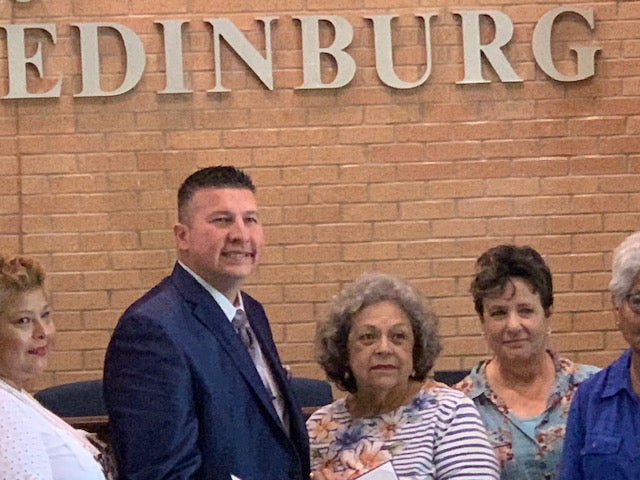
“It’s very obvious that people wanted change,” Molina, the former Army veteran and 11-year Edinburg Police officer said. “There was an incumbent here that was here for 14 years, and people wanted a new face. The public wants me here. I’m not here because I want to be here. Nonpaying job. It’s easier to walk away.”
Edinburg’s mayor and four council members don’t draw salaries. Under the city’s weak-mayor, council-manager form of government, the city manager oversees administration while the mayor and council oversee the legislative side.
Municipal elections are nonpartisan in this heavily Democratic area.
‘Vote Harvesting Scheme’
On April 25 of this year, Molina and his wife, Dalia Molina, were arrested.
“Molina and his wife had numerous voters change their addresses to places they didn’t live—including the apartment complex he owns,” Texas Attorney General Ken Paxton’s office announced after the arrests, adding that Molina’s “vote harvesting scheme involved the participation of paid campaign workers, among others.”
Vote harvesting is when campaign workers collect and submit voter registration forms and absentee ballots by soliciting people.
Earlier this month, a Hidalgo County grand jury indicted Richard and Dalia Molina on one count each of engaging in organized election fraud and 11 counts of illegal voting. The indictment names nine co-conspirators.
Molina declined to speak with The Daily Signal about the criminal charges, citing the advice of lawyers. However, he noted that his margin of victory over Garcia far exceeded the number of questionable votes cast.
Ricardo Rodriguez, the Hidalgo district attorney who is prosecuting the case, declined an interview with The Daily Signal during a brief meeting at his office at the Hidalgo County Courthouse Annex, saying speaking about the ongoing case could pose legal problems.
Some of Molina’s supporters, however, insist that the other side engaged in a similar voting scheme, and they suggest the prosecutor has a conflict. They filed their own complaints against presumed Garcia voters.
Molina’s defenders also note that Rodriguez is the nephew of Terry Palacios, a law partner of the former mayor in the firm of Garcia, Quintanilla, and Palacios.
‘Pressured and Persuaded’
The criminal complaint against the mayor lays out a scathing picture of recruiting voters from Sept. 19 to Nov. 7, 2017, which was Election Day. The mayor has denied every allegation.
In Texas, it’s a first-degree felony to engage in organized election fraud, under a bill passed by the state Legislature that went into effect on Sept. 1, 2017.
The law outlines what constitutes an offense committed “with the intent to establish, maintain, or participate in a vote harvesting organization.”
Shortly after it went into effect, the criminal complaint alleges, Molina “aided, solicited, and encouraged” and “pressured and persuaded” persons who lived outside Edinburg to register illegally with an address inside the city so they could vote for him. One of the addresses is for an apartment complex the mayor owns, prosecutors said.
Most of the 19 arrested, including the mayor and his wife, were charged with illegal voting, a second-degree felony punishable by up to 20 years in prison and a $10,000 fine. Two were charged with making a false statement on a voter registration form, a Class B misdemeanor.
Documents from the Attorney General’s Office identify “cooperating conspirator witnesses” whose identities are being shielded.
The most damaging information may have come from the seventh cooperating witness, who claimed to be part of a conversation in which Molina said his strategy was to falsely register some voters with city addresses.
This witness said Dalia Molina advised him or her to register at an Edinburg address and vote for her husband, which the witness did, according to the complaint.
The criminal complaint against the mayor’s wife states that on Aug. 21, 2017, Dalia and Richard Molina first asked someone who later became a cooperating witness to make an address change. The complaint further alleges that she followed up Oct. 10 by giving “Person A” a blank voter registration form.
Mayor’s Apartment Complex
Among those arrested were three sisters and their brother whose voter registrations show them living at a four-building apartment complex at 2416 E. Rogers Rd. The apartment complex is owned by Molina, according to a public announcement and additional arrest reports provided by the Texas Attorney General’s Office.

Arrest reports note that investigators combed through motor vehicle information, school enrollment, and utility bills to determine that those arrested actually lived outside the city limits.
Residents who answered their doors at the apartment complex—located in a rural edge of Edinburg behind several manufactured houses—told The Daily Signal that they didn’t live there in 2017. Some noted that the mayor or his wife collect their rent checks.
“I heard something about a scandal, but I can’t believe he’d be involved in something like that,” said Lewis, 72, a resident who didn’t want to give a last name. “He won by a landslide, from what I heard. Anytime somebody wants to bring down a politician or a preacher or whatever, they just come up with a scandal.”
One of the mayor’s supporters, who asked not to be identified, said it is a low-income complex. Residents rent from month to month, the supporter said, which is why it’s likely someone might have had a different address before or after registering to vote.
Little Blue House
Seven out-of-towners were registered to vote with the address of 409 E. Fay St., a small blue house not far from downtown Edinburg, authorities say. At least four were from a family whose home actually is in Alamo, Texas (about 12 miles away), and another was identified as a boyfriend, according to arrest reports.
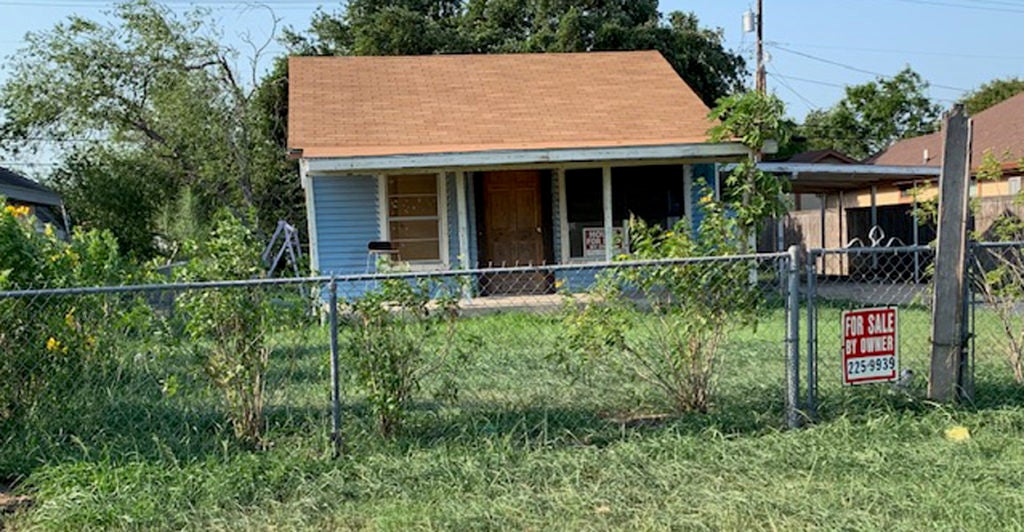
The blue house appeared abandoned when visited by The Daily Signal, with boarded-up windows and an overgrown yard. A sign on a chain-link fence says: “For Sale by Owner.”
“They said they all live there,” Molina reportedly said in May 2018 of the seven voters registered with the 409 E. Fay St. address. “I don’t know; I don’t stay in the house with them every day.”
Six others registered to vote with different addresses inside city limits other than East Rogers Road and Fay Street, but didn’t live at those addresses, according to arrest reports.
In May 2018, Texas Ranger Chad Matlock interviewed a cooperating witness who admitted to changing his or her voter registration on Sept. 19, 2017, after Molina said the witness “was permitted to do so.” The witness then voted illegally.
Another witness, in an interview with the Election Fraud Unit’s investigator Sgt. John Waits, admitted to doing the same, falsely registering on Oct. 10, 2017, before illegally voting in the municipal election. This witness claimed he or she “would have never falsely changed” the registration if Richard Molina “did not solicit” the action.
This witness claimed to have received numerous text messages from Molina for several days before the election, as a reminder to vote.
Another witness said Molina “provided the address” to use on a voter registration form.
The Texas Rangers made the first round of arrests in May 2018, charging four individuals with illegal voting, including one they said registered to vote with the Fay Street address and another with the East Rogers Road address, but who actually lived outside the city.
In November 2018, a year after the election, the Rangers made another roundup of Hidalgo County residents mostly connected to the Fay Street and East Rogers Road addresses, charging them with illegal voting.
Of the 10 charged, three were not registered at either the East Rogers Road or the East Fay Street addresses.
Al Alvarez, a McAllen lawyer who represents one of the defendants in the case, is critical of the law that led to the prosecution.
“Historically in Texas, all cases about voting were misdemeanors because we want to encourage people to vote, not discourage them,” Alvarez told The Daily Signal. “It’s difficult to know where the law ends and politics pick up, but the people suspect.”
“Election cases usually don’t do very well,” he said. “Politics don’t change through prosecutions, they change through elections.”
The Investigation’s Start
After Molina’s victory, Mary Alice Palacios, a former municipal judge with connections to the defeated mayor, compiled information about voter addresses. She sent her complaint documenting addresses to the Office of the Texas Secretary of State, which referred most of the questionable registrations to the Texas Attorney General’s Office.
Palacios “alleges that multiple persons provided false information to register to vote and voted illegally,” the attorney general’s Law Enforcement Division said in a memo dated Jan. 22, 2018.
Palacios is the aunt of the Hidalgo county prosecutor involved in the case, Rodriguez. Rodriguez disclosed his connection with her to Paxton’s office, which primarily pursued the case through Waits. Texas Rangers in the state’s Department of Public Safety also investigated, according to the April 25 criminal complaint from Paxton’s office.
Molina has also reportedly called the investigation retaliation because Palacios had a $300,000 insurance contract with the city that was cancelled when Molina was mayor.
Palacios returned a phone call from The Daily Signal, but declined to comment on the case while it is under investigation.
‘Wrong Case?’
Paxton, the attorney general, expressed appreciation in a press release for the district attorney’s “commitment to election integrity” in this and unrelated cases.
However, not everyone in Edinburg thinks the commitment is consistent.
Jerad Najvar, a Houston lawyer who has actively fought voter fraud, represents Molina in the recall matter. He contends that Paxton is pursuing the wrong case.
“Molina’s side filed the same complaints, but the attorney general wanted a big fish. This is a mayor of a reasonable-sized city,” Najvar told The Daily Signal.
Supporters of the mayor, including his wife Dalia, made complaints to Texas Secretary of State David Whitley about presumed Garcia voters. They provided motor vehicles records and land deeds as evidence that likely Garcia voters registered with Edinburg addresses were residents not only of nearby McAllen but also of Houston and San Antonio.
The Secretary of State’s Office received 12 complaints against Garcia’s campaign for recruiting nonresidents to vote in the city election. It determined six complaints had enough evidence to refer to Paxton’s Election Fraud Unit, spokesman Sam Taylor said.
“If there was not enough evidence to warrant an investigation, we didn’t refer,” Taylor told The Daily Signal.
Asked about Molina’s margin of victory, Taylor said: “I’m not aware that there were 1,200 illegally registered voters in the city; I believe [it’s] far less.”
Among the complaints against presumed Garcia voters, alleging they used phony addresses, including one complaint about Mary Alice Palacios.
The one about Palacios, the former judge who filed the first complaint against the Molina campaign, is one of the six complaints the Secretary of State’s Office confirmed forwarding to the attorney general for investigation. It accuses Palacios of living outside the city but using another address.
“They are using prosecutorial discretion to allow prosecution of just one side of the aisle,” Najvar said, referring to the case against Molina. “The incumbent Garcia and Palacios were law partners.”
“The public sees through it. This is an effort to take back the power they lost in 2017,” he said, referring to the mayoral election.
“I’m all for fighting voter fraud and I’ve done so in Hidalgo County,” Najvar said. “Attorney General Paxton is going after voter fraud. That’s fantastic. But Paxton has been jerked around on this by complicit local prosecutors.”
Taylor, spokesman for the secretary of state, said the attorney general’s office typically doesn’t confirm or deny the existence of an investigation. So it doesn’t comment on whether Garcia supporters also are under scrutiny.
Paxton spokeswoman Kayleigh Lovvorn initially told The Daily Signal that someone from the office would address the matter, but the office did not respond to several follow-up calls and emails.
The Next Chapter
As the mayor, his wife, and those accused of voting after registering with fake addresses move toward a trial, the next chapter could be a recall election.
Robert Solis, a nurse anesthetist, says he isn’t particularly political but started a petition drive to recall Molina because he thought Edinburg was getting a black eye.
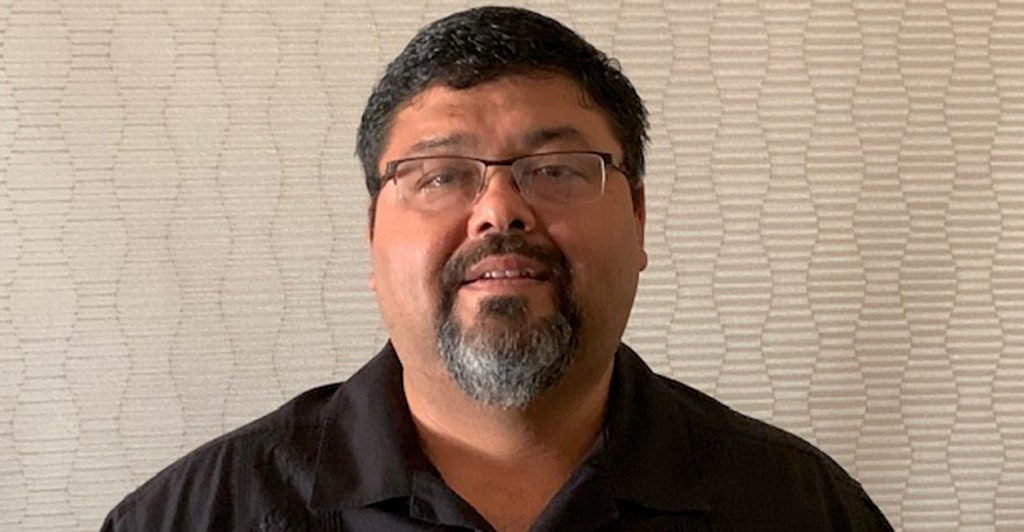
“It looked bad on our city. I mean, we made The Washington Post, we made The New York Times, USA Today, Austin [American-] Statesman,” Solis told The Daily Signal. “It’s kind of embarrassing.”
Solis and others have collected more than half of the nearly 2,200 signatures they need by June 21 to trigger a recall. They seek signatures at tables set up in the Echo Hotel and at public events such as a 5K race.
Solis, leader of the recall effort, said he is familiar with allegations against both sides, but would like to see the city make a new beginning.
“I know the people that I have talked to on both sides, mainly on the recall side, really want to push, hopefully, somebody new, somebody not involved on either side, somebody that can bring new leadership to Edinburg,” Solis said.
Recall efforts are not unusual at the municipal level in Texas or nationally, and public officials frequently weather the storm, according to data from Ballotpedia, a nonprofit that tracks election information.
“In 2018, Ballotpedia covered 206 recall efforts against 299 officials” nationally, Dave Beaudoin, news editor at Ballotpedia, told The Daily Signal. “Recall attempts targeting 150 officials did not make it to the ballot.”
“Of the 123 officials whose recalls made it to the ballot,” Beaudoin said, “77 were recalled and 46 survived the attempt. Ten other officials resigned before their recalls could go to a vote. That year had the largest percentage of recalls approved at the ballot since our tracking began in 2012.”
Mayors accounted for 13% of the recall efforts across the country in 2018, down from 19% the year before.
The mayor’s office contends it’s business as usual.
“Day-to-day operations are not affected at all,” city spokeswoman Cary Zayas told The Daily Signal, talking about the case against Molina. “The mayor remains the mayor. … He has been very much accessible at all times.”
“He’s at the meetings,” Zayas said of Molina. “He’s conducting business, he’s going to groundbreakings. He’s carrying on with business as usual because he denies any wrongdoing, No. 1; and No. 2, there is no reason why he shouldn’t.”
Monte, the planning consultant, said he worries that a recall election for Molina at this stage is “putting the cart before the horse.”
“Whether you believe the mayor is guilty or not, I think that we need to wait for the process,” Monte said. “He has been arrested, but he has not been tried. He has not been found guilty. There is already a recall. It’s politically based in reference to other people that wish they were mayor or want to be mayor, rather than anything else.”
Other Edinburg residents have differing views.
“If the mayor committed voter fraud, he should pay a price,” Sara Reyes, 47, told The Daily Signal outside a shopping center in Edinburg. “He should stay clean. This is why people don’t trust politicians.”
Abel Rocha, 46, said Molina “seems like a good man.”
“I’ll leave it up to God,” Rocha said in an interview near the same shopping center. “If he committed a crime, or it ends up he did something wrong, he’ll be punished.”
Joseph Schubert, 51, had a more decided view.
“I’ve heard people talk about it, but the mayor won in a landslide,” Schubert said in a parking lot interview. “I think some people are just sore losers.”

