In 2008, Fort Myers police officer Andrew Widman was shot in the face and killed on a downtown street. He was a husband and father of three, and he never had the chance to draw his weapon.
The man who killed him, Abel Arango, was an armed robber already ordered removed from the country. Cuba refused to take him back, and so, under the rule this bill is written to fix, he was released into the community that later buried Widman. That release did not hinge on anything Arango did in custody. It hinged on a decision made in Havana.
This is not a unique event. Look to San Francisco in 2012, where Binh Thai Luc murdered five members of one family in their home. He too had been ordered removed. Vietnam refused to issue travel documents, the clock ran out, and he was released.
Two cities, two refusing regimes, the same outcome. When a foreign government will not accept its own national, current American law does the releasing on its behalf.
That is the loophole in one sentence, and several U.S. senators are working to close it. The people attacking this fix never state the nature of the loophole plainly. They prefer to shout about supposed indefinite detention and wave around Zadvydas v. Davis, the 2001 case they clearly have not read.
The court did not order anyone released after six months. It read a reasonableness limit into a statute that was silent on prolonged custody, in order to avoid a constitutional question, and set six months as presumptively reasonable. After that, an alien wins release only by showing no significant likelihood of removal in the reasonably foreseeable future, and even then the government may rebut it.
TRENDING ARTICLES



The holding rested on statutory silence, and the court said plainly that clearer authority from Congress would change the analysis.
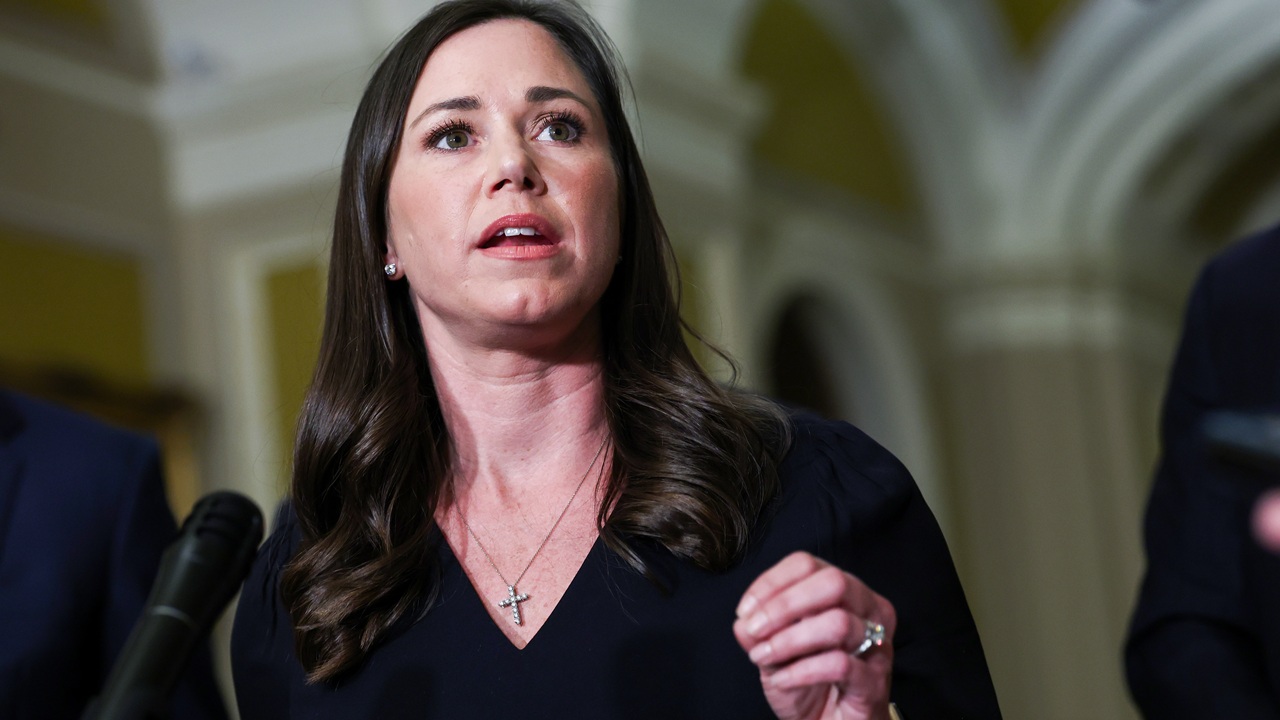
That clearer authority now has a name. The Keep Our Communities Safe Act of 2026, introduced in August by Sen. Katie Britt, R-Ala., and a dozen colleagues, is the latest version of a fix reformers have pressed for more than a decade.
Under current law, once the six-month Zadvydas clock runs out, a removable criminal alien whose home country will not take him back must generally be released, no matter what he did. The bill amends Sections 236 and 241 of the Immigration and Nationality Act so that release is no longer the automatic default. It lets the Department of Homeland Security hold a defined set of dangerous cases past six months—aggravated felons, perpetrators of violent crimes, national security threats, and those sabotaging their own removal—and it pairs that authority with individualized review and a requirement that the government justify the hold. It authorizes holding the worst of them while removal is worked out, not locking people away and forgetting them.
Look hard at who the current system rewards. The trigger for release is not the alien’s behavior. It is a foreign government’s refusal to cooperate. The more a regime stonewalls, the faster its nationals walk free onto American streets. Cuba, China, and Vietnam figured this out long ago. Refuse the paperwork, run out the clock, and the U.S. empties the cell for you. We built a machine that punishes cooperative countries and rewards the least cooperative regimes on earth, and the bill gets paid by people like Andrew Widman’s children.
None of this is inevitable. Congress built a tool for this problem into the Immigration and Nationality Act in 1952 and broadened it in 1996. Under INA 243(d), once the secretary of homeland security notifies the State Department that a country is refusing to take back its nationals, the State Department can halt visa issuance to that country’s nationals until it cooperates.
This tool has historically been used sparingly, but it works. After the government applied it in 2017, Sierra Leone moved off the recalcitrant list into the cooperative column. A regime that will ignore a deportation order still notices when its officials and elites can no longer get visas. Detention reform and visa sanctions are two halves of the same answer.
The due process objection collapses the moment you examine what the bill actually does. This is civil detention, not criminal punishment, and it is not the lifelong confinement some headlines claim.
Zadvydas faulted a statute that was silent, that set no standards for prolonged custody. This bill is the opposite of silence. It names the categories, builds in individualized review, and makes the government carry the burden. In Demore v. Kim, the Supreme Court upheld civil immigration detention during removal as regulatory rather than punitive, and in Johnson v. Arteaga-Martinez, it held that the post-order statute carries no hidden requirement of a fresh bond hearing every few months.
So strip away the theater. Under the status quo, a violent offender’s release turns on the goodwill of the regime he fled. This bill takes that decision away from Havana and Hanoi and hands it back to the U.S.
If you believe Widman’s killer earned his freedom because Cuba said “no,” stand up and defend that out loud. Everyone else already understands why this loophole needs to be closed.
We publish a variety of perspectives. Nothing written here is to be construed as representing the views of the Daily Signal.

Read the first chapter of The Woketopus right now for FREE
Today, even with President Trump’s victory, leftist elites have their tentacles in every aspect of our government.
The Daily Signal’s own Tyler O’Neil exposes this leftist cabal in his new book, The Woketopus: The Dark Money Cabal Manipulating the Federal Government.
In this book, O’Neil reveals how the Left’s NGO apparatus pursues its woke agenda, maneuvering like an octopus by circumventing Congress and entrenching its interests in the federal government.
You can read the first chapter of this new book for FREE in this eBook, The Woketopus: Chapter One using the secure link below.

The Daily Signal depends on the support of readers like you.
RELATED ARTICLES





Don’t miss the

Don’t miss the signal