
The practical and strategic utility of the Abraham Accords matters more than ever despite the ongoing geoeconomic and security challenges.
Victoria Coates, vice president of the Kathryn and Shelby Cullom Davis Institute for National Security and Foreign Policy at The Heritage Foundation, underscored this reality in the preface of the recently published annual report on the Abraham Accords. She wrote that “the Gaza ceasefire brokered by President [Donald] Trump in October 2025 and the deepening cooperation among the U.S., Israel, and America’s Arab U.S. Central Command (CENTCOM) partners have created an opportunity to take the Abraham Accords to the next level.”
Coates further noted that “President Trump has announced his intention to broaden the Accords from individual agreements to a more comprehensive regional deal, and we look forward to continuing to work with all of our partners at home and abroad to advance this American-led path to peace, partnership, and prosperity.”
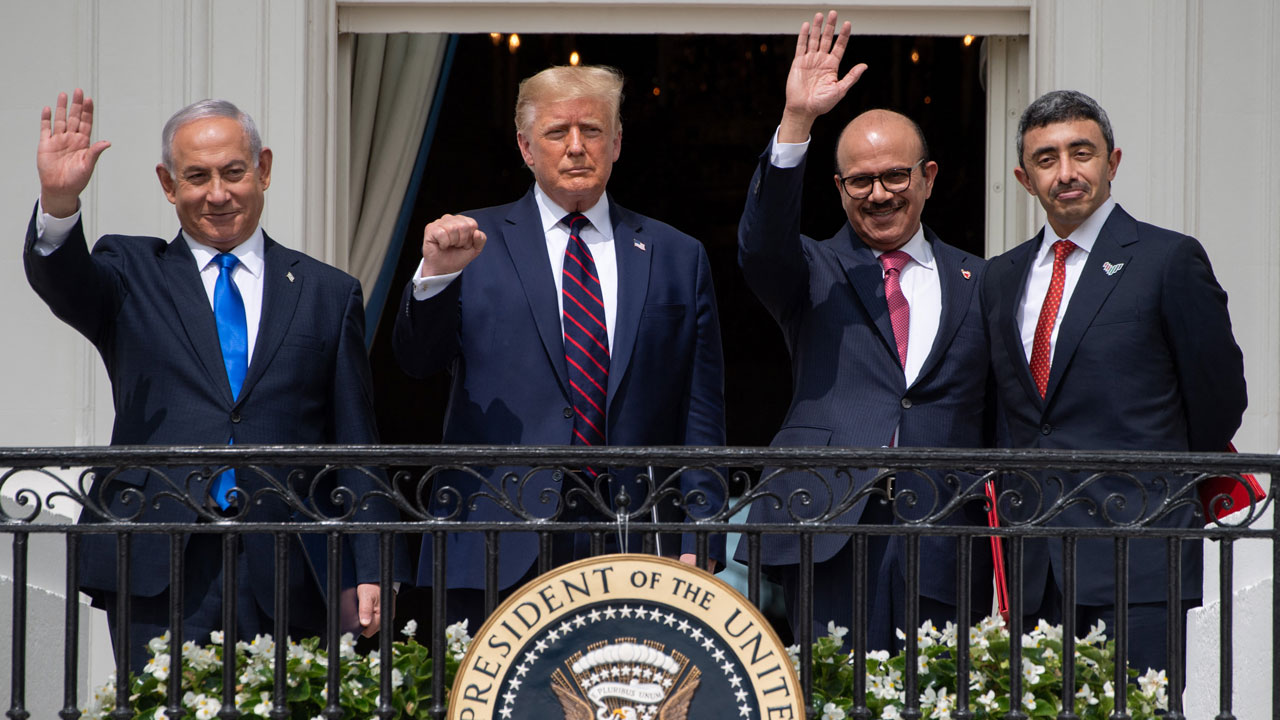
As the United States approaches the six-year anniversary of the Abraham Accords, this September will present a timely opportunity to reflect upon the resilience of Trump’s Abraham Accords.
Since their inception in September 2020, when Trump initially institutionalized the bilateral pacts between Israel and the United Arab Emirates and Bahrain, the Abraham Accords have yielded measurable steps forward, with Morocco and Sudan also added later. Most recently, Kazakhstan acceded to the accord and joined the “club of strength” in November 2025, becoming the first country to do so during Trump’s second term.
As Trump works toward a meaningful end to the war in Iran, Washington and its partners must not only reflect upon the success of the historic cooperation of the Abraham Accords, but they should also take this opportunity to expand upon the accords’ growing relevance in advancing freedom, opportunity, and prosperity.
TRENDING ARTICLES


To secure longstanding peace and prosperity in the Middle East, it is imperative that the Abraham Accords expand to shape a region marked as, in Trump’s words, “united, powerful, and economically strong, like perhaps no other area in the world.”
Such a coalition would enhance the ongoing campaign against the current Iranian regime.
As seen over the past six years, the success of the Abraham Accords has not only highlighted Trump’s vision but has proven to be a practical way to generate mutual prosperity for all participating nations. With the Abraham Accords, Trump has presented real and practical opportunities to reshape the Middle East focused on peace and prosperity.
Countries in the Middle East, including the UAE, Bahrain, Morocco, Jordan, Egypt, and Israel, have successfully increased their trade cooperation within the last year. This increased cooperation has deepened ties between nations and strengthened continued partnerships “fueled by mutual interests in security and prosperity.”
While the Abraham Accords have seen tremendous success since their implementation, conflicts in the region remain. Coates and Asher Fredman, executive director of the Misgav Institute for National Security, say that, despite continued tensions, the U.S. should not “retreat in the face of … hostility.” Instead, it is in the clear interest of the U.S. to pursue a greater “comprehensive strategy for a more secure, stable, and prosperous region.” Indeed, now more than ever, the strategic and pragmatic expansion of the Abraham Accords represents the hopeful outcome of peace in the Middle East.
While pursuing a meaningful conclusion of the war in Iran, it is critical that America’s Arab allies harness the courage to commit to the expansion of the Abraham Accords and embark on a regional reconstruction that bears the fruits of economic freedom. The alliance joined together by the accords is like none before it.
The Abraham Accords have proven that multilateral security and cooperation can be the cornerstones of a peaceful and prosperous Middle East.
The establishment of the accords almost six years ago and their expansion since then have underpinned America’s work to promote greater interaction spanning the critical region and beyond. From a broader strategic perspective, as Coates and Fredman succinctly observed, “the Abraham Accords should no longer be individual deals; they should become the foundation of a new regional order.”
Indeed, it would be misguided to loosen our commitment to the accords. Now is the time for the U.S. and its Arab allies to work together more strategically and embark on an era of greater peace and prosperity by building on what the Abraham Accords have already achieved through Trump’s vision.

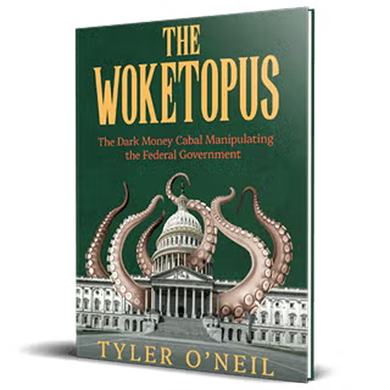
Read the first chapter of The Woketopus right now for FREE
Today, even with President Trump’s victory, leftist elites have their tentacles in every aspect of our government.
The Daily Signal’s own Tyler O’Neil exposes this leftist cabal in his new book, The Woketopus: The Dark Money Cabal Manipulating the Federal Government.
In this book, O’Neil reveals how the Left’s NGO apparatus pursues its woke agenda, maneuvering like an octopus by circumventing Congress and entrenching its interests in the federal government.
You can read the first chapter of this new book for FREE in this eBook, The Woketopus: Chapter One using the secure link below.
TRENDING ARTICLES


The Daily Signal depends on the support of readers like you.
RELATED ARTICLES





Don’t miss the

Don’t miss the signal