






















While Americans are told to think of Iran as a distant threat, the arrest of Iranian national Shamim Mafi at Los Angeles International Airport shattered that fiction on April 18.
According to First Assistant U.S. Attorney Bill Essayli, Mafi, a lawful permanent resident living in Woodland Hills, allegedly brokered more than $70.6 million in Iranian-made drones, bombs, bomb fuses, assault weapons, and millions of rounds of ammunition for Sudan.
If convicted, she faces up to 20 years in federal prison. This is not just a sanctions case. It is a homeland security warning Americans cannot afford to ignore.
The credentialed class loves to debate Iran as a theoretical policy challenge, but this case turns the abstract into reality with a California address. According to federal authorities, Mafi, who was born in Iran and became a lawful permanent resident in 2016, allegedly operated from inside the United States while maintaining approximately 62 bidirectional contacts with Iran’s Ministry of Intelligence and Security. This is no longer just about what Iran is doing in the Middle East. It is about whether more regime-linked operatives are already inside America.
Politically, and more importantly for homeland security, this story matters because Americans already see Iran as a real threat. A McLaughlin poll found that 52% of voters approve of military action to eliminate Iran’s nuclear and missile programs, and that support rises to 59% when voters are reminded of Iran’s record of killing Americans, taking hostages, and attacking U.S. forces.
America is also facing growing concern that Iranian sleeper cells or covert assets could exploit the vetting and enforcement vulnerabilities exposed during the Biden-era border crisis, which left dangerous gaps in interior security.
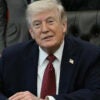
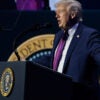
President Donald Trump has said the administration is watching possible Iranian sleeper-cell threats, and a 2025 White House national security memorandum warned that Iran directed proxy groups, including Hezbollah’s Islamic Jihad Organization, to embed sleeper cells in the homeland. The FBI has also warned that Iran continues to plot attacks against U.S. citizens.
The Mafi case is not proof of a sleeper-cell operation, but it makes those warnings immediate. Hostile regimes are not just overseas. They can exploit weaknesses inside the United States.
The scope and details of the allegations make clear that this case should not be ignored as just an isolated arrest. The allegations involve drones, air-drop dump bombs, massive ammunition deals, an Oman-based business structure, travel through multiple countries, and repeated contacts with a suspected Iranian intelligence officer. This case reveals a broader network and a direct failure to recognize how an Iranian foreign adversary could exploit U.S. residency while using shell businesses and international trade routes to move dangerous materials.
The policy lesson is critical. This is not only about funding the Department of Homeland Security in the abstract, but is also a reminder that America must fund and strengthen the capabilities that protect its people before it is too late. If the United States wants to stop hostile-regime networks, it must prioritize the functions that disrupt them: stronger vetting, aggressive investigations, intelligence gathering and analysis, export-control enforcement, and sanctions enforcement. Homeland security is not a slogan.
Democrats will treat any strong response as fearmongering, insisting that asking tough questions about residency, networks, and regime ties is fearmongering. That argument is a political loser, given that this is not theory. Federal prosecutors allege that a lawful permanent resident living in Southern California was operating an Iranian weapons-brokering network. Asking how that happened is the bare minimum of serious homeland security oversight.
The Mafi arrest should force a broader reckoning. The Iranian threat is no longer confined to foreign battlefields or intelligence briefings overseas. It is at America’s doorstep. We are facing the possibility that Iranian-linked actors, facilitators, and covert networks increasingly see the United States itself as operating ground. That is the real warning in this case, and it is one Washington can no longer afford to dismiss.

