
























Two former chiefs of staff for Sen. Ted Cruz, who also had senior roles under Texas Attorney General Ken Paxton, sparred Tuesday evening over who would be the Lone Star State’s next top law enforcement official.
Paxton is currently competing in a high-profile GOP Senate primary against incumbent Sen. John Cornyn and Rep. Wesley Hunt.
Competing to fill his seat are Rep. Chip Roy, a House conservative with the backing of Cruz, and Aaron Reitz, endorsed by Paxton. Two state senators are also in the mix, Joan Huffman of the Houston area and Mayes Middleton, an oil and gas executive who has reportedly raised $12 million.
If no candidate wins 50% in the March primary, the attorney general contest will be decided in a June runoff.
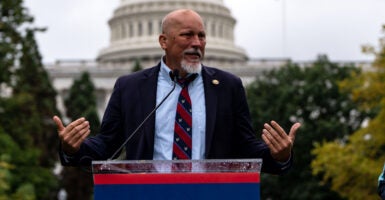
Roy and Reitz squared off during Tuesday evening’s GOP primary debate for the Texas attorney general seat.
“Don’t be fooled when Chip Roy tells you that he was Paxton’s chief deputy, and he wants to cite his record there. Remember, he was so ineffective, so bad at serving as Paxton’s deputy, that Paxton fired him,” Reitz said.
Roy responded, “That’s simply not true.” Roy was reportedly part of an exodus of senior staff that left Paxton’s office in 2016.
“I know someone who both of us worked for that’s endorsed me, and that’s Sen. Ted Cruz, and he has put his full confidence in me to serve as the attorney general of Texas,” Roy continued.
“Ted, having served as solicitor general for this great state, knows what is necessary in that office, and I’m proud to have his full support and endorsement.”
The Republican Attorneys General Association sponsored the debate, which included questions via video from GOP attorneys general from Iowa, Kansas, and West Virginia. The Blaze commentator Allie Beth Stuckey was the moderator.
There was little difference between the candidates on policy, as all four are pro-life, vowed to stop a Sharia movement in Texas, and promised to crack down on the type of welfare fraud that occurred in Minnesota.
While candidates agreed on enforcing the Texas ban on “gender transition” surgeries and hormone treatments for minors, there was some disagreement on who had the strongest position.
“These young people who were used, trapped into making these decisions, tricked into the decisions, whatever it was, it was horrible,” Huffman said.
She said as attorney general, she will work with the state Legislature “to make sure there are civil remedies for victims.”
“I’ve always stood up for victims, and this is just another class of victims that I would fight for,” Huffman said.
Middleton accused Roy of attempting to water down a House-passed national ban.
Roy proposed an amendment to take away federal funding for such procedures and expressed concerns about federal overreach. He dropped the amendment and voted for the bill.
“It was under a state’s rights argument. I’m sorry. There is no right to hurt a child,” Middleton said. “We need to make sure that we ban this completely.”
Roy said, “It is amazing to listen to Republican attorneys general candidates standing up saying, they want massive federal laws to step over the state of Texas.” He also noted the bill was sponsored by former Rep. Marjorie Taylor Greene, R-Ga., a fervent critic of President Donald Trump.
“I stood up to try to improve legislation in December that is dead in the United States Senate, and to make it something that we could pass with a funding string, rather than what my opponents want to criticize me for,” Roy said.
“The truth matters, and I’ve stood up alongside those victims, and I will do it as attorney general.”

