


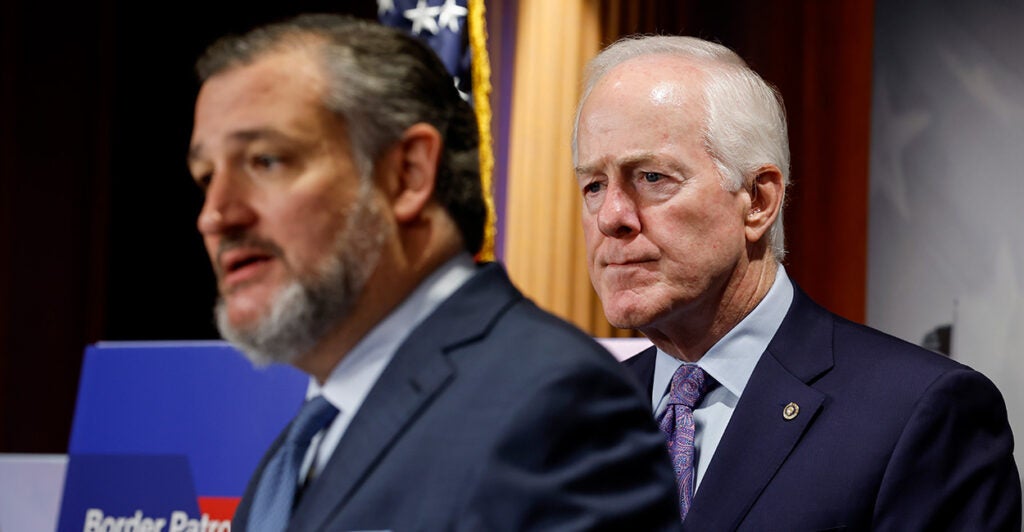
FIRST ON THE DAILY SIGNAL—A bipartisan group of more than 60 Texas state representatives wrote a letter to the state’s U.S. senators asking them for stronger child protections online.
A total of 64 state House members, led by Rep. Shelby Slawson, a Republican, are joining their state Senate colleagues in urging U.S. Sens. John Cornyn and Ted Cruz to ensure the inclusion of specific protections for children in the Kids Online Safety Act. The Daily Signal previously reported a letter by 20 state senators saying that the Kids Internet and Digital Safety (KIDS) Act, a U.S. House bill, is too weak.
The House Energy and Commerce Committee recently marked up the KIDS Act, which contains a version of the Kids Online Safety Act that the legislators say is “considerably weaker” than the Senate version.
“It removes the duty of care to prevent online harm to children,” the lawmakers write. “It replaces it with broad preemption language that prevents states from enforcing any laws that conflict with federal provisions.”
The KIDS Act, with KOSA included, would invalidate any state law that “conflicts with” its provisions. That could invite Big Tech to litigate against child protection laws, according to the Alliance for Secure AI.
The letter urges Cornyn and Cruz “to support legislation that includes a duty of care and balanced preemption language, such as the Senate version of KOSA, to ensure that states retain the ability to protect children online effectively.”
Under the KIDS Act, platforms are not specifically required to protect against suicidal behaviors, eating disorders, substance use disorders, and “addictive use.”
The sponsor of the KIDS Act, Rep. Brett Guthrie, R-Ky., said in a recent statement that under the bill, “platforms must maximize protections for children and teens.” He added that the legislation mandates “robust enforcement by the Federal Trade Commission—and states attorneys general.”