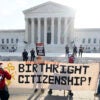




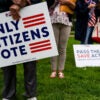





Noncitizens demonstrating against the United States and Israel at U.S. campuses scored a legal victory over the Trump administration last week, as a Massachusetts federal judge halted the deportation of international students and faculty.
The case of American Association of University Professors v. Rubio, naming Secretary of State Marco Rubio as the lead plaintiff, concerns a State Department policy that allowed for the deportation of international students and academic faculty involved in pro-Palestinian demonstrations that often involved anti-American and anti-Israeli sentiment.
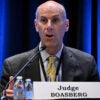
U.S. District Judge William G. Young held Thursday that a change in immigration status, or arrest, could not be based on viewpoints.
He determined that the administration implemented its orders against the students in “‘a viewpoint-discriminatory way to chill protected speech’ that ‘violated the First Amendment.’”
The lawsuit also named several other top administration officials, as well as President Donald Trump. The Middle East Studies Association was among the plaintiffs.
This marks Young’s second ruling in the case that undermines two Trump executive orders.
In January 2025, Trump directed federal agencies to enhance immigration vetting procedures to prevent the entry of individuals who may pose a national security threat.
That same month, he issued a separate order directing authorities to combat antisemitism on college campuses, amid an outpouring of demonstrations against Israel that intimidated Jewish students.
The plaintiffs in the case sued over the orders, asserting that enforcement amounted to viewpoint discrimination and violated the First Amendment.
The Trump administration argued that noncitizens do not have the same First Amendment rights as American citizens.
But in a separate September ruling in the case, Young held that international students and faculty have the same First Amendment rights as citizens.
Young is an appointee of President Ronald Reagan.
Last year, Young ruled against the Trump administration on National Institutes of Health funding for research related to racial minorities and Americans identifying as LGBTQ+. Young called the funding cuts “appalling” discrimination.
One of Young’s most high-profile cases was that of Richard Reid, the convicted “shoe bomber” who boarded a passenger plane with a bomb in his shoe. After the 2003 conviction, Young sentenced Reid to life in prison.

