


The late Rush Limbaugh posited in 2012 that it would be very difficult to win an election over Santa Claus. Meaning that someone who is just seen as bringing gifts will always be popular, and—with apologies to New York newspaper editor Francis Church—yes, Virginia. You just elected Santa Claus.
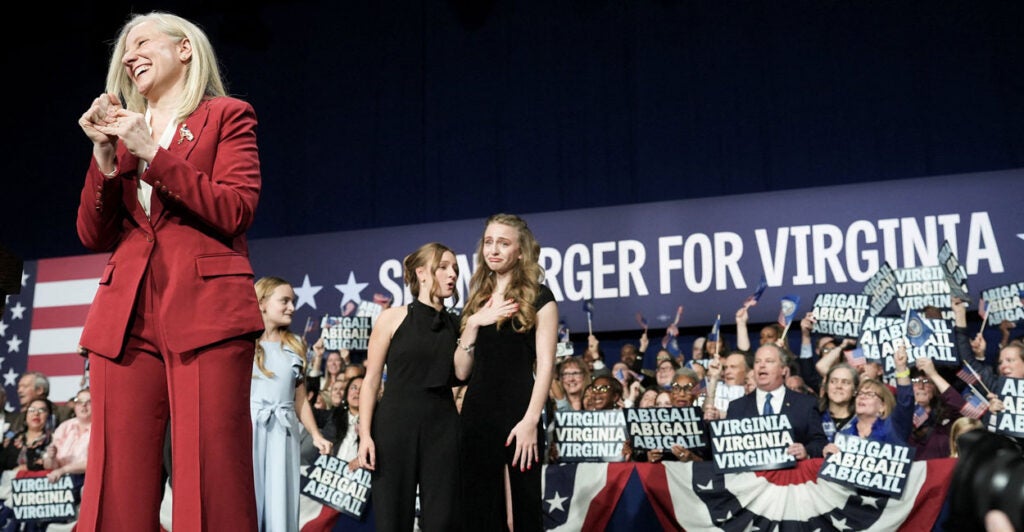
Both Gov.-elect Abigail Spanberger and Lt. Gov.-elect Ghazala Hashmi have spoken since the election of their plans to lower the costs of things like electricity and housing on Virginians. However, as is often the case, details are sketchy.
For example, she told WUSA in Washington, D.C., “I think people will see a common theme on getting things done and improving on people’s lives,” which is hard to find in the Virginia Constitution.
“Lowering the cost” is most frequently code for subsidizing. This is a bipartisan truism. Republicans will often acquiesce to subsidy rather than try to make the case for free-market solutions. If you are explaining, you are losing, they say.
Subsidies increase the cost of goods or services because the provider no longer is under pressure to consider the ability of the end-user to pay what it would reasonably cost. This frequently causes the provider to choose more expensive ways of creating the product often to prove to the subsidizer that they are worthy of continued receipt.
The losers in this are the consumers that did not qualify for the subsidy, often only by a small margin leaving them well short of being able to afford the “full freight” cost.
The incoming administration will have two primary choices in how to accomplish this subsidization, supply-side or consumer-side. The latter is simpler but less common because the subsidy comes from the government, and if the consumer fails to keep their qualification, it will be on the government to tell them they are out of luck.
Think of SNAP benefits as a recent example. You can imagine that a new governor wouldn’t want to take that hit.
Supply side is more convoluted but because it insulates the elected official from being directly blamed for the loss of benefits it is more frequently how it works.
Think of most Section 8 housing or how most of the current electric cost subsidies work. The provider trades the position of having to play the “bad guy” for a predictable stream of semi-paid bills. The phrase “some money is better than no money” applies here.
In either event, this will require tax-paying Virginians to carry more of this burden through higher taxes, fees and, of course, in the prices of the things that the governor will try and “lower the cost of.”
The secondary effect of this campaign often manifests in job losses and that will further strain Virginia’s economy, which has been on the recovery trail for the past four years.
Spanberger will likely try to stave this off with workforce subsidy, and now you are starting to sense how this becomes a self-fulfilling process. Support people in need with tax dollars, create economic damage with those taxes, then create more people that need assistance.
The incoming governor has said that she favors streamlining the regulations in the home-building process to create more inventory, but localities have balked at that in past administrations.
Here comes Santa Claus. At least we don’t need to leave her milk and cookies.
We publish a variety of perspectives. Nothing written here is to be construed as representing the views of The Daily Signal.