


























Jupiter Christian School, located 22 miles north of Palm Beach, Florida, has 700 students on its waiting list. The head of Grandview Prep, also near Palm Beach, reports that the number of applications to private schools in the area increased by almost 50% between 2017-2018 and 2022-2023. A charter school that serves students in grades K-8 near the heart of Orlando reports just three open seats and only across the sixth-eighth grades.
In sum: There is high demand for private schools and public charter schools in Florida.
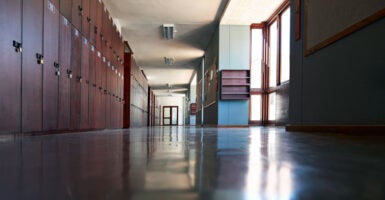
Meanwhile, at least two traditional school districts in Florida are reporting thousands of open seats, and taxpayers are paying for school buildings with declining enrollment.
Last week, Orange County Public School officials announced that so many students are leaving the district that administrators could close seven buildings—paving the way for private and charter school operators to gain access to the facilities. One Orange County middle school on the list of underused buildings has more than 900 open seats.
However, around the country, public school districts have been notorious for holding on to underused or even vacant facilities so private schools and charter schools cannot use the buildings. Heritage Foundation research has documented examples from Detroit, where the city’s public school district blocked charter school operators from accessing a building the school district did not even own.
Between 2010 and 2017, the Tucson Unified School District was maintaining at least a half-dozen closed district school buildings, even as the district had some 13,000 empty seats.
Pew Research reports that Philadelphia closed 30 schools between 2010 and 2015 and found dozens of vacant buildings in Ohio, Missouri, Pennsylvania, and Wisconsin, to name just a few states identified in its research.
Florida lawmakers have adopted provisions that prevent public school boards from holding on to vacant school buildings. Not only do empty buildings become an unnecessary expense for taxpayers, but the facilities can be objects of vandalism and attract other forms of crime.
Under state law, public charter schools that operate in areas with low-performing traditional schools can be designated as “schools of hope” and access empty public school buildings. The traditional district would still be responsible for facility costs.
Florida lawmakers could give parents and children still more great options for a child’s education by expediting the process by which private school leaders could purchase these properties.
The combination of parents seeking great learning options for their children and more vacant public school facilities creates exciting education possibilities.
For example, innovative educators should see the vacant buildings as an opportunity to expand the number of private classical schools. Surveys find that parents want character and virtue taught more in schools, as well as a greater emphasis on civics.
Classical schools focus on developing responsibility and manners in young students and design their curricula around great books, rhetoric, memorization, and etiquette—instruction that is noticeably absent from traditional public school classrooms.
The Orlando Sentinel reports that Orange County school board members are looking for ways to prevent schools of hope from accessing their buildings, but state lawmakers and parents should not let them get away with acts of subterfuge.
The burgeoning enrollment figures in the state’s education savings accounts, along with long waiting lists for private schools and public charter schools, are evidence that parents are looking for more than what assigned schools offer.
Florida policymakers should take note of the evidence from other states and prevent school district administrators from hoarding empty school buildings. Officials should see the facilities as opportunities for new private or public charter school learning opportunities.

