



























House Republican leadership wants to get its health care premium-slashing package passed this week. But will a party that has always struggled to find consensus on health care be able to get anything done?
The bill in question is the Lower Health Care Premiums for All Americans Act, a bundle of targeted tweaks to Obamacare. Increased appetite to enact legislation to lower health care costs could also lead to a second budget reconciliation process, which Republicans used to pass the “One Big, Beautiful Bill” in July.
On health care, Republicans are battling against Democrat-led efforts to extend boosted premium tax credit levels set in place under President Joe Biden. As it stands now, the GOP bill will let these enhanced credits expire at the date set by Democrats under Biden, but put in place other premium-cutting provisions.
The biggest policy change in the bill is the appropriation of Treasury funding toward cost-sharing reductions, a part of Obamacare.
In theory, CSRs involve insurers being required to offer cheaper copays and deductibles to consumers for out-of-pocket expenses, for which the federal government reimburses them.
Under President Barack Obama, funding for CSRs was originally provided directly from the executive branch to insurers, without explicit congressional approval. This practice faced a Republican-backed court challenge before finally being cut off in 2017 during President Donald Trump’s first term.
This change led to what is called “silver loading,” as insurers increased premiums on the Obamacare silver-level plan in order to make up for no longer being reimbursed for offering the legally mandated cheaper copays and deductibles.
Proponents say that renewing funding for CSRs will effectively end silver loading, thereby lowering premiums substantially.
Additionally, although counterintuitive, funding CSRs is likely to reduce the federal deficit, per the Congressional Budget Office, a nonpartisan budgetary analysis office funded by Congress.
This is due to the fact that higher premiums from silver loading have automatically increased the deficit costs from premium tax credits, which cover a set percentage of premiums for each income level.
Fiscal Hawks
So far, there is a good amount of support for the package among House fiscal conservatives because of the bill’s impact on the deficit.
House Freedom Caucus Chairman Andy Harris, R-Md., told The Daily Signal he supports the idea of funding CSRs.
“Yes, I do [like it] because that’ll save tens of billions of dollars in subsidy costs for the federal government,” he told The Daily Signal.
Still, there might be some groans among fiscal hawks as they support a bill that would pour more money into part of Obamacare, a law that created outrage among free-market conservatives in the 2010s and fueled the rise of the tea party movement.
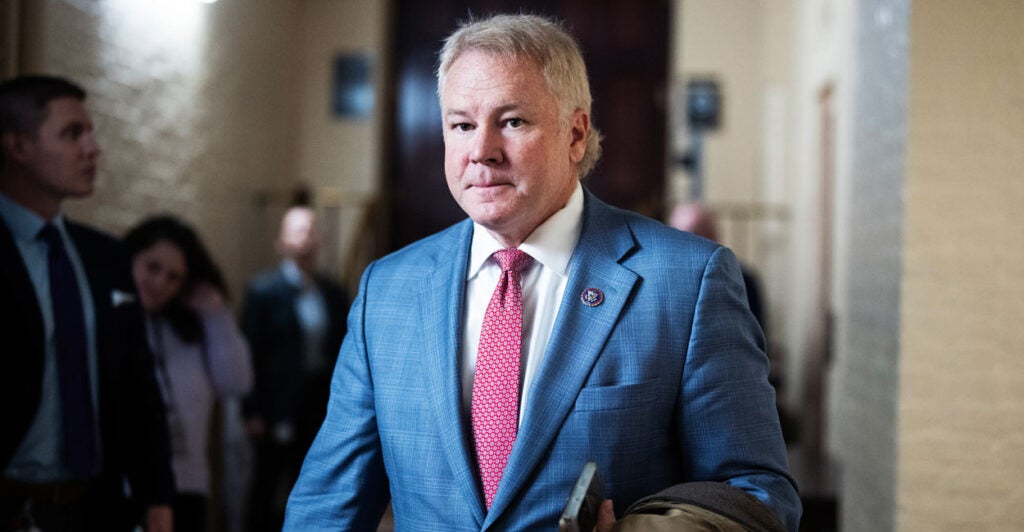
“No,” Rep. Warren Davidson, R-Ohio, said bluntly when asked if he liked the idea of funding the reductions.
“Yeah that’s right, yeah, we spend money and it somehow saves us money,” he added, sarcastically. “It’s like the sales. I saved money because I bought more stuff.”
Still, Davidson told The Daily Signal that the bill is “progress.” It includes other provisions requiring transparency from third-party pharmacy benefit administrators, as well as deregulating employers’ decisions in offering health plans.
Rep. Byron Donalds, R-Fla., another supporter of the Republican health care push, also expressed hesitancy over the cost-sharing reduction policy in principle.
“Not the biggest fan, but listen, a lot of things at this time, I’m not the biggest fan,” Donalds told The Daily Signal.
Health Savings Accounts Coming Soon?
Part of most Republican proposals to reform Obamacare has been instituting health savings accounts to replace the premium tax credits that cover consumers’ monthly costs. This is not included in the leadership-backed bill.
The idea is that these funds would not go directly to insurance companies, would be less prone to fraud, and would offer consumers more flexibility.
Conservatives in the House stressed Monday that they would like to see these instituted in the future.
“What needs to happen is that there has to be expanded accounts within the confines of the ACA,” Donalds said. “So those premium subsidies, instead of going to health insurance companies, actually go to the American people.”
Speaker of the House Mike Johnson, R-La., told The Daily Signal Tuesday that these policies remain on the table, and that he would like to implement them in 2026.
It’s “very much on the table. The president likes the policy as well,” Johnson told The Daily Signal. “I think we could get broad consensus on that.”
Johnson also previewed a likely budget reconciliation bill—a type of legislation that can pass with simple majorities in both chambers—next year to address the matter.
“What we anticipate going into the first quarter of next year is—possibly in a reconciliation package, or in regular order, stand-alone—ideas just like this. We have a long list of things that we know will reduce premiums.”
Revolt of the Moderates
But what Johnson might fear more is a band of House Republicans ditching his health care bill for a Democrat-backed bill.
Originally, the idea was to allow House Republicans from swing districts to bring forth an amendment on whether to extend the premium tax credits.
These members, many from districts where Democrat president candidate Kamala Harris won more votes than President Donald Trump in 2024, would get a chance to fight for their preferred policy.
But the proposal ran into difficulties due to the House’s CUTGO rule, which requires that any such amendment be budget neutral. This would have to require massive offsetting provisions to reduce mandatory spending.
Johnson said Tuesday that this was now off the table.
“There’s about a dozen members in the conference in these swing districts who are fighting hard to make sure that they reduce costs for all of their constituents, and many of them did want to vote on this,” Johnson said.
“We looked for a way to try to allow for that pressure release valve, and it just was not to be. We worked on it all the way through the weekend, in fact. And in the end … an agreement wasn’t made.”
It remains to be seen whether these Republicans will offer some amendment at the House Rules committee, which will determine the rules for consideration of the bill.
The danger for leadership’s health care push is if a coalition of Republicans help move one of multiple discharge petitions now in circulation.
If one of these petitions gathered a majority of members’ signatures, it would force a vote on a bill to extend the subsidies. The Senate has already rejected a Democrat-backed three-year extension, though, so it would have little chance of reaching the president’s desk.
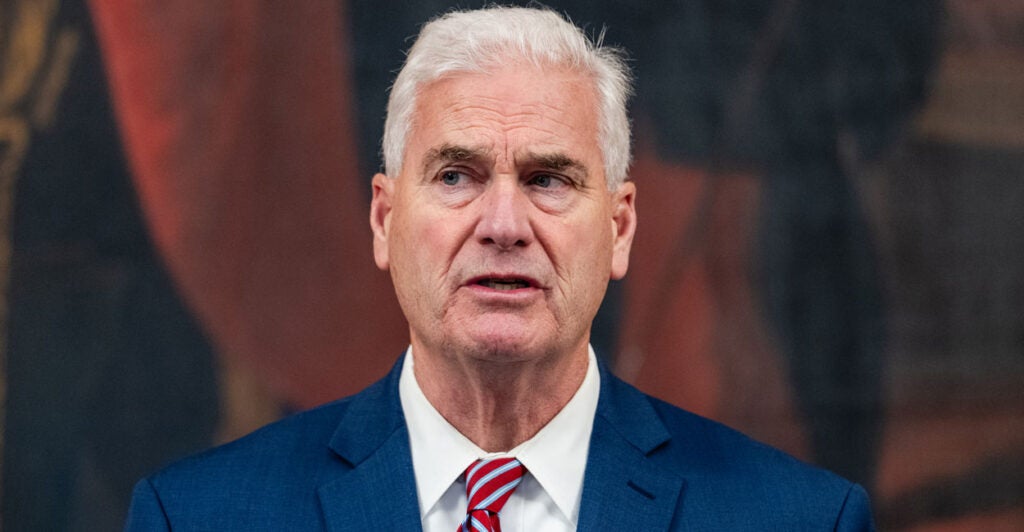
House Majority Whip Tom Emmer, R-Minn., told The Daily Signal that the petitions are a minor concern, and he is not whipping against them.
“We don’t whip on discharge petitions, we don’t whip on rules,” he said. “We whip on bills that are the priority of the speaker and the Republican House to get across the finish line.”
Johnson also expressed confidence that swing district Republicans would be on board with the premium-slashing package, saying, “One thing they will all join in unity on is voting for this bill.”

