















A federal judge in California on Wednesday ordered an end to Donald Trump’s deployment of National Guard troops to Los Angeles and directed that they be returned to the control of the state’s Democratic governor, finding that the Republican president had exceeded his authority.
“Today’s ruling is unmistakably clear: the federalization of the California National Guard must end,” wrote Gov. Gavin Newsom, a Democrat, on X.
The ruling by San Francisco-based U.S. District Judge Charles Breyer represented the latest legal setback for Trump and his efforts to deploy National Guard troops to Democrat-controlled cities, an extraordinary use of the military for domestic purposes.
The White House appears poised to appeal the decision.
“President Trump exercised his lawful authority to deploy National Guard troops to support federal officers and assets following violent riots that local leaders like Newscum refused to stop,” White House spokesperson Abigail Jackson said in a statement to The Hill. “We look forward to ultimate victory on the issue.”
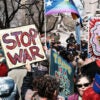
The judge found Trump overstepped his authority by taking control of California National Guard units and sending them to Los Angeles and elsewhere in response to protests against federal immigration authorities.
Breyer, who was appointed by President Bill Clinton, said there was no evidence to support the administration’s claim that the protests were a rebellion against the government that legally justified sending in troops.
However, Hans von Spakovsky, a senior legal fellow at The Heritage Foundation, pointed out that the judge, when he claimed there was no “rebellion” to justify sending in National Guard troops, ignored the other grounds in the relevant statute that apply to what has been happening in Los Angeles.
Under 10 U.S.C. 12406, the president can call the National Guard into federal service when he is “unable with the regular forces to execute the laws of the United States.”
“Only a rogue judge who wants to rule against Donald Trump could possibly conclude that the attacks on federal immigration agents, mob violence, and obstruction of enforcement of federal immigration law that we have witnessed in the City of Angels do not fall within this statute,” said von Spakovsky.
“This judge’s legal conclusions are obviously without foundation and I would expect Judge Breyer’s opinion to be overturned on appeal, as already happened with his prior opinions.”
Breyer also rejected the administration’s claim that courts have no power to review a president’s decision to take control of state National Guard units during an emergency, saying this was an overly expansive view of presidential authority.
“The founders designed our government to be a system of checks and balances. Defendants, however, make clear that the only check they want is a blank one,” Breyer said, referring to the Trump administration.
The judge’s ruling came in a lawsuit filed by Newsom, a prominent critic of Trump, that asked the court to block an August order by Trump’s administration taking federal control of 300 California National Guard troops through Feb. 2, 2026.
National Guard units are controlled by states but can be called into federal service under certain circumstances.
Trump has said his troop deployments in Los Angeles, Chicago, Washington, D.C., Memphis, and Portland, Oregon, are necessary to fight crime and protect federal property and personnel from protesters.
Local leaders in those cities have said the deployments are unnecessary. They have accused Trump of exaggerating isolated episodes of violence at mostly peaceful protests to justify sending in troops.
Reuters contributed to this report.

