
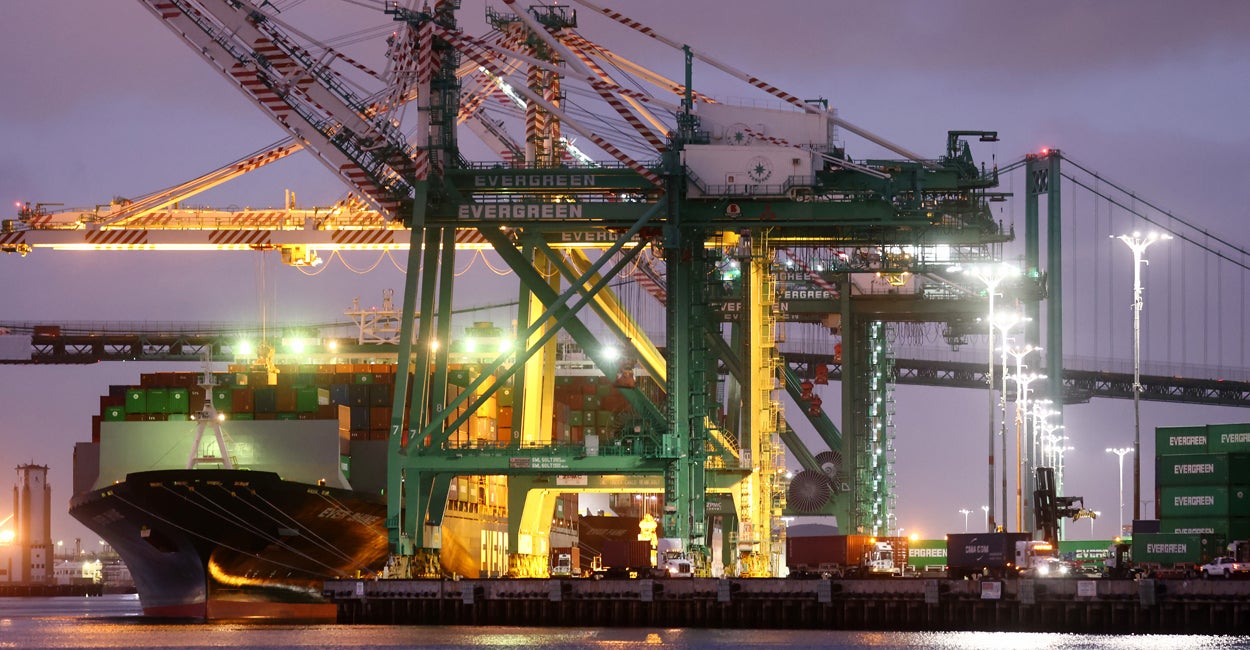
A recent report by the World Trade Organization revealed that “despite a slowdown in new trade restrictions unrelated to the pandemic, the stockpile of unrepealed restrictive measures that has accumulated since the monitoring exercise started in 2009 now affects traded merchandise worth an estimated USD 1.5 trillion, or nearly 9 percent of world imports.”
The World Trade Organization director-general’s annual overview report on trade-related developments, which covers the monitoring period of mid-October 2020 through October 2021, also underscored the importance of transparency in trade and in trade policy-making for markets around the globe to operate more efficiently.
Regrettably, government interference in the capacity of individuals and businesses to exchange goods and services freely across borders has not been subdued over the past year, according to a recent Heritage Foundation report on the freedom to trade.
The study finds that the global average of countries’ trade freedom scores has declined from 70.9 to 69.5 on the 0-to-100 trade freedom scale. This is the fourth straight year that the global average of trade freedom has dropped.
As The Heritage Foundation’s annual Index of Economic Freedom and a large number of other research have documented, economies and people are better off when trade is free and open.
Countries with greater trade freedom tend to have much higher income per capita, better food security, more political stability, and healthier natural environments.
TRENDING ARTICLES


It is notable that when a country’s government gets out of the way and allows individuals to make unimpeded trading decisions that are best for themselves, their families, and their companies, people thrive.
Governments have often found that it is easiest to dismantle trade barriers in the context of international negotiations or as a result of commitments made in multilateral or bilateral trade agreements.
The keystone of the international system of such agreements and negotiations has been the World Trade Organization, and it is probably no coincidence that the recent decline in world trade freedom has occurred at a time when the World Trade Organization has been in crisis, with its dispute resolution system virtually inoperable.
Many member nations feel that the World Trade Organization is lacking in certain areas, especially in its ability to curtail what many regard as abusive or coercive trade practices by China. It is vital that such nations and regional organizations, especially the United States and the European Union, work together strategically and practically to reform the over 25-year-old institution to improve its effectiveness in resolving disputes between members and to ensure that bad actors with anti-free-market trade practices are not supported.
Indeed, the freedom to trade is the foundation of economic progress, and the expansion of global markets has proven to be a powerful engine for growth and a key factor in the worldwide fight against poverty.
In a highly complex global economic environment, open trade is a constantly evolving phenomenon and process. The temptation to seek short-term advantages through protectionist measures abounds and has been increasing. Particularly in the context of the current coronavirus pandemic, defending and advancing trade freedom is more critical than ever.
It is regrettable to see America’s free trade policy has been largely absent or undermined over the past years. As a Jan. 5 Wall Street Journal commentary titled “Joe Biden’s Inflationary Trade Policy” points out:
American trade policy was traditionally bipartisan, and aimed at reducing prices and increasing choices for consumers. Sadly, both parties have abandoned this approach … Americans concerned by high prices can expect the government to point the finger of blame everywhere except at its own ‘worker centric’ and, yes, greedy trade policies.
The freedom to trade is critical for ensuring the much-needed economic rebound in the wake of COVID-19. The year 2022 should be the year to lay the ground for reversing those short-sighted protectionist trade policies and move toward restoring America’s trade freedom that will enhance its overall economic freedom.
Have an opinion about this article? To sound off, please email [email protected] and we’ll consider publishing your edited remarks in our regular “We Hear You” feature. Remember to include the URL or headline of the article plus your name and town and/or state.



Read the first chapter of The Woketopus right now for FREE
Today, even with President Trump’s victory, leftist elites have their tentacles in every aspect of our government.
The Daily Signal’s own Tyler O’Neil exposes this leftist cabal in his new book, The Woketopus: The Dark Money Cabal Manipulating the Federal Government.
In this book, O’Neil reveals how the Left’s NGO apparatus pursues its woke agenda, maneuvering like an octopus by circumventing Congress and entrenching its interests in the federal government.
You can read the first chapter of this new book for FREE in this eBook, The Woketopus: Chapter One using the secure link below.
TRENDING ARTICLES


The Daily Signal depends on the support of readers like you.
RELATED ARTICLES



Don’t miss the

Don’t miss the signal
