




























According to a poll from the University of Maryland’s Program for Public Consultation, 86% of Americans “favor prohibiting stock-trading in individual companies by Members of Congress.” This includes more than 80% of Republicans, Democrats, and independents.
The Stop Insider Trading Act (HR 7008) from Rep. Bryan Steil, R-Wis., the chairman of the Committee on House Administration, would take the first real step toward placing limits on members of Congress when it comes to buying and selling stocks based on the special briefings and connections they receive as a privilege of their elected positions. It would close the gaps left open by the 2012 STOCK Act, an Obama-era law, which has allowed members of Congress to purchase and profit from stock sales while in office.
It is not a new phenomenon or breaking news that Americans broadly disapprove of the way that Congress is handling its job. In the latest public polling from Gallup, Congress receives just 16% approval. Members of Congress, through inaction and scandal, have eroded public trust.
Yet, the same polling also shows short spikes in congressional approval in the early months of each new presidential administration, demonstrating that Americans have not given up on Congress. Americans are a hopeful people.
We can—and should—hold our elected representatives to a high standard and expect them to honor their duty to put the interests of the American people first. Congress is central to the proper functioning of our republic, and when it’s out of whack, then symptoms of that dysfunction manifest across our government, impacting Americans’ daily lives.
There are no silver bullets for this problem, and there are plenty of obstacles to fixing it. Many political issues are polarized, leaving little room to win independents. Meanwhile, the uniparty establishment in both parties seems determined to block anything that could bring meaningful change to a status quo that encourages entrenched interests that profit from a broken system.
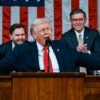
One of President Donald Trump’s best qualities is his twofold knack for uncovering how old D.C. orthodoxy fleeces the American people and forcing Congress to do the right thing when it comes to what he has dubbed “80-20 issues.” He’s placed a strong spotlight on the SAVE America Act to advance ID and proof of citizenship for voting, and now he’s doing it again with the Stop Insider Trading Act, which he called Congress to pass during his latest State of the Union speech.
The failure of the STOCK Act has been amplified by the rise of digital platforms like the Pelosi Stock Tracker and Quiver Quantitative’s Congress Trading Dashboard, which give the American public unprecedented access to reported trades by congressional members.
So long as a member is not breaking federal securities provisions on insider trading, which are crafted more for corporate boardrooms rather than legislative committee hearings, he or she is free to buy and sell stock for companies, industries, and government contractors that his or her committee oversees, as long as it’s reported within 45 days.
The most common violation of the STOCK Act is late reporting of a trade. The fine exceeding the 45-day reporting window is a mere $200. The Stop Insider Trading Act will dramatically increase penalties for violations to a minimum of $2,000 or 10% of the stock trade (whichever is greater), plus the total amount of any gain realized from the investment.
While the merits of what Congress could do to go further can be debated, the core elements of the Stop Insider Trading Act will provide a strong baseline to root out the abuses that have roiled Congress in scandal for too long.
Democrats and Republicans would do themselves a favor to work together on this proposal or else forever endure an endless news cycle of insider-trading scandals and the ire of hardworking Americans.
The Stop Insider Trading Act was reported out of committee favorably in February. House Republican leadership would be smart to schedule a vote without delay to reassure the American people that Congress understands its first duty is to its constituents, not its stock portfolios.

