
































Syria is on track to experience a genocide if security protections are not put in place for endangered religious minorities, according to one expert on global religious freedom.
If the “right” steps are taken, there could be “a long-term, stable, I hope, open to democratic [government in] Syria that will take place. We get it wrong now, you will have a genocide within three or four years,” warns Sam Brownback, who formerly served as ambassador-at-large for international religious freedom in the first Trump administration.
To prevent genocide, “local security has to be provided by and for minority groups so that they can protect themselves,” Brownback said while speaking at the International Religious Freedom Summit in Washington, D.C. this week.
Multiple minority groups, including Alawites, Christians, Kurds, and Druze, are currently facing various levels of persecution in Syria following the collapse of the Assad regime at the end of 2024. Reports of kidnappings, church bombings, and torture of minority groups continue to emerge from the country.
Alawite Persecution
Dr. Morhaf Ibrahim, who is Alawite and serves as president of the Alawites Association of the United States, grew up in Syria but moved to the United States in 2005 at the age of 25.
Ibrahim, a cardiologist who lives in Jacksonville, Florida, still has family and friends in Syria. About a week ago, Ibrahim received news that one of his Alawite friends, who is also a doctor, was kidnapped in Syria and his body was found two days later.
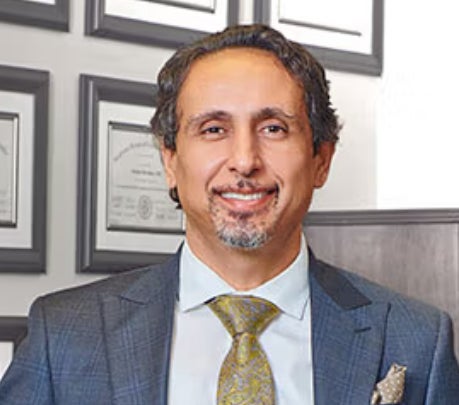
“Kidnapping and killing continues to be an issue” in Syria, Ibrahim told The Daily Signal.
The Alawites are a branch of Shia Islam and enjoyed favor with the Assad regime due to the ruling family being members of the Alawite sect. However, Syria is a predominantly Sunni Muslim nation.
Shia and Sunni are the two main branches of Islam and hold different views on the Prophet Muhammad’s successor, which has created tension between the two groups since the 7th century.
Shia Vs. Sunni in Syria
Hafez al-Assad seized power in Syria in 1970, and his son Bashar al-Assad, nicknamed “The Butcher,” succeeded his father in 2000. Syria entered a civil war beginning in 2011 after the Assad regime responded to anti-regime protests with brutal force.
During the civil war, over 200,000 civilians were killed under Bashar al-Assad’s rule. More than 15,000 died of torture at the hands of the regime, according to the Syrian Network for Human Rights, a nonprofit that has tracked deaths in Syria since 2011.
With the Assad family’s connection to Shia Islam, Syrian Sunni Muslims faced repression and persecution under the regime.
Following Assad’s fall, Ahmed al-Sharaa, who is Sunni, became president of Syria in 2025. Now, as the Washington Institute reports, there are concerns that those viewed as the former oppressors in Syria have become the oppressed.
Future of Syria
During the Assad regime, many Alawites worked for the state, Ibrahim says.
After Sharaa took over leadership of Syria, many Alawites were “let go” from their government positions, Ibrahim explains, adding, “Alawites are actually excluded in certain areas, and they cannot really leave because they’re afraid [for] their lives.”
Through his advocacy work, Ibrahim is calling for all citizens of Syria to have “equal citizenship,” and, like Brownback, he says each minority group should control its own security.
“The security officers in the … Alawite-controlled area, or the Alawite-majority areas, should be from the Alawite sect,” Ibrahim told The Daily Signal, adding the same principle should extend to education.
President Donald Trump hosted Sharaa at the White House in November and expressed his desire to see Syria prosper, pledging to do “everything we can to make Syria successful.”
Sharaa is a former al-Qaeda commander, a history Trump acknowledged.
“We’ve all had rough pasts,” the president said during the meeting in November.
Ibrahim says Trump’s engagement with Syria gives him hope that things can change and minorities will be protected.
“With the U.S. engagement with the Syrian regime, and trying to force the Syrian regime to … accept treating all minorities as equal citizens, there’s hope,” Ibrahim says, adding, “but if we continue to have the same path that’s going on right now, I don’t see there is actually improvement in … creating a peaceful state.”

