


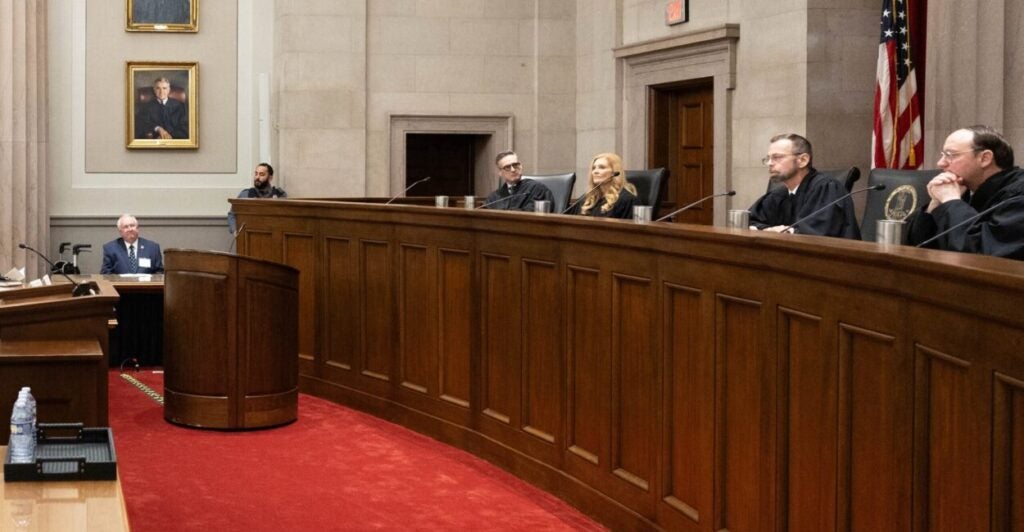
On April 26, the Virginia Supreme Court will take up the appeal of two rulings made in Tazewell district court that found procedural laws were broken — or were going to force registrars to break laws — on how elections in Virginia are administered, and how the state constitution can be suspended in order to secure a partisan victory.
The justices ruled that the right of the people to vote on issues outweighed determining if the vote was called in violation of Virginia law.
Citing 100-year-old precedent in their order to allow Tuesday’s redistricting referendum election to proceed, the justices said, “The Courts cannot interfere to stop any of the proceedings while this permanent law is in process of being made.”
Here are the issues the justices must decide after the April 21 election.
First, in advancing their redistricting hopes, the Democratic state lawmakers made use of a special session that had been called specifically for budget reconciliations — which, conveniently, the Democratic majorities in both houses had not been able to do by the end of October. The Speaker of the House simply announced they would take up new matters while convened.
Second, the General Assembly passed the referendum which, in Virginia law, must wait until an “intervening election” takes place before it must pass the Assembly a second time. This is designed to give voters the ability to oust a member who supports a referendum that they do not.
Supporters of the move claimed that the election on Nov. 4, just days after the special session, would be counted as the “intervening election,” even though Virginians had been voting for a month and a half prior. Their argument was that all those early voting days are nothing more than a procedural window of opportunity, and that elections only happen when the votes are tallied on Election Day.
Finally, the Assembly forced registrars to execute a referendum without the requisite 90-day period in which the referendum could be put on display for voters to view.
So, the question is, should the Supreme Court take into consideration the outcome of Tuesday’s vote?
The court itself said it was going to wait until after the votes were cast, and the justices did state that if “vote No” wins, they will consider the matter moot. So, it appears that they will not pretend that they are unaware of the outcome.
What if it’s close? The UVA Center for Politics said at the end of last week that they expected “Yes” to prevail — by a very slim margin, 51% to 49%.
What about the spending disparity? Do the justices consider the fact that it took three times as much money pouring into the state from outside to fund the campaigns? Virginia Public Access Project reported last week that only 3% of the money behind “vote Yes” has come from actual Virginians.
Moreover, if turnout is low on top of that, especially below 50%, how could justices claim that something as essential as a constitutional amendment be suspended for six years given all those circumstances?
What would you do if you were a justice on the Virginia Supreme Court?
We publish a variety of perspectives. Nothing written here is to be construed as representing the views of The Daily Signal.