


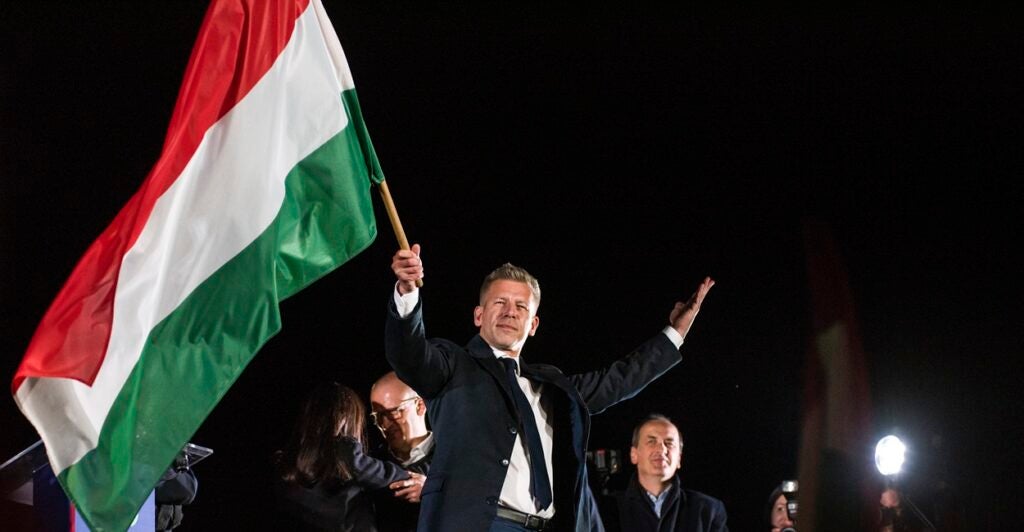
For many in the liberal press, Hungary’s recent election signaled the “defeat of autocracy” and a decisive “turn back” toward Europe. For some conservative commentators, the same outcome was framed as evidence that “Brussels-backed liberals” had taken over yet another conservative stronghold.
Both sides miss what actually happened.
Hungary’s election was not a conventional contest between left and right. It was a systemic correction driven by broad-based dissatisfaction with how power has been exercised over roughly the past two decades. This dissatisfaction is also with the political crisis of 2006 tied to the socialist government at the time, which eroded trust in democratic institutions and led to Fidesz’s landslide victory in 2010.
After 16 years in power, Fidesz was no longer simply a governing party, but the very system voters were evaluating.
What really drove the outcome was accumulated frustration with a political system that had become increasingly centralized and insulated. Over time, this system became associated with entrenched corruption, weakened institutional accountability, and political polarization that deepened and strained civic life and personal relationships.
At the same time, economic and geopolitical concerns intensified. Many voters perceived a shrinking middle class alongside expanding crony networks, as well as growing dependence on Russia and China. This included not only Hungary’s long-standing energy dependence on Russia, but also a perceived increase in political alignment with Moscow, often reflected in government narratives critical of Ukraine. Environmental concerns linked to Chinese investments, including in electric vehicle battery production, made things even worse.
Against this backdrop, a governing approach that emphasized “enemies”—whether Brussels, Soros, migrants, Ukraine, or others—appeared increasingly disconnected from the country’s domestic challenges. Messaging that signaled heightened war risks in the event of a non-Fidesz victory contributed to a climate of fear and anger, instead of a policy-focused electoral debate that many Hungarian voters have long been hungry for.
TISZA emerged in this space. Its success stems from a simple but effective message: that Hungarians, regardless of political affiliation or background, share common priorities.
By focusing on education, health care, economic performance, and national competitiveness, TISZA shifted the political conversation toward everyday concerns, bringing together voters from across the political spectrum. Hungarian society leans moderately center-right on average, which helps explain why this coalition is anchored slightly to the right.
Notably, much of the traditional left did not reemerge as an alternative but folded into this broader movement. This reflects opposition to the Fidesz government. It also suggests a deeper convergence around shared priorities that cut across traditional party lines. In many ways, this mirrors how Fidesz itself once rose to power—with a broad, unifying message.
TISZA presented a detailed program and a slate of prospective officials drawn from professional fields and the private sector. This resembles practices familiar in the U.S., where agency leadership often includes individuals with private-sector expertise.
Hungary itself has some precedent for this approach: Viktor Orbán’s first government in 1998 included individuals with nonpolitical or technocratic backgrounds. By contrast, Fidesz’s recent campaign environment relied heavily on messaging centered on Ukraine and featured many established political figures with whom voters had grown dissatisfied.
The international portrayal of Péter Magyar, TISZA’s leader, further illustrates the limitations of prevailing narratives. He is neither the liberal figure celebrated in some outlets nor the proxy for external interests lamented by some conservatives. On key issues such as immigration, border control, family policy, and peace—positions that broadly align with those of Orbán—his platform reflects continuity with conservative priorities. However, Magyar has taken a clear stance against corruption and against deepening political and economic alignment with Russia and China. Thus, the difference between TISZA and Fidesz is not about left and right, but about how power is exercised.
The election is often mischaracterized as a simple choice about “Europe.” But for Hungarians, Europe is not synonymous with alien institutions or regulatory frameworks coming from Brussels. Instead, it reflects a deeper cultural, historical, and geographical orientation.
The desire to choose Europe is about rejecting alignment with alternative systems—particularly those associated with Russia, which oppressed Hungary for nearly half a century, and whose painful legacy many families still vividly remember. It is also notable that resisting Russian influence was once a central talking point of Fidesz itself.
This moment underscores a broader lesson: As Lord Acton warned, power tends to corrupt, and great power corrupts even more. A political movement that once called for civic renewal and independence gradually became the very system it once opposed.
Hungary’s experience underscores a general principle: even strong leadership and good intentions can give way to corruption if power remains unchecked for too long. This moment represents both an opportunity and a responsibility for TISZA—to ensure that institutional accountability is preserved and that the mistakes of the past are not repeated.
In this light, narratives that interpret Hungary’s election through their own lenses fall short, reducing a complex domestic development to a familiar storyline. TISZA’s landslide victory reflected a rejection of a governing system perceived as unresponsive. It was also a demand for the government to restore checks and balances, strengthen institutional accountability, enhance competitiveness, and reaffirm a pro-Western civilizational alignment. Whether this model can be sustained remains to be seen, but understanding Hungary today requires paying closer attention to the realities on the ground.
We publish a variety of perspectives. Nothing written here is to be construed as representing the views of The Daily Signal.