


















At a Thursday hearing, Democrats claimed Republicans are engaging in “xenophobia” by looking into Chinese espionage on American college campuses.
“We should not be launching xenophobic attacks on our students,” Rep. Haley Stevens, D-Mich., stated at a House Committee on Education and the Workforce hearing Thursday morning.
The hearing, titled “U.S. Universities Under Siege: Foreign Espionage, Stolen Innovation, and the National Security Threat,” sought to uncover how foreign agents are using American universities as a tool to infiltrate American society, exert influence, and conduct espionage.
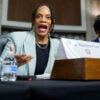
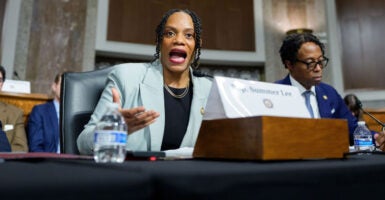
Rep. Summer Lee, D-Pa., said the hearing amounted to “Republicans latest attempt to villainize the global community. “They [Republicans] would have us treat every international student and faculty member as a foreign spy.”
Meanwhile, Rep. Frederica Wilson, D-Fla., called the hearing a “xenophobic conspiracy theory.”
The committee’s Republicans, however, focused on the repeated instances of Chinese Communist Party-linked espionage and fraud committed against American universities.
“So, I live in the real world, not the world of sunshine, rainbows, pixie dust and unicorns,” Rep. Randy Fine, R-Fla., said. “This isn’t fictional. In 2015, a Chinese national linked to the CCP was arrested and charged with espionage at the University of South Florida.”
Chairman Tim Walberg, R-Mich., hosted Thursday’s hearing and invited witnesses from American universities that could personally attest to these foreign influence efforts.
President of the University of Michigan Domenico Grasso told the committee that he had to cut ties with their Chinese partner, Shanghai Jiao Tong University, after engaging in talks with the House education committee and Select Committee on the Chinese Communist Party.
Months after the partnership between the two ended, two Chinese nationals were charged with smuggling a potential agro-terrorism weapon into the country, Grasso told the committee.
Another college administrator, Cassandra Farley, a senior director at the University of Florida, explained the challenges these influence operations present to universities as they hire staff and admit students.
Farley testified that the University of Florida conducts rigorous background checks for new hires. “By centralizing our research security program, we have been able to ensure that our senior leadership also has oversight,” Farley stated.
These alleged espionage efforts have also impacted student well-being at some universities. Elsa Johnson, a Stanford University student and the editor in chief of a student newspaper, told the committee that a suspected CCP agent has repeatedly harassed her and her family.
Johnson claimed that she does not think the university has done enough to protect her.
“Stanford issued a statement that they were looking into the reports, but nothing meaningful has come about,” Johnson said.

