


The SAVE America Act has split the Senate GOP on the filibuster. As the election integrity measure struggles through the Senate slog, one Republican senator is calling on Senate Majority Leader John Thune, R-S.D., to nuke the filibuster.
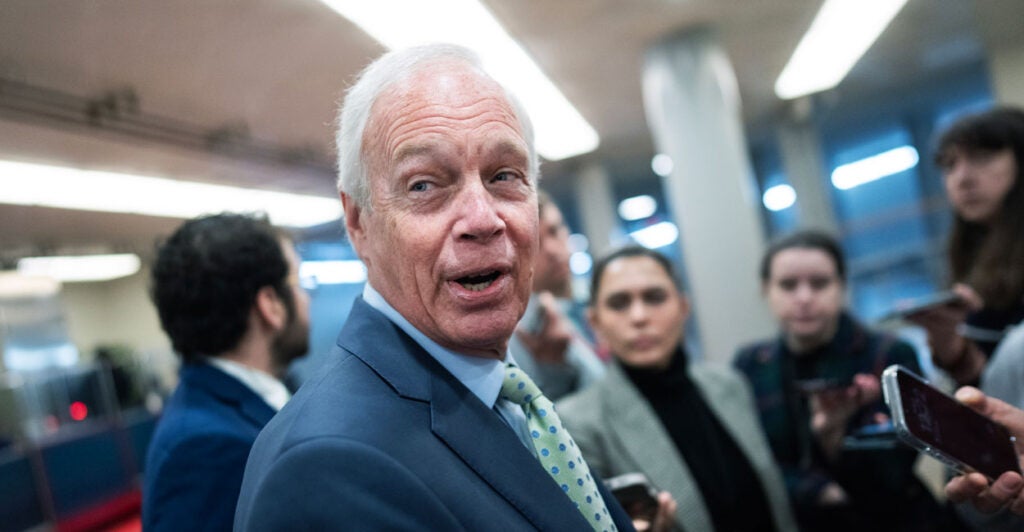
Sen. Ron Johnson, R-Wis., wrote an opinion in the Wall Street Journal calling on his Republican colleagues to nuke the filibuster before the Democrats do it for them.
“By ending the filibuster now, Republicans could pass important legislation that the public overwhelmingly supports, but Democrats oppose,” Johnson wrote in the Wall Steet Journal.
“For some inexplicable reason many of my Republican colleagues believe that maintaining the 60-vote threshold required to end a filibuster is crucial to the future of our republic,” Johnson claimed. “I’ll admit that the 60-vote cloture threshold has prevented many bad bills from becoming law, and that without it bad bills would become law more easily. But it also prevents good bills from getting passed.”
The current example being the SAVE America Act, a piece of legislation which would secure American elections, protect women’s sports, and enshrine a number of other conservative priorities into law.
The Senate is currently in the process of an extended floor debate about the bill, but without some effort to circumvent the filibuster, either by using the talking filibuster or nuking the filibuster altogether, the bill stands little chance of passing.
At the very least, Johnson said of a move to nuke the filibuster, Republicans will put Democrats on record promising to end the filibuster before the midterm elections.
“At a minimum, if the SAVE America Act fails to pass, the Senate should immediately debate and vote on a rule change (requiring 67 votes) to end the filibuster,” Johnson argued. “It would be interesting to see whether Democrats would vote yes when Republicans are in power. Forcing them to defend the rule now could politically shame them into preserving it later: It’s the only chance I see of dissuading them from voting yes once they regain power.”
Thune joined Fox News on Friday morning to discuss Johnson’s argument to vote to end the filibuster and signaled his opposition to anything other than getting Democrats on the record against the SAVE America Act.
Thune told Bill Hemmer on America’s Newsroom that reaching 67 votes to change a rule in the Senate, isn’t even a possibility.
“There aren’t anywhere close to the votes to nuke the legislative filibuster in the United States Senate today,” Thune said. “That’s the reality that I have to deal with.”
However, Thune suspects that there are Democrats who want to nuke the filibuster as well.
“Democrats have already made their intentions clear,” he said. The last time the rule change was voted on was in 2022 when the Democrats controlled the White House and the Senate. All but two Democrats voted to nuke it.”
“[The filibuster has] protected Republicans through the years, conservative principles, principles and priorities, by requiring a supermajority to get things done in the United States Senate,” Thune argued.
Many Republicans have been vying for Thune to initiate a talking filibuster, which is not nuking it. “Requiring senators to speak during a filibuster doesn’t nuke the filibuster,” wrote Sen. Mike Lee, R-Utah, on X. “It lets the filibuster be what a filibuster is—namely, speaking on the Senate floor.”