























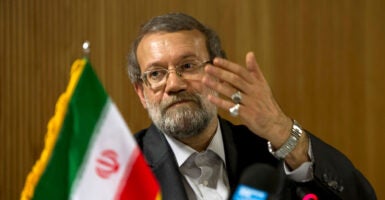
Two top Iranian leaders have been killed as the United States and Israel continue their joint operation against the Iranian regime.
Ali Larijani, secretary of Iran’s Supreme National Security Council, and Gholamreza Soleimani, the commander of the Basij Force, have been eliminated, the Israeli Defense Forces announced Tuesday.
“Under Soleimani, the Basij unit led the main repression operations in Iran, employing severe violence, widespread arrests, and the use of force against civilian demonstrators,” according to the IDF.
Larijani was closely associated with the late Supreme Leader Ali Khamenei and was one of the nation’s top security officials. The former supreme leader tasked Larijani and several other officials with ensuring the regime would survive if he were killed, The New York Times reports.
“Throughout the years, Larijani was considered one of the most veteran and senior figures within the Iranian regime leadership,” according to the IDF.
Larijani “personally oversaw the massacre that was carried out against Iranian protesters” at the end of December and into January, the IDF reports. It is estimated that the regime’s crackdown on protests killed more than 30,000 citizens.
Israeli Prime Minister Benjamin Netanyahu referred to Larijani as the “boss” of Iran’s Revolutionary Guard. Larijani is believed to have been leading the Iranian regime since Khamenei was killed on Feb. 28.
“We are undermining this regime in the hope of giving the Iranian people an opportunity to remove it,” Netanyahu said in a statement Tuesday. “It will not happen all at once, and it will not happen easily. But if we persist, we will give them the chance to take their destiny into their own hands.”
The deaths of the two leaders come as Iran’s new Supreme Leader Ayatollah Mojtaba Khamenei has rejected proposals for de-escalation with the U.S. and Israel, Reuters reports.
Two senior Iranian officials told Reuters that two intermediary countries had conveyed proposals to Iran’s Foreign Ministry for “reducing tensions or a ceasefire with the United States.”
Khamenei, who had held his first foreign policy session since being named supreme leader, had responded that it was not “the right time for peace until the United States and Israel are brought to their knees, accept defeat, and pay compensation,” the official said.
He did not clarify whether Khamenei, who has not yet made a public appearance since being selected last week to replace his slain father, had attended the meeting in person or remotely.
The conflict with Iran is in its third week, and President Donald Trump has not indicated when he plans to end the operation.
Reuters contributed to this report.

