


Two dozen Republican state attorneys general called on the Trump administration to investigate what they say is the use of tax dollars to influence judges in climate cases.
The state attorneys general, in a letter to Trump cabinet officials, point to federal grants issued by the National Science Foundation to the National Academies of Sciences, Engineering, and Medicine, or NASEM, to produce a reference manual for judges. The attorneys general allege that activists helped shape the content of the manual’s chapter on climate law.
They are calling on federal agencies to “investigate whether NASEM should be suspended or disbarred from federal funds,” based on the organization’s work with the Environmental Law Institute’s Climate Judiciary Project in producing the climate chapter in the judges’ reference guide.
The National Science Foundation issued an $874,752 grant to the National Academies to produce the Reference Manual of Scientific Evidence, which is meant to be a “primary reference source for federal judges on questions of science in litigation.” The academies worked with the Federal Judicial Center, or FJC, on the report.
“After state attorneys general raised these concerns, the FJC removed the chapter from its online version of the Manual. State attorneys general have raised these concerns with NASEM as well, but NASEM has not taken action, nor has NSF publicly called for a retraction or attempted to address violations of its grant restrictions,” the letter says.
The letter also calls for barring future federal grants to NASEM, a private nonprofit organization with a congressional charter that frequently works with government agencies.
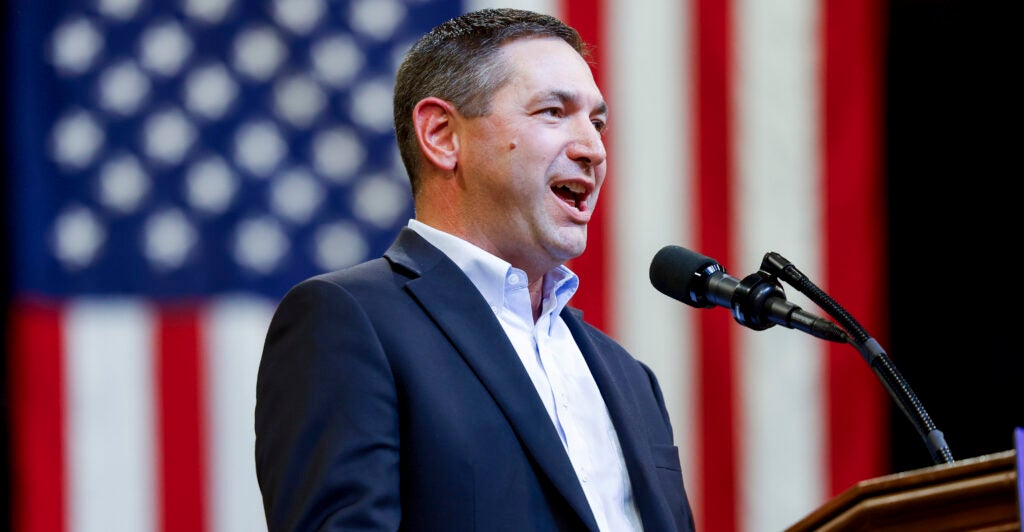
Montana Attorney General Austin Knudsen led the letter, joined by attorneys general from Alabama, Alaska, Arkansas, Florida, Georgia, Idaho, Indiana, Iowa, Kansas, Kentucky, Louisiana, Mississippi, Missouri, Nebraska, North Dakota, Ohio, Oklahoma, South Carolina, South Dakota, Texas, Utah, West Virginia, and Wyoming.
The AGs sent the letter to War Secretary Pete Hegseth, Transportation Secretary Sean Duffy, and Energy Secretary Chris Wright.
The letter says that NASEM President Marcia McNutt informed the Montana attorney general’s office that the “manual, including the chapter on climate science, will continue to be available on the Academy’s website.”
The letter notes the Transportation Department provided $84 million in contracts or grants to the academies; the Energy Department provided $7 million; and the War Department DOW provided $33 million in federal tax dollar payments.
The attorneys general referenced National Science Foundation grantee guidelines and argued the involvement of the environmental group in the manual for judges represented a conflict of interest, as the activists had testified in environmental litigation.
“NSF grantees must ‘uphold the highest standards for scientific integrity,’ such as ‘transparency’ and ‘protection from inappropriate influence,’” the letter says. “NSF’s grant recipients also must avoid or disclose any ‘significant financial interest’ that ‘could directly and significantly affect the design, conduct, or reporting of NSF-funded research or educational activities.’”
On Thursday, the Washington Free Beacon reported on newly obtained public records that show the Environmental Law Institute’s Climate Judiciary Project conducting “Judicial Leaders in Climate Science” seminars at multi-day conferences with all expenses paid luxury accommodations in Napa Valley and Palm Beach.
Last August, Knudsen asked the Environmental Protection Agency to cancel taxpayer grants to the Climate Judiciary Project, which has funded the climate advocacy training for about 2,000 judges across the country. The EPA terminated the grants.
NASEM acknowledged receiving an inquiry from The Daily Signal for this story but did not respond by publication time.
A spokesman with the National Science Foundation declined to comment.
The Environmental Law Institute also did not respond to phone and email inquiries for this story by publication time. However, a spokesman for the group, Nick Collins, told the Free Beacon that the organization seeks to ensure judges can “competently evaluate the evidence presented by all parties.”
Collins added, “[Climate Judiciary Project] does not advise judges on how they should rule on any issue or in any case. In every case, it is up to the judge to consider the specific evidence presented by the parties and make particularized rulings grounded in the factual record before them.”