


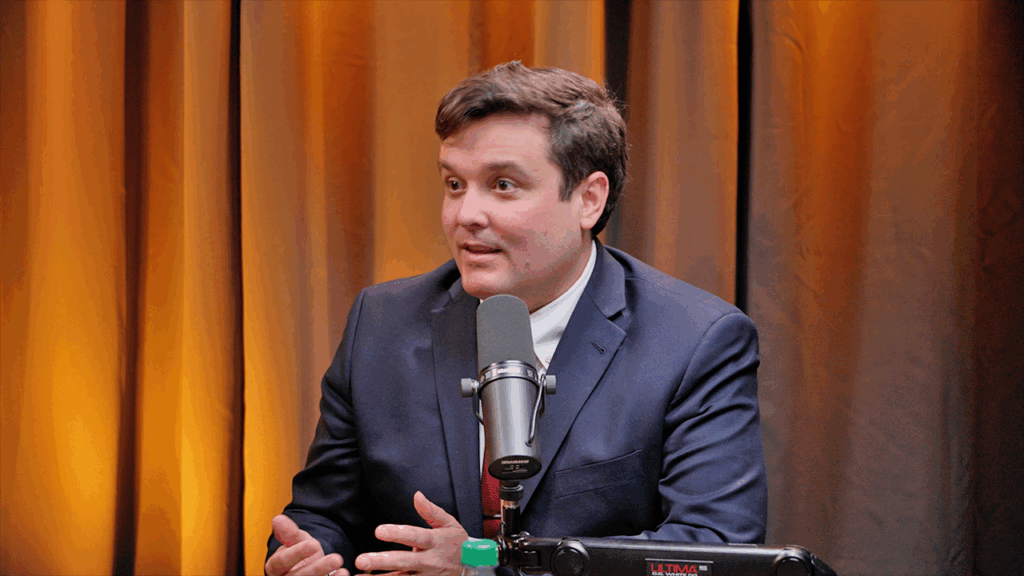
The following is a preview of Daily Signal Politics Editor Bradley Devlin’s interview with State Department deputy spokesperson Tommy Pigott on “The Signal Sitdown.” The full interview premieres on The Daily Signal’s YouTube page at 6:30 a.m. Eastern on Feb. 12.
It has been five weeks since the U.S. removed former Venezuelan President Nicolas Maduro from power. But the question on everyone’s mind is what comes next now that Maduro is no longer in power?
State Department deputy spokesperson Tommy Pigott joined “The Signal Sitdown” this week to discuss the Trump administration’s plan for Venezuela.
President Donald Trump’s administration has implemented a three-phase plan for the future of Venezuela, a process that Secretary of State Marco Rubio has hinted could be a long process.
“I can’t give you a timeline of how long it takes,” Rubio said at a Jan. 28 Senate hearing. “It can’t take forever. I get it. We all want something immediately. But this is not a frozen dinner you put in a microwave and in two and a half minutes it comes out ready to eat.”
Pigott explained the administration’s phased approach.
“First, the stability of Venezuela. Second, the recovery, where you might see the beginnings of investment, in oil infrastructure, for example,” Pigott said. “Then the third phase being that transition to a longer-term situation where hopefully you have a reliable partner in the region.”
Pigott claimed that the cooperation between Venezuela and the United States, especially in the oil industry, is improving conditions in Venezuela.
“The oil deal was an important part of this,” Pigott said, referencing changes that will allow American companies to invest in Venezuela’s oil industry. “Seeing that stabilization, those constructive conversations with the interim authorities,” makes a path forward possible.
New “revenue wasn’t used to go to a corrupt regime, prop up the corrupt regime, and instead used to benefit the people of Venezuela,” Pigott added.
“Part of that phase two [will be] seeing companies go in there, invest, and hopefully, as the secretary says, we have a normal oil infrastructure, a normal oil industry, in Venezuela,” he continued.
Pigott confirmed that the U.S. maintains communication with Venezuela’s interim authorities “pretty regularly.”
“There’s a degree of conversations that are happening across different levels of government,” he said. “We have a new director of our Venezuelan affairs unit, for example, who’s had different conversations with the interim authorities there,” as stability remains America’s top concern in Venezuela.